

Jan 12, 2026
-
By Ivan
As more startups, solopreneurs, and lean teams adopt project management software, one question keeps coming up:
“Why do most tools force a minimum number of seats?”
If you're a solo founder, consultant, or small agency operator, you already know the frustration: you need a professional-grade project management platform, but legacy tools force a 3-seat minimum on their paid plans—whether you have a team of three or not.
In 2026, software should scale with your business, not punish you for being lean. Yet tools like Monday.com and ClickUp still gate essential features behind rigid seat blocks and expensive tiers that don’t match the realities of 1–5 person teams. This unnecessary “Ghost Seat Tax” drains budgets, reduces runway, and forces growing businesses to pay for licenses that will never be used.
This article breaks down why seat minimums exist, how they impact small organizations, and why AI-Native WorkOS platforms like Kroolo are rewriting the rules with fair, per-user pricing that finally makes sense.
In 2026, teams are no longer static. They scale up and down, work with freelancers, and collaborate across departments only when needed.
Seat minimums create problems such as:
Paying for users who rarely log in
Hesitation to invite external collaborators
Reduced ROI for small or agile teams
Instead of enabling flexibility, rigid pricing models slow adoption and experimentation.
Most legacy platforms enforce 2–3 seat minimums, but Kroolo offers true per-user pricing with no mandatory seat blocks at any tier. This makes it one of the only modern tools designed to scale economically with freelancers, consultants, and boutique teams.
The seat minimum issue isn't accidental—it's a business model. Many incumbents inflate revenue by:
This creates a pricing trap for small operators who only need a single seat but must pay for three.
For a solo user, here's what the economics look like:
|
|
|
|
|
|
|
|
|
|
|
|
|
|
|
|
|
|
|
|
|
|
|
|
|
|
|
|
|
|
Small teams shouldn’t have to overpay just to unlock automations, AI, or advanced task management.
While monday Work Management is widely used, recurring user feedback highlights several friction points that make teams question its value—especially when seat minimums are involved.
Users frequently report that certain core features feel underdeveloped. Examples include:
Inadequate commenting systems that limit collaboration
Bugs that interrupt daily workflows
Gaps that require workarounds or external tools
For teams paying per seat, these limitations become more noticeable and frustrating.
Another common concern is complexity. Users mention:
Too many features and customization options without clear guidance
Difficulty onboarding new users quickly
Time spent learning the tool instead of managing work
This becomes a bigger issue when teams are forced to add multiple seats just to test or adopt the platform.
Despite being known for customization, many users still feel constrained. Reported challenges include:
Limited flexibility for certain project types
Difficulty adapting workflows beyond predefined structures
Mobile customization that lags behind desktop capabilities
Teams want tools that adapt to them—not the other way around.
Usability is another recurring theme. Users often say:
The interface feels complex and overwhelming
Navigation isn’t intuitive for first-time users
They want clearer guidance and smarter defaults
For smaller teams, this adds unnecessary friction—especially when every paid seat counts.
Seat minimums are a holdover from the early SaaS era—built around revenue growth at the vendor’s expense, not customer value. In reality, solo founders and freelancers make up one of the fastest-growing user segments in the productivity market, but legacy tools haven’t adapted.
Incumbents rely on seat minimums due to:
Revenue predictability over customer needs
Tier-based gating to upsell features
Technical debt preventing flexible pricing
Monolithic architectures not suited for single-user mode
This locks small teams out of truly powerful tools unless they pay inflated amounts.
The market now demands transparent pricing that reflects:
Seat minimums are incompatible with modern, AI-powered workflows where one person can now do the work of three.

Kroolo eliminates seat minimums by using an AI-native architecture that scales based on real users, not artificial blocks. It includes built-in GenAI agents—even at 1 seat—making advanced automation accessible to everyone.
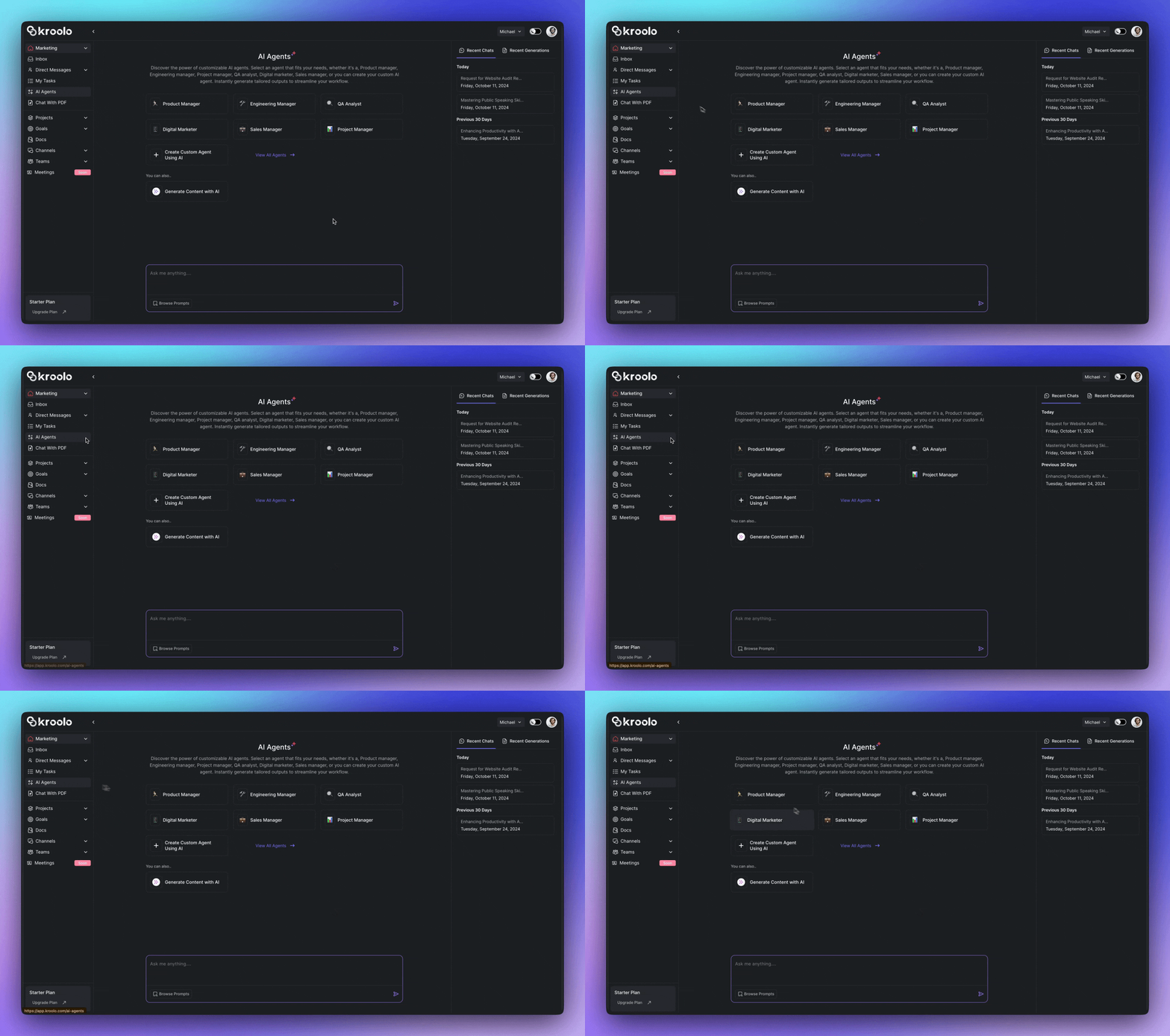
Teams want workflows that don’t break.
Instead of relying on fragile rules and manual automations, AI-native platforms use 40+ specialized AI agents to:
Build workflows correctly from the start
Manage tasks and dependencies automatically
Continuously optimize projects without manual fixes
The result is reliable execution without constant maintenance.
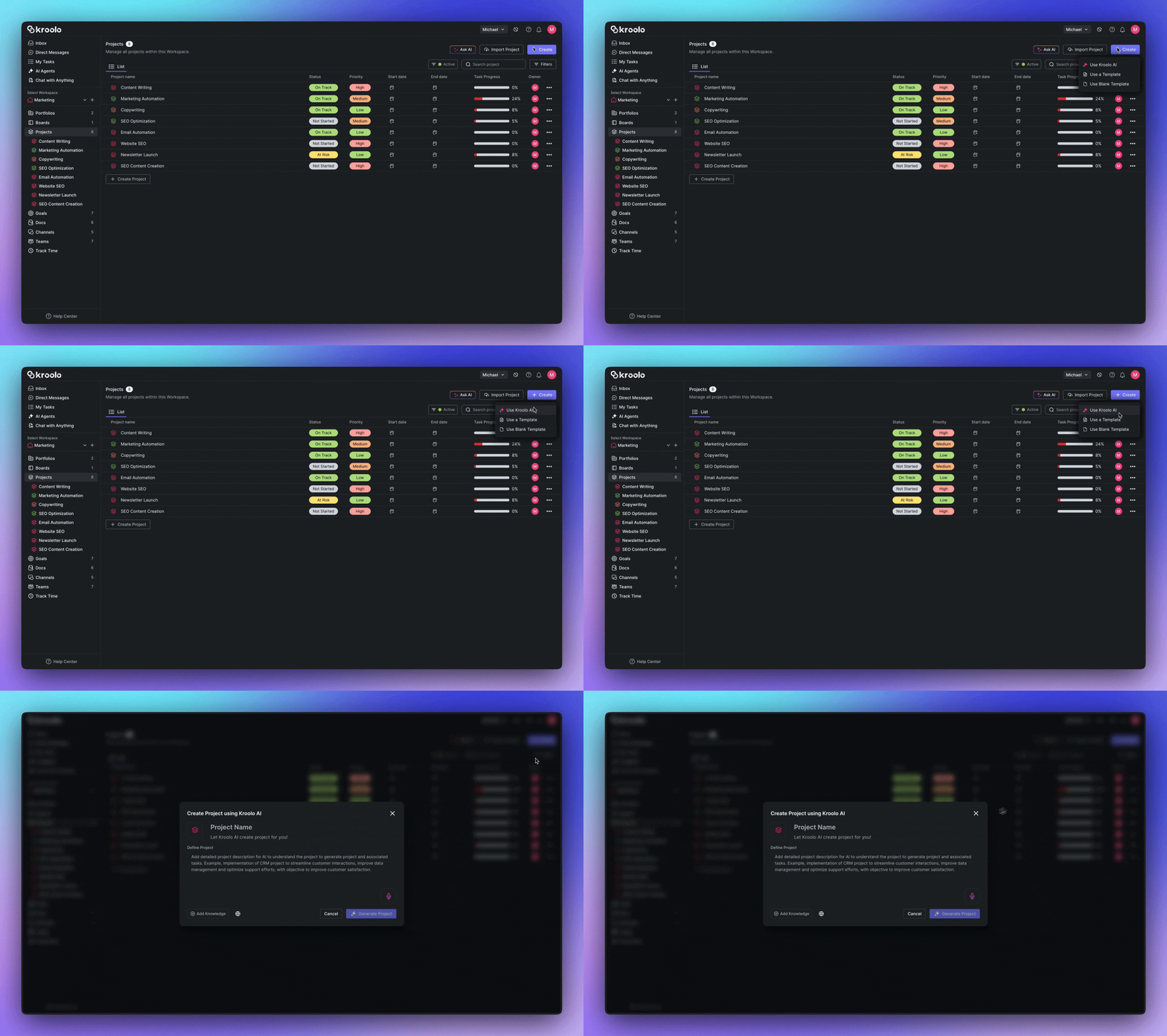
Lengthy setup is no longer acceptable.
Teams now expect:
Projects generated from simple AI prompts
Instant boards, subtasks, and checklists
Immediate execution without navigating complex menus
Prompt-to-project replaces hours of setup with seconds of clarity.
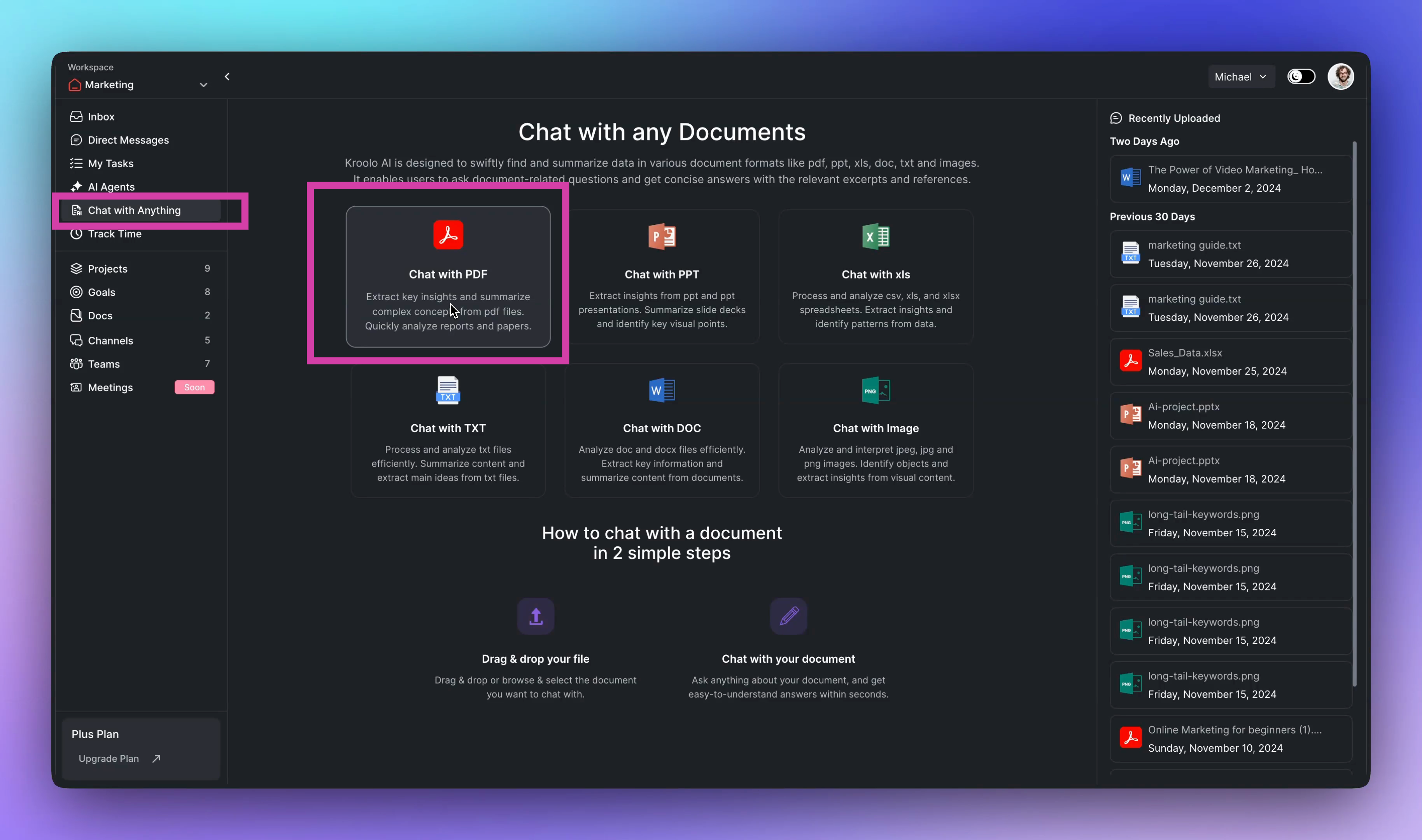
Modern teams don’t want to search—they want answers.
They expect to:
Chat directly with Docs, PPTs, PDFs, and text files
Ask contextual questions and get instant insights
Interact with data instead of just storing it
This turns information into something usable, not buried.

Teams prefer understanding over control.
Instead of manuals and training sessions, they want:
Automated analytics that explain progress and risks
Clear signals on what needs attention next
Intelligence should guide teams—not overwhelm them.
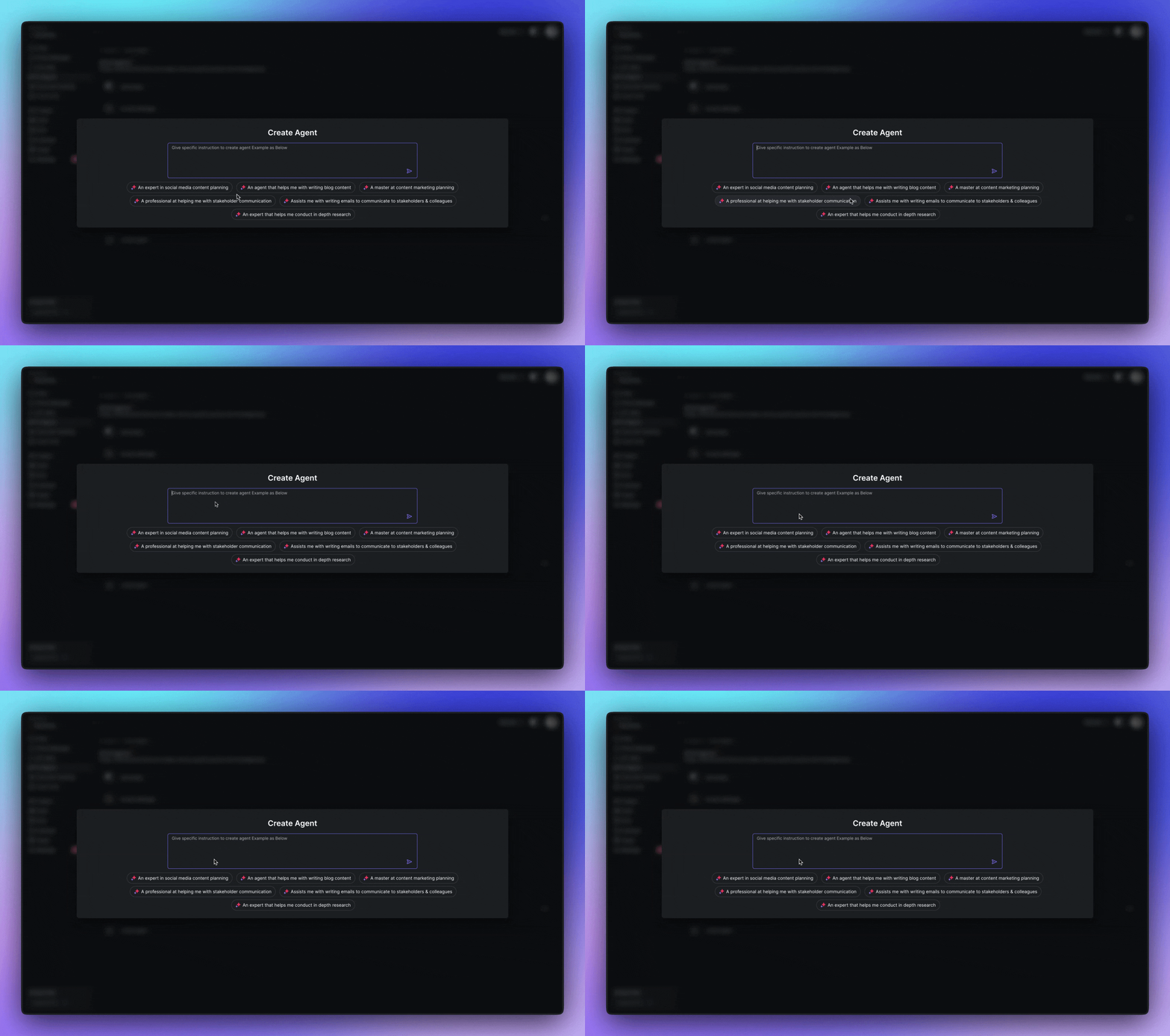
Every team works differently.
In 2026, flexibility means:
Creating custom AI agents
Leveraging multiple LLM models
Tailoring workflows without over-customization
This allows teams to adapt the platform to their needs without adding friction.
Consider a solo strategic consultant who was previously using Monday.com. To access the automations and private boards they needed for their high-ticket clients, they were forced into a 3-seat Pro plan costing roughly $57/month. As a team of one, 66% of their spend was pure waste.
The consultant decided to make the switch to Kroolo. Using Kroolo’s 1-click importer, they moved their entire workspace—tasks, docs, and files—instantly.
The Transformation:
The result? A 50%+ reduction in software costs and a significant increase in the speed of service delivery. This is why AI-native enterprises are quickly replacing legacy-bound firms.
Conclusion
The SaaS pricing landscape is finally shifting toward flexible, per-user billing. Kroolo leads this change by eliminating seat minimums, removing artificial barriers, and giving even single-seat users access to enterprise-grade AI.
In 2026, teams shouldn’t have to pay extra just to remove friction.
Kroolo brings the AI-first advantage without locking teams behind seat minimums or paid add-ons. From AI-native workflows and prompt-to-project setup to chat with documents, intelligent dashboards, and customizable AI agents—these capabilities are available in Kroolo’s free plan.
For teams evaluating modern project management tools, that means:
Kroolo lets teams experience what AI-first project management actually looks like—for free, before they scale.
Stop paying for empty seats. Start automating work with Kroolo. Sign up NOW!