
Jun 01, 2026
-
By Clive
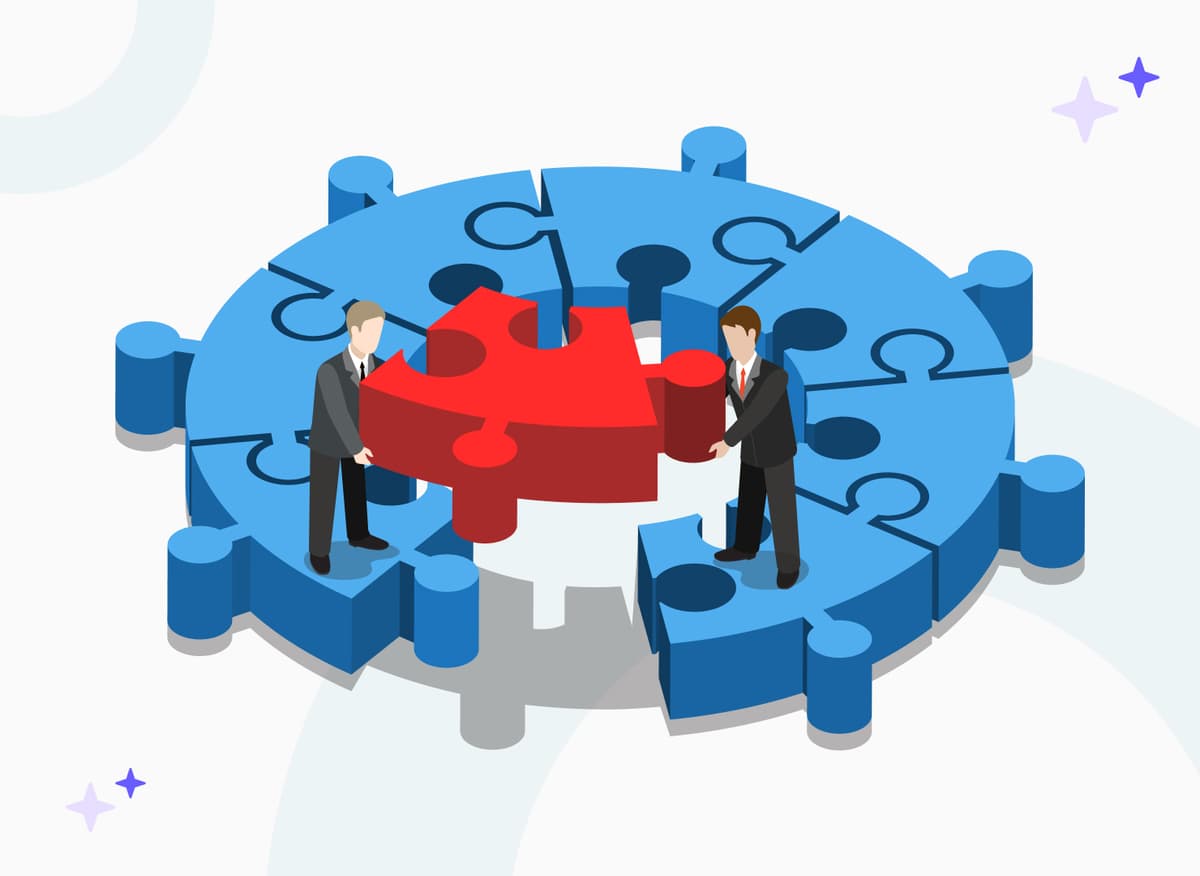
Cross-functional collaboration should be easier than ever.
Teams have access to project management platforms, communication apps, dashboards, CRMs, and AI-powered tools. Yet many organizations still struggle to stay aligned.
The problem isn't a lack of software.
It's that every team works inside its own system.
Marketing manages campaigns in one tool. Product tracks development in another. Sales lives inside a CRM. Operations relies on spreadsheets and workflows. Leadership depends on dashboards and reports.
Each team becomes more productive individually, but the organization becomes less connected as a whole.
The result is something many growing companies experience: Operational Disconnect
When information is scattered across teams and tools, collaboration starts to break down.
Common symptoms include:
In 2026, the biggest collaboration challenge isn't managing work. It's creating alignment across functions.
Marketing thinks in campaigns. Product thinks in roadmaps. Sales thinks in pipelines. Leadership thinks in goals and dashboards.
None of these approaches are wrong—they're simply different ways of viewing work.
The problem begins when organizations force every team into the same workflow. Instead of creating alignment, it often creates friction.
Teams struggle to work in a system that doesn't match how they operate, leading to disconnected processes and fragmented information.
As a result:
You can see the impact when simple questions become difficult to answer:
When basic answers require multiple meetings and status updates, collaboration is no longer the problem—visibility is.

Most project management tools were designed for a world that no longer exists: one team, one fixed workflow, one way to look at the work. That was fine when departments operated like separate little companies.
Modern organizations are far more entangled. A single initiative touches four teams before lunch.
What these companies actually need is the freedom for each team to work its own way, plus shared visibility across the whole org, plus real-time updates, all sitting on one common foundation of data.
The future of collaboration isn't herding everyone into the same workflow. It's letting every team keep its own view while staying tied to the same source of truth.
That sounds abstract. So let's make it concrete.
Picture a product launch.
In many organizations, the same launch is tracked separately by Product, Marketing, Operations, and Leadership. Each team maintains its own view, creating multiple versions of the same information.
The problem appears when something changes.
A launch date gets pushed back, but not every system is updated at the same time. Teams end up working from different information, leading to confusion, delays, and misalignment.
A better approach is to have one source of truth.
The launch exists once, but each team views it in the format that works best for them:
Different teams can work in different ways while staying aligned on the same reality. That's what true cross-functional collaboration looks like.
Cross-functional collaboration breaks down when teams work in different systems, follow different processes, and lack visibility into each other's work.
Kroolo solves this challenge by creating a connected workspace where every team can work in the way that suits them while staying aligned on shared goals and priorities.
Not every team works the same way.
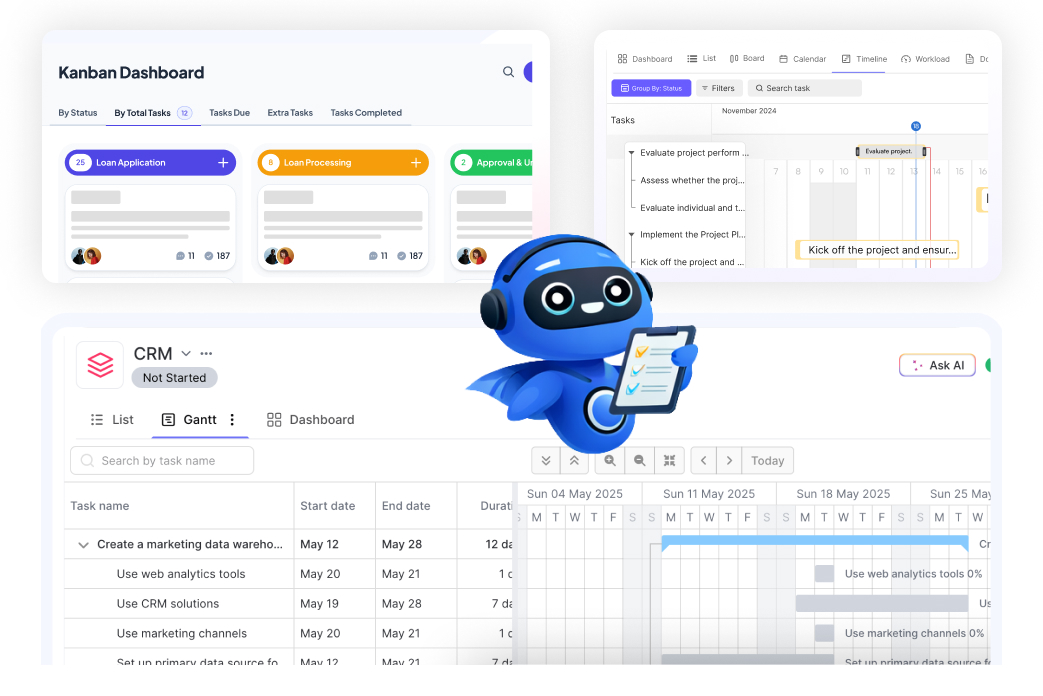
Marketing teams often prefer calendars and campaign workflows. Product teams rely on Kanban boards and sprint views. Leadership teams need dashboards and high-level reporting.
Kroolo allows every team to view and manage the same work through the format that makes the most sense for them. Whether it's a List, Kanban Board, Calendar, Timeline, Gantt Chart, or Workload View, everyone works from the same underlying data.
Multiple project views eliminate the need for duplicate systems while giving teams the flexibility they need.
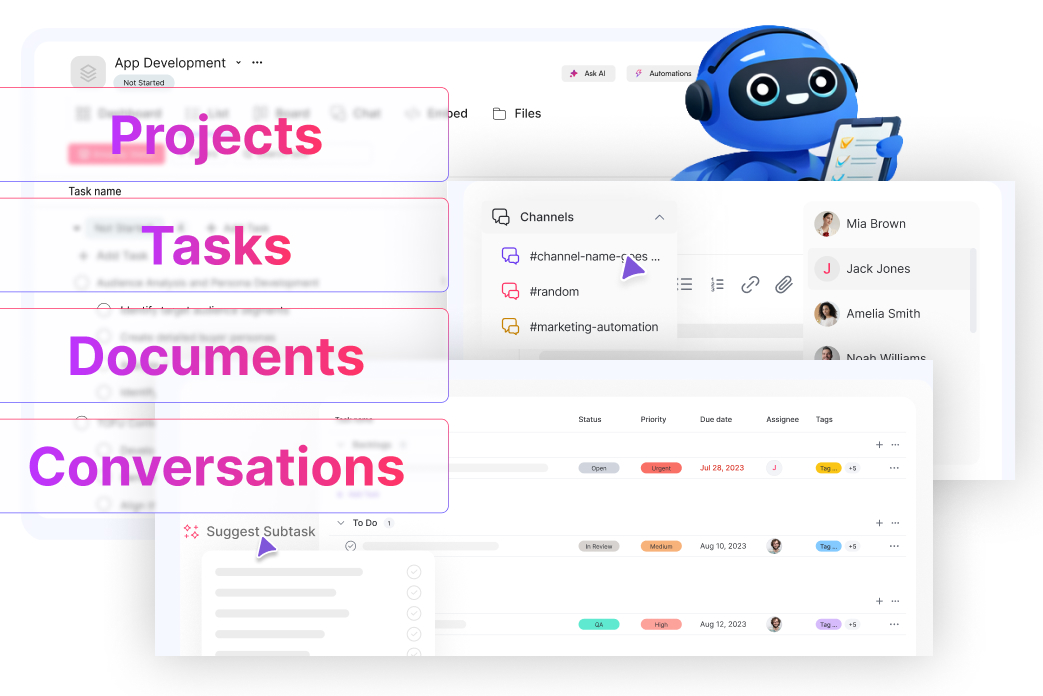
One of the biggest causes of misalignment is information spread across multiple platforms.
Project plans live in one tool. Documents are stored somewhere else. Team discussions happen in chat applications. Goals sit in separate dashboards.
Kroolo brings projects, tasks, documents, conversations, forms, goals, and dashboards into a single connected workspace.
As a result, teams spend less time searching for information and more time executing work.
Traditional project management relies heavily on manual planning, coordination, and reporting.
Kroolo uses AI to automate project setup, generate tasks and workflows, assign ownership, and organize work around business goals. As priorities change, projects can adapt without requiring teams to rebuild plans from scratch.
With built-in project dashboards, workload management, roadmaps, Gantt charts, and real-time reporting, teams always have visibility into what needs attention and what comes next.
The result is faster project execution, reduced administrative overhead, and better alignment across departments.
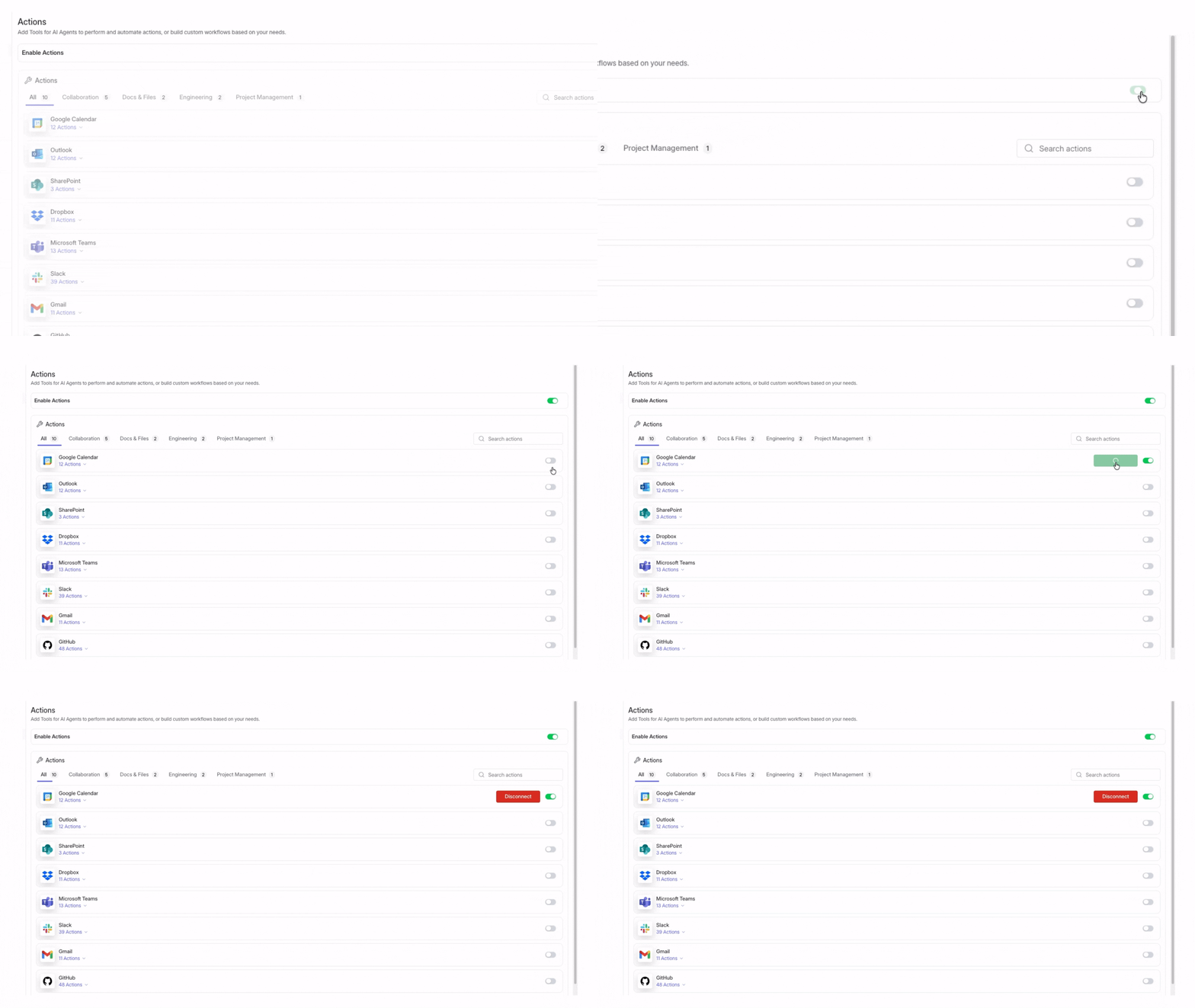
One of the biggest challenges in cross-functional collaboration is information scattered across multiple tools.
Project updates live in Jira, documents in Google Drive, conversations in Slack, and customer data in other systems. Teams often waste time searching for information instead of taking action.
Kroolo's AI-Native Enterprise Search connects all your tools and knowledge sources into a single searchable experience. Instead of digging through files and applications, teams can get instant answers, relevant context, and the information they need from one place.
Powered by AI, Kroolo understands intent and context—not just keywords—helping teams find information faster, reduce knowledge silos, and stay aligned across departments.
This means less time searching and more time getting work done.
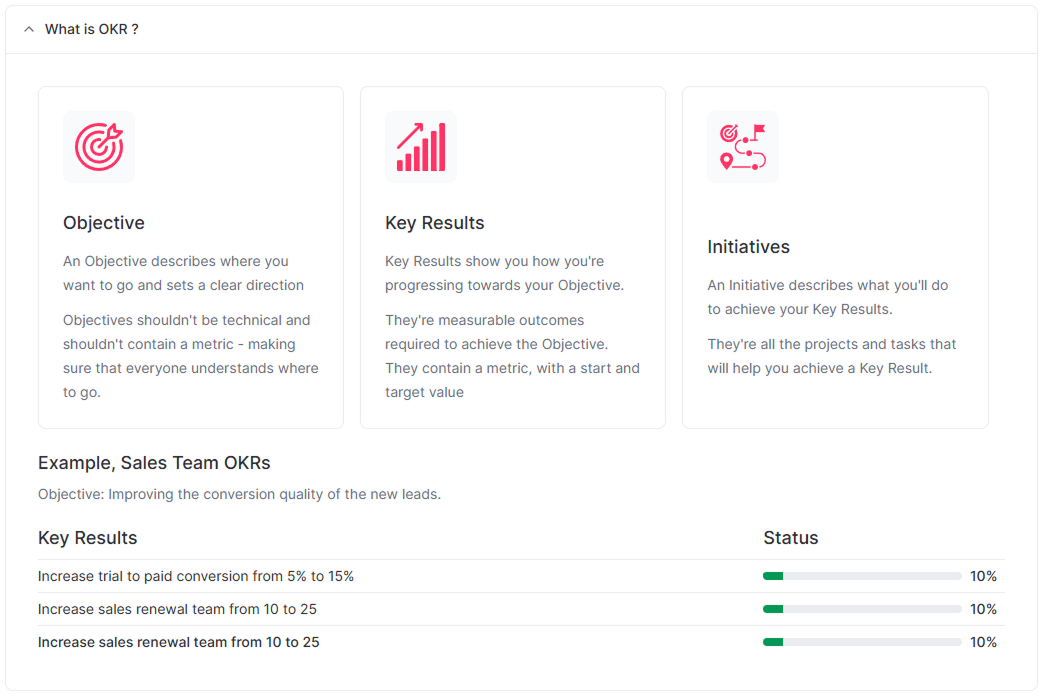
Many organizations struggle because strategic goals and day-to-day execution exist in separate systems.
Kroolo connects Objectives and Key Results (OKRs) directly to projects, tasks, and initiatives.
This gives teams visibility into how their work contributes to company objectives while helping leaders track progress in real time.
Everyone stays focused on outcomes, not just activities.
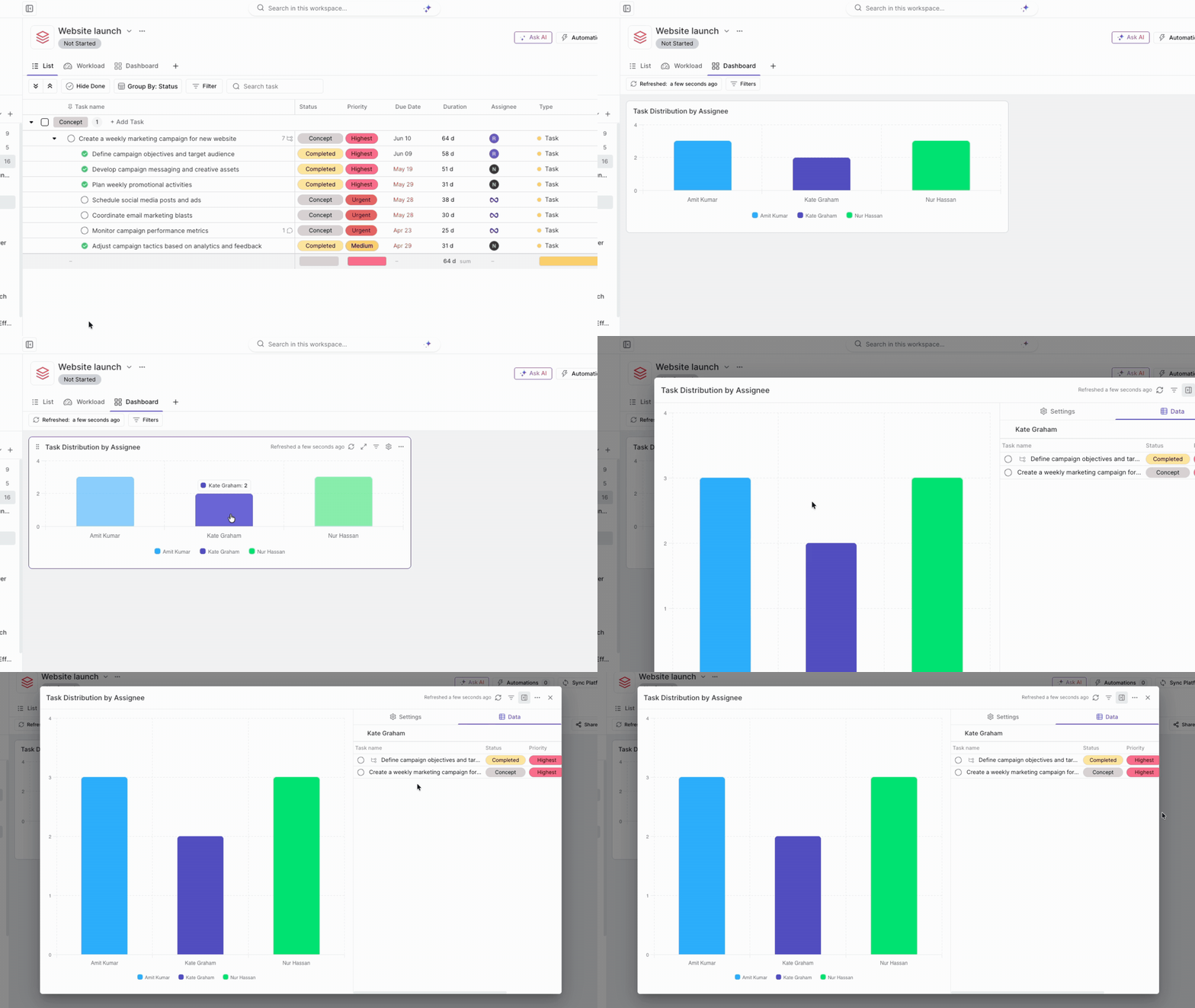
When teams work across different projects and departments, it can be difficult to get a clear view of progress.
Kroolo's customizable dashboards bring project data, task progress, team workloads, goals, and key metrics into one place. Teams can track completed, pending, and overdue work while leaders gain real-time visibility into project health and performance.
With visual reports and live updates, everyone stays informed without relying on manual status reports or constant follow-ups.
This enables faster decisions, better accountability, and stronger alignment across teams.
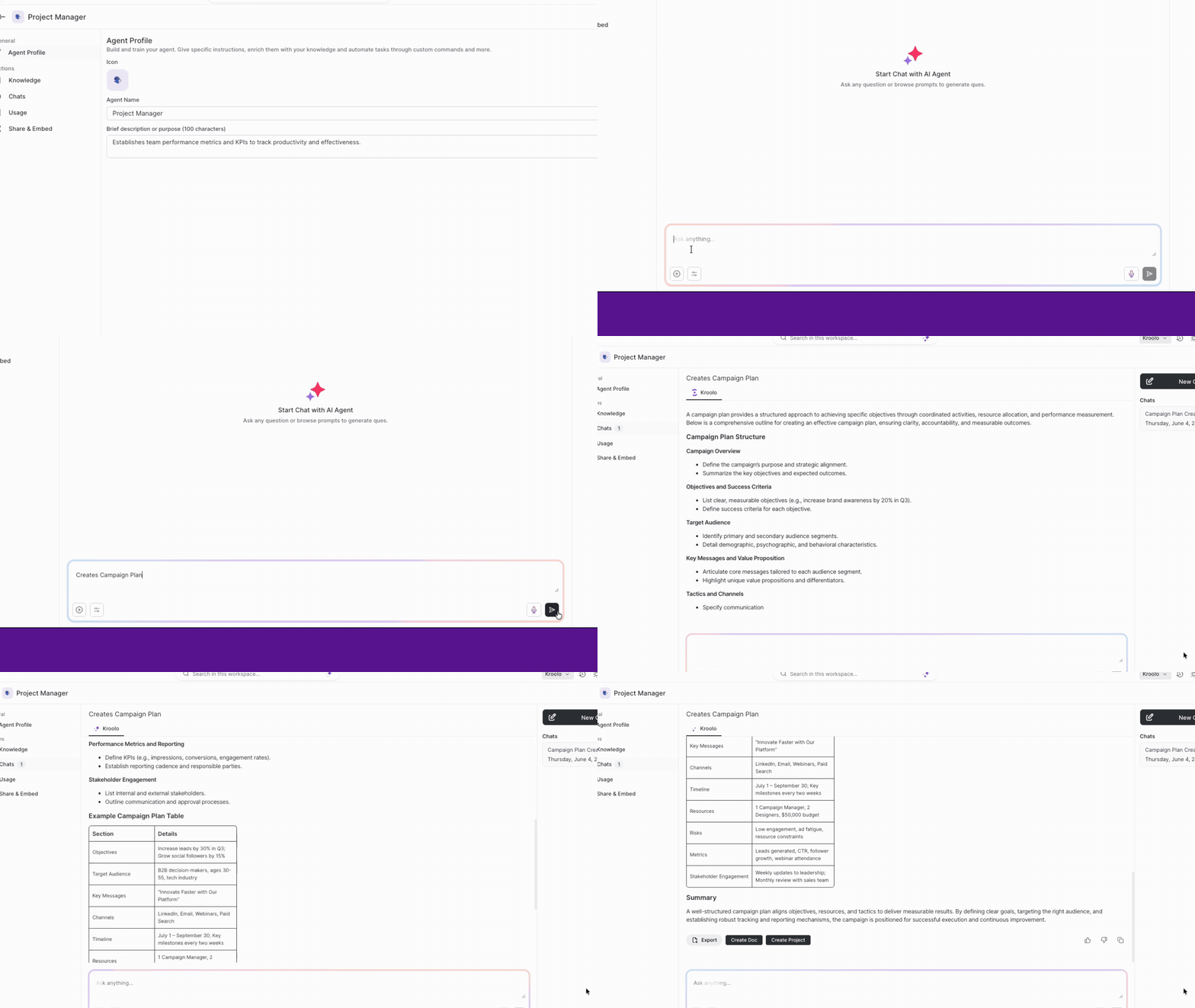
Most AI tools help teams generate content or answer questions.
Kroolo's AI Agents go a step further—they help teams plan, create, coordinate, and execute work directly inside their workspace.
Teams can deploy specialized AI Agents for different functions, including Marketing, Sales, Product, HR, and Operations. These agents understand your business context, company knowledge, projects, and workflows, allowing them to contribute meaningful work instead of generic responses.
Most organizations already use tools like Jira, Slack, Google Drive, GitHub, Asana, Microsoft Teams, and others.
Replacing every tool isn't realistic. Kroolo integrates with existing systems to create a connected operational layer across the organization.
Teams can continue using their preferred tools while ensuring information stays synchronized and accessible.
When projects, goals, documents, conversations, and workflows are connected, collaboration becomes significantly easier.
Teams gain visibility into shared priorities, leadership gains real-time insight into execution, and everyone works from the same source of truth.
The result is faster decision-making, fewer silos, stronger accountability, and better alignment across the entire organization.
Conclusion
The next wave of work platforms won't just track tasks. They'll understand how everything relates: teams, goals, workflows, dependencies, priorities, outcomes, as a connected whole.
That's the real shift, and it's why "shared work intelligence" matters more than any single feature. Because growth doesn't add complexity in a straight line; it multiplies it.
Without a layer holding everything together, alignment erodes, execution drags, visibility fades, and your strategic goals quietly wander apart while everyone's heads-down and busy.
The move that defines modern collaboration is going from managing work to connecting work intelligently.
Sign up with Kroolo now and let’s get started!