
Feb 26, 2026
-
By Clive
Your team isn’t slow. Your software is.
If your task board takes 7–10 seconds to load, you're not managing projects — you’re managing technical debt.
And in fast-paced engineering environments, that lag isn’t just annoying — it’s a measurable drag on productivity, morale, and delivery velocity.
Legacy platforms like ClickUp weren’t slow from birth — they became slow.
Over years, feature bloat, patched-on functionality, and tangled codebases have created tools suffering from:
This isn’t just theory — it’s costing teams real time and money.
According to research surveying 500 developers, teams lose an average of ~3 hours per week to tool failures, outages, and workflow issues — totaling nearly 20 lost workdays per year, per developer.
Almost half (44%) of those developers reported missing deadlines due to technical issues alone.
A 7-second delay sounds negligible — until you start multiplying it.
Let’s break it down:
Multiply that across an engineering org and timeline cycles slow, context switching skyrockets, and productivity bleeds.
The result? Teams lose nearly a full workday every week battling slow or fragmented tooling.
External research finds employees lose nearly 7 hours weekly due to inefficient software processes — almost a full day of potential output eaten by latency and complexity.
Most PM tools suffer from an architectural mid-life crisis:
This creates what we call the “complexity tax” — and it’s real: Software complexity now drains nearly 20% of software budgets due to unnecessary tooling, failed implementations, and hidden integration costs.
This isn’t hypothetical — it’s measurable leakage that slows teams and steals focus.

Here’s the technical roadmap for curing organizational lag:
Track metrics that matter:
If it’s above 2 seconds, users feel it — and lose flow state.
More features ≠ More productivity.
Complex feature sets in legacy PM tools often slow down basic interactions because payloads and rendering logic balloon over time.
Ask: “Are users waiting mostly because of unused, underutilized features?”
If yes — that’s technical debt manifesting as UI weight.
Switching between:
Docs → Tasks → Chat → Reporting
breaks flow — every time.
Tools should be unified, with shared in-memory state, not disjointed windows hopping back and forth.
AI as a plugin won’t solve systemic lag — it will add to it.
AI must be embedded in the core rendering and execution layers, processing queries and generating responses without round-trip overhead.
Legacy stacks cannot retrofit this without compromise.
Most project management tools try to optimize performance on top of old foundations.
Kroolo took a different path.
It was built as an AI-Native WorkOS from day one — designed for speed, clarity, and instant interaction. No legacy baggage. No feature bloat layered over a decade of patches. Just a modern, clean architecture that keeps performance consistent — even as teams scale.
For Technical Leads and Engineering Managers, this means one thing:
Below are the capabilities that reflect that architectural advantage.
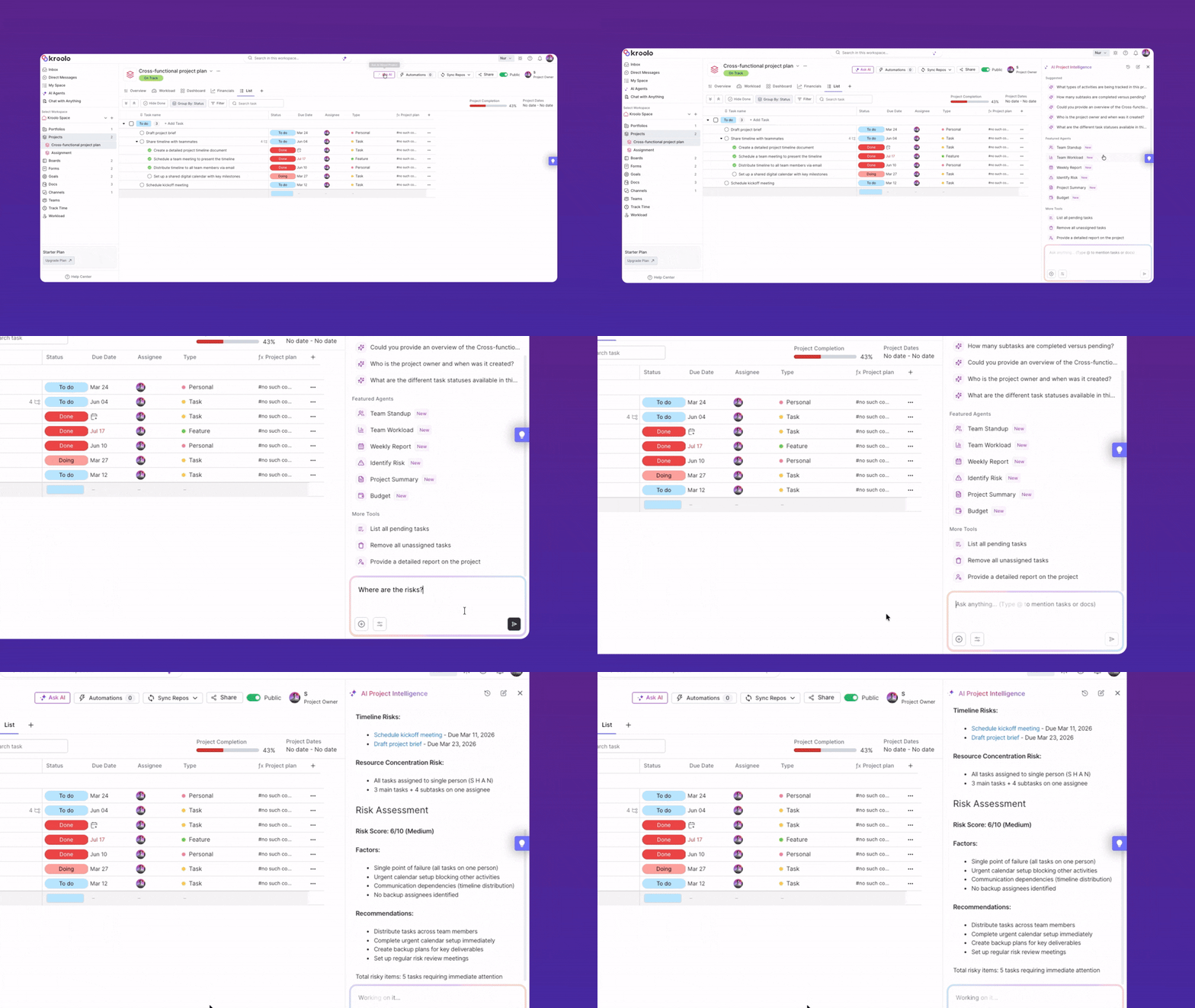
Instead of manually reviewing tasks, filters, activity logs, and status columns, you can simply ask:
Kroolo's chat with project scans ongoing, pending, and due tasks in real time and returns a concise summary instantly.
You’re not navigating the system. You’re interacting with it.
This eliminates review time before standups, speeds up decision-making, and gives leaders immediate clarity without slowing down execution.
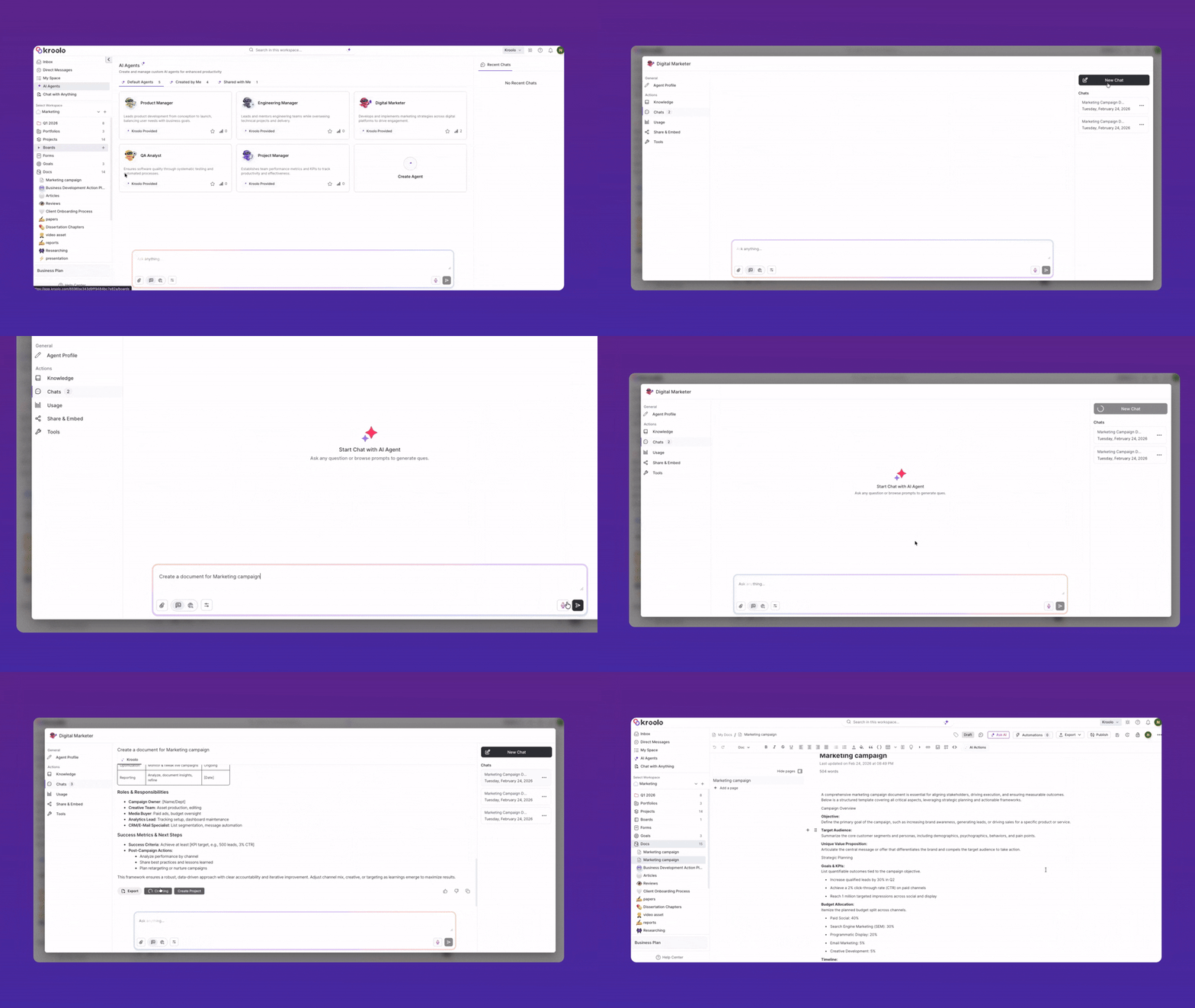
Documentation shouldn’t take hours of blank-page friction.
With AI Agents inside Docs, you can generate:
You define your objective, select your persona (e.g., Product Owner, Designer, Copywriter), choose tone — and Kroolo generates a fully structured document instantly using curated prompt intelligence.
No template hunting. No formatting struggle. No context switching.
And once created, you can continue chatting within the document to refine, expand, or clarify sections. For fast-moving teams, this turns documentation from a bottleneck into a velocity multiplier.
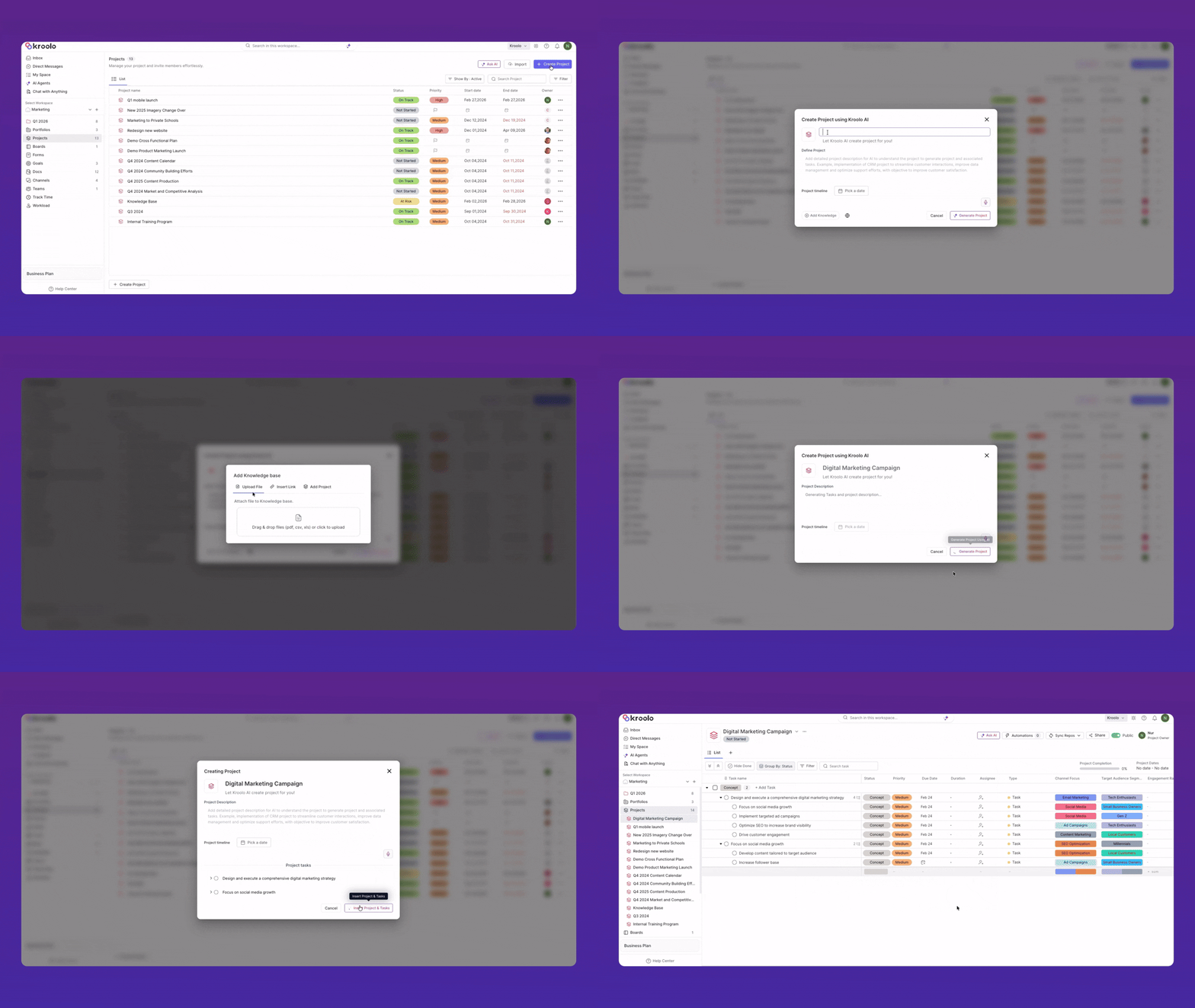
Project setup is traditionally manual and time-consuming.
Kroolo eliminates project creation using AI.
Describe your project, optionally attach knowledge, links, or references — and Kroolo generates:
You can refine, regenerate, rearrange, and finalize — all within seconds. Instead of spending hours building task hierarchies, you move straight into execution.
For Technical Leads, this means faster sprint planning and immediate operational readiness.
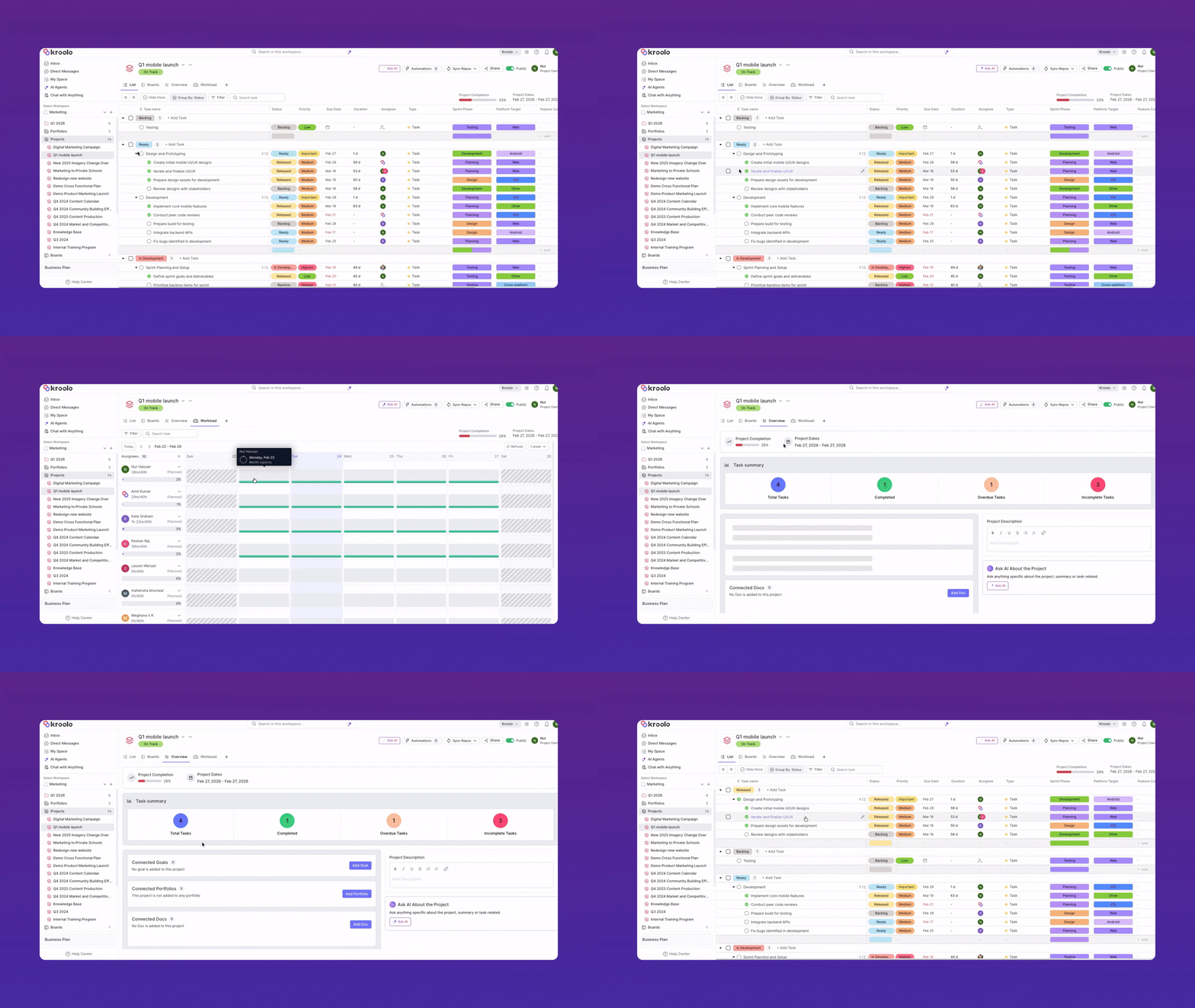
Status tracking shouldn’t require manual filtering.
With AI-powered project updates, you can instantly ask:
Kroolo scans the project and delivers a concise summary based on selected criteria — time range, task type, assignee, or status.
No spreadsheets. No report building. No dashboard drilling. Just instant visibility.
One of the biggest hidden causes of system lag isn’t slow task loading.
It’s context switching between tools.
That workflow may not show a loading spinner — but it creates operational lag.
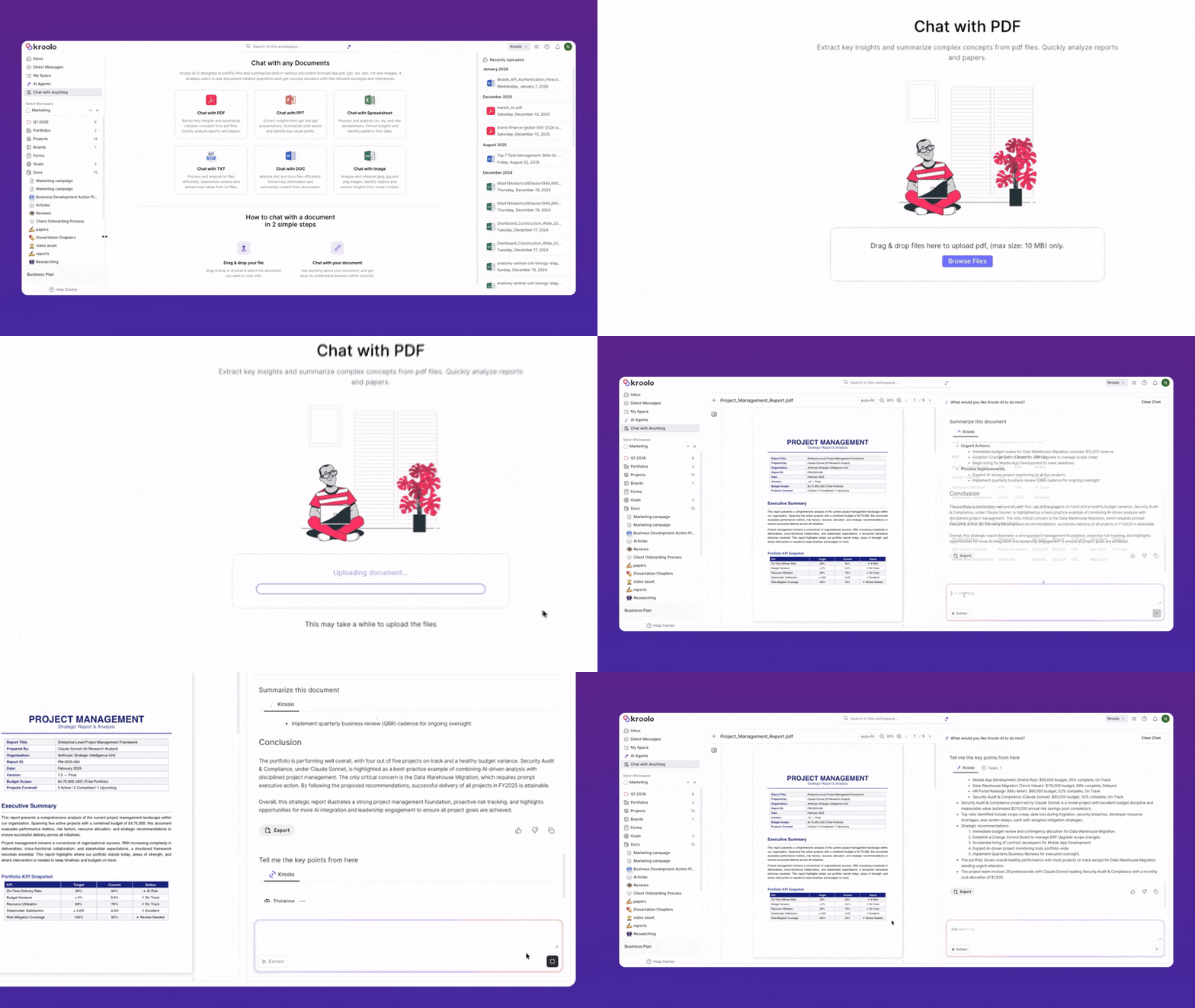
With Chat with Anything, Kroolo removes that friction entirely.
You can upload and interact with:
✅ PDFs
✅ Word documents
✅ Text files
✅ PPT
✅ Image
Instead of manually reviewing documents, you simply ask -> “Summarize this document.” OR “Extract all action items.” OR “What deadlines are mentioned?” OR “Highlight key risks.”
Kroolo scans the file instantly and delivers clear, structured answers — inside the same workspace. You can even highlight specific sections and ask targeted questions without leaving the system.
A fast-growing SaaS company was managing projects inside ClickUp.
In the early days, the platform worked well. But as the team scaled — more projects, more automations, more reporting — performance began to slow down.
Nothing crashed. But everything felt delayed.
Sprint boards hesitated. Dashboards lagged. Bulk updates froze mid-action. Over time, the friction compounded — longer planning sessions, slower standups, and reduced developer focus.
The issue wasn’t feature gaps. It was system lag affecting execution speed. To restore velocity, the team moved to Kroolo.
Earlier, sprint planning required manual setup. Leads had to create tasks individually, structure epics, configure workflows, and build dashboards from scratch.
The process was structured — but time-consuming.
With Kroolo, planning became dramatically simpler. Instead of assembling everything step by step, they could describe the outcome they wanted, and the system generated the structure instantly.
They were now able to:
What once required hours of coordination now took minutes.
As projects grew more complex, maintaining clarity became harder. Managers spent valuable time verifying status updates and cross-checking data.
With Kroolo, visibility became immediate and proactive with Kanban, List or Gantt chart.
Instead of searching through filters and views, leaders could instantly understand:
AI-powered summaries replaced manual reporting. Meetings became shorter. Decisions became faster.
As the organization matured, operational needs expanded. They required advanced workflows, automation, risk tracking, financial oversight, and multiple project views.
Previously, adding complexity increased lag.
With Kroolo, the system handled growth without slowing down. Even with structured workflows and detailed reporting, performance remained stable.
The team could confidently implement:
Within two sprint cycles, execution improved across the board. Planning accelerated, rollover tasks reduced, and blockers were resolved faster.
But the most noticeable shift wasn’t just operational. It was momentum.
The team no longer waited for boards to load or dashboards to respond. They focused entirely on building and delivering.
Conclusion
System lag isn’t a small inconvenience — it’s a silent productivity killer. When your boards take seconds to load and your team constantly waits on tools, momentum slows, focus breaks, and delivery suffers.
Fixing it isn’t about adding more features. It’s about choosing software built for speed at its core — not patched for performance later.
Legacy tools often struggle under growing complexity. Modern, AI-native platforms like Kroolo are designed to scale without slowing you down.
Your team isn’t slow. Your software is.
Stop waiting for your software to catch up to your team’s ideas. Experience instant project management — with no seat minimums and zero lag.
Sign up for free and feel the difference today.