
Feb 23, 2026
-
By Ivan
“Is your software actually intelligent, or is it just wearing an AI mask?”
Most of the tools your teams use today — Monday, Notion, ClickUp, Asana — were built in the 2010s.
When generative AI exploded in 2023, they responded the fastest way possible: by bolting a chatbot onto a decade-old architecture.
The result? A shiny AI sidebar that can summarize text but can’t fundamentally change how work gets done. In 2026, this divide becomes mission-critical. There is a profound difference between a tool that has AI and a tool that is AI.
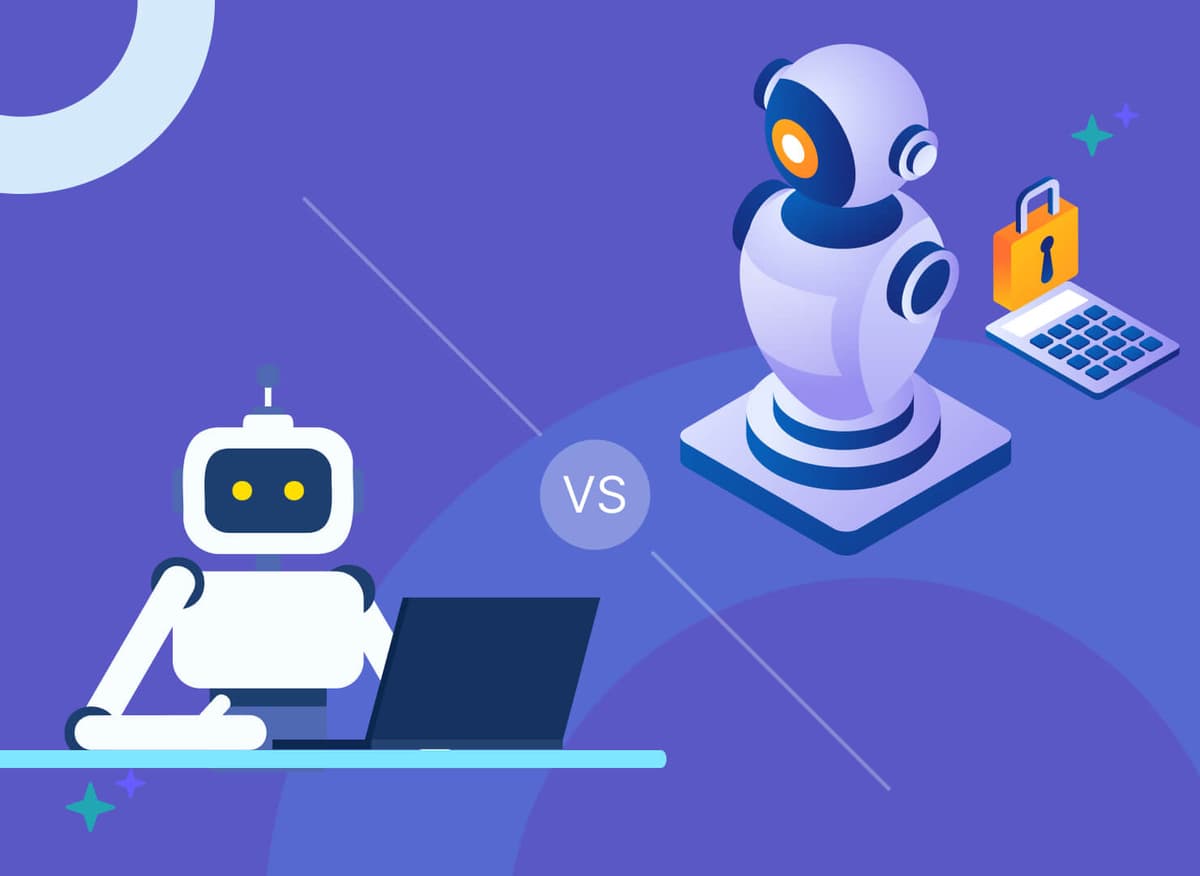
AI-enabled tools are assistive. They help you with paraphrasing, summarizing, or generating formulas — but the user still performs 90% of the actual work. AI-native systems are agentic. They perform work, automate processes, execute tasks, and unify the organization under a single intelligence layer.
This architectural difference determines which companies accelerate into the future — and which remain stuck in manual, fragmented workflows.
An AI-enabled tool is a legacy platform that adds AI features on top of an existing database or interface.
These tools provide assistive functions like summarizing content, generating text, or suggesting formulas, but they do not automate workflows or unify data. Users still perform nearly all manual setup, configuration, and execution.
AI-enabled tools create a false sense of innovation.
They add:
But underneath the surface, the core architecture hasn’t changed.
Slack is still chat. Notion is still documentation. Monday is still boards.
AI is decorative, not operational. This leads to a fragmented, multi-tool experience where users are doing the heavy lifting while paying an AI premium for features that don’t materially change execution velocity.
An AI-Native WorkOS is built from the ground up with AI as its core interaction layer. Instead of bolting features on top, AI orchestrates tasks, automates workflows, processes documents, and performs execution autonomously. It unifies chat, docs, and project operations into one agentic system that acts, reasons, and generates work, not just content.
According to Gartner's Technology Impact on Future of Work report, 82% of workers will require new skills by 2025, yet their core productivity tools remain rooted in pre-AI interaction models. Organizations face compounding Architectural Technical Debt:
The result is what Forrester research identifies as "innovation theater"—visible AI features that generate headlines without fundamentally changing how work gets done.
Teams pay premium prices for tools that feel futuristic but operate identically to their 2015 counterparts, just with a ChatGPT-style interface tucked in the corner.
AI-Native architecture reduces administrative overhead, eliminates manual configuration, and consolidates fragmented tools into one intelligence layer. It increases engineering and operational velocity by enabling systems to execute tasks autonomously, not merely assist humans. This leads to significantly faster execution, lower costs, and a more unified organizational workflow.
For CTOs and Product Heads, AI-Native systems unlock:
In contrast, AI-enabled tools create more tabs, more fragmentation, more manual oversight, more configuration debt, and more “AI-tax” without efficiency gains. In 2026, sticking with AI-enabled tools is not a neutral choice — it is a strategic liability.

AI-Native WorkOS architecture uses intelligence as the foundational operating system, allowing software to act as an "agent" that executes tasks autonomously.
Unlike AI-enabled tools that require human prompts for every small step, AI-native systems process unstructured data (like PDFs or chats) and transform them into structured workflows (tasks, docs, and projects) instantly.
For a CTO or Head of Product, the distinction is purely architectural. AI-enabled tools are reactive; AI-native systems are proactive.
|
|
|
|
|
|
|
|
|
|
|
|
|
|
|
|
|
|
|
|
|
|
|
|
As Gartner’s 2026 Strategic Technology Trends point out, the rise of "agentic AI" means that software is now capable of meeting goals autonomously.
Companies stuck with "assistive" bolt-ons will face significant performance latency compared to those utilizing a unified, agentic WorkOS.
When Rahul, a Technical Lead at a growing SaaS company, was asked to spin up a new platform initiative, he did what most modern teams do—he turned to an AI-enabled work tool.
He typed a clear prompt describing the project scope. Within seconds, the AI responded with a neat list of tasks. And then the real work began.
The tool gave Rahul a starting point—but not a project.
What he received was a flat list of around 50 loosely defined tasks. No structure. No dependencies. No sequencing. No technical context.
To make it usable, Rahul had to:
What was supposed to “save time” still took over an hour of careful setup—and required deep context only he had. The AI had helped generate text, but Rahul was still doing the thinking, the structuring, and the orchestration.
That’s when he realized the difference between AI-assisted and AI-native.
For the next initiative, Rahul used Kroolo. Instead of asking for a task list, he gave a single instruction:
“Create a backend-heavy project for a real-time analytics feature with API development, data pipelines, frontend integration, QA, and deployment.”
That was it. Within about 10 seconds, Kroolo’s Prompt-to-Project agent built the entire execution layer.
Not just tasks—but a working project.
The system created a structured project board with clear workstreams for backend, frontend, QA, and infrastructure. Tasks weren’t generic—they were technically specific, scoped properly, and sequenced logically.
Kroolo also drafted Technical documentation outlining system components, milestones aligned to delivery phases and acceptance criteria based on common engineering standards. Rahul didn’t have to translate intent into structure. The system already understood how technical work flows.
In the AI-enabled tool, Rahul was acting as the human compiler—turning AI output into something usable. In Kroolo, the AI did that work.
Instead of spending his time organizing tasks, Rahul focused on higher-value decisions:
Project setup time dropped from over an hour to seconds. But more importantly, execution started cleaner—with fewer downstream corrections.
The difference wasn’t better prompts. It was architecture. Kroolo wasn’t generating a list—it was generating a project.
Because projects, tasks, docs, and dependencies all live in the same AI-native system, Kroolo understood relationships, sequencing, and execution context by default. There was no handoff between “AI output” and “human setup.”
The AI didn’t assist Rahul. It executed alongside him.
What changed wasn’t just speed—it was role clarity.
Rahul stopped being the bottleneck for project setup. The team started execution with clarity from day one. Planning felt less like admin work and more like strategy. This is the quiet but powerful shift Kroolo enables.
Conclusion
The "Great Rationalization" of 2026 demands a move to AI-native consolidation. The era of the fragmented, manual stack is over. If your tools aren't actively processing data and executing work for you, they are holding you back.
Adopting an AI-Native WorkOS like Kroolo is not just a tool upgrade; it is a strategic commitment to the future of automated, intelligent work. It is the only way to eliminate the "Toggle Tax" and ensure your organization stays ahead of the performance curve.
The First TRUE AI WorkOS is here. Don't get left behind in the fragmentation era—experience the power of a platform where AI is the core, not an add-on.
Sign Up for Free and start automating your entire workplace today.