
Mar 20, 2026
-
By Julia
“Hey, this feature is deployed.”
“QA approved the fix.”
“Moving this to Done.”
These messages happen in team chat every single day. But here’s the problem: the project board rarely reflects them.
Someone still has to open the project management tool, find the task, and manually update the status.
That tiny step is where modern teams lose massive amounts of productivity.
So the real question is:
Can AI automatically convert team conversations into real-time project updates?
Short answer: Yes—and that’s exactly where AI-native work systems are heading.
In most companies today, communication and execution live in separate tools:
When the team confirms progress in chat, that information rarely flows automatically into the project board.
The result is what many operations leaders call the “Sync Gap.”
The board becomes outdated within hours, and managers end up asking questions the team already answered.
Examples:
The answers already exist — in chat threads.
Switching between communication tools and project management tools is not just annoying — it’s a measurable productivity drain.
Research shows that Knowledge workers toggle between apps around 1,200 times per day. Employees spend nearly 4 hours every week simply reorienting after switching apps. And, importantly, frequent context switching can drain up to 40% of productive time.
For operations leaders managing distributed teams, this fragmentation creates operational fog:
Ironically, the information already exists — it’s just trapped in chat.
In most organizations today, work updates happen in chat, but accountability lives in a separate project tool.
This creates a workflow that looks simple on the surface but breaks down in practice.
A developer shares that the fix has been deployed.
QA confirms that testing is complete.
The manager acknowledges that the task is ready to move forward.
At this point, everyone in the conversation knows the task is finished.
But the project board doesn’t know that yet.
For the board to reflect reality, someone now needs to:
This step sounds small, but in fast-moving teams it is often skipped or delayed.
Not because people are careless — but because they immediately move on to the next task.
Even though the team has already confirmed the task is complete, the project board still shows it as “In Progress.”
Over time, more and more tasks fall into this state where the conversation reflects reality, but the board does not.
This is what many teams experience as the Sync Gap.
Because the board is outdated, managers and operations leaders lose confidence in it.
They begin asking questions like:
Ironically, the answers already exist — inside the chat thread.

This fragmented workflow creates a repetitive cycle:
Work happens → the team confirms progress in chat → someone needs to update the task manually → the update gets delayed → the board becomes outdated → leaders ask again → a status meeting is scheduled.
Multiply this across dozens of projects and hundreds of tasks, and the project board becomes something teams maintain reluctantly instead of relying on.
When communication and execution live in different tools, teams experience constant friction:
The result is administrative fatigue, where highly skilled engineers and project managers spend time reporting work instead of doing it.
For AI to automatically update task statuses from team conversations, one thing is critical: the conversation must happen within the context of the work.
In most organizations, discussions happen in chat tools while tasks live in separate project management platforms. This disconnect creates the sync gap—progress gets confirmed in chat, but the project board stays outdated.
Kroolo solves this with Context Channels—project-based chat spaces that exist directly inside the project workspace.
Because conversations happen where the work lives, Kroolo’s AI can understand the context of discussions and transform them into insights and actions.
What You Can Do with Context Channels
By bringing conversations into the project workspace, Context Channels provide the foundation for Kroolo’s AI to understand team discussions and connect them to real project activity—a key step toward automatically updating task statuses from chat.
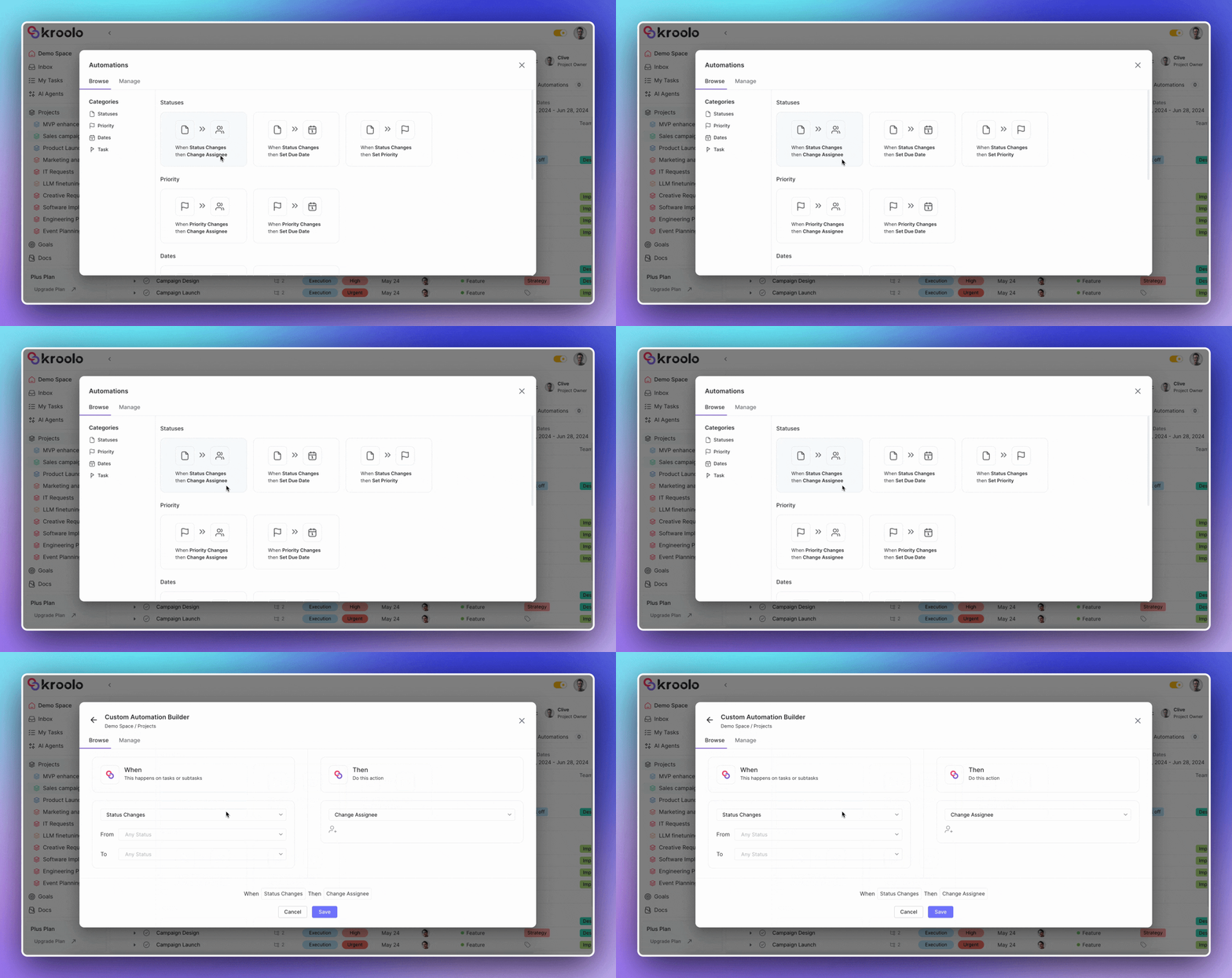
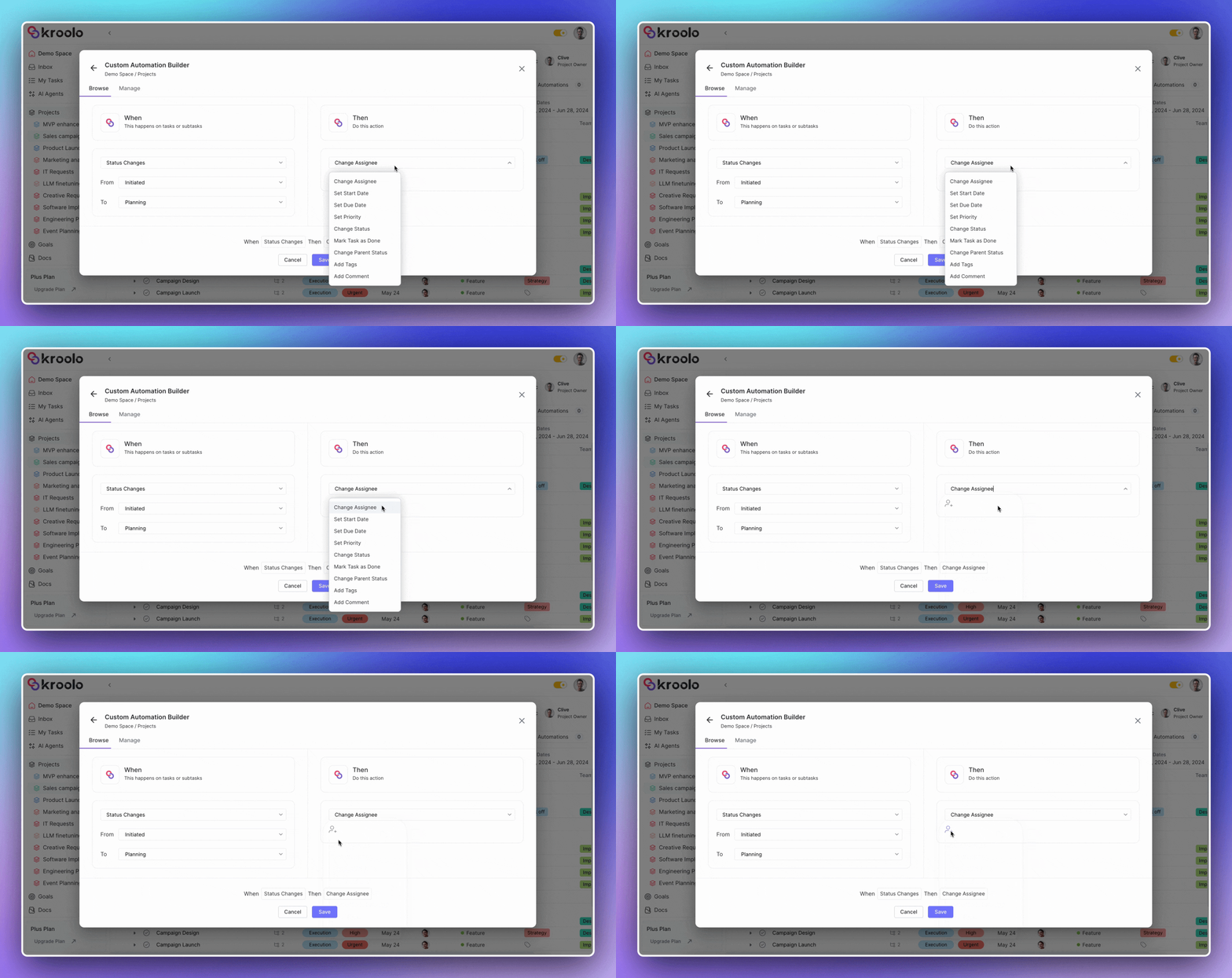
Even when teams confirm progress in chat, someone still needs to manually update statuses, reassign tasks, or trigger the next step in the workflow. This is where administrative work starts piling up.
Kroolo solves this with Project Automation, allowing teams to automate repetitive workflow actions so that project updates happen automatically.
Instead of relying on manual updates, teams can create automation rules that trigger actions whenever certain events occur within the project.
What You Can Automate in Projects
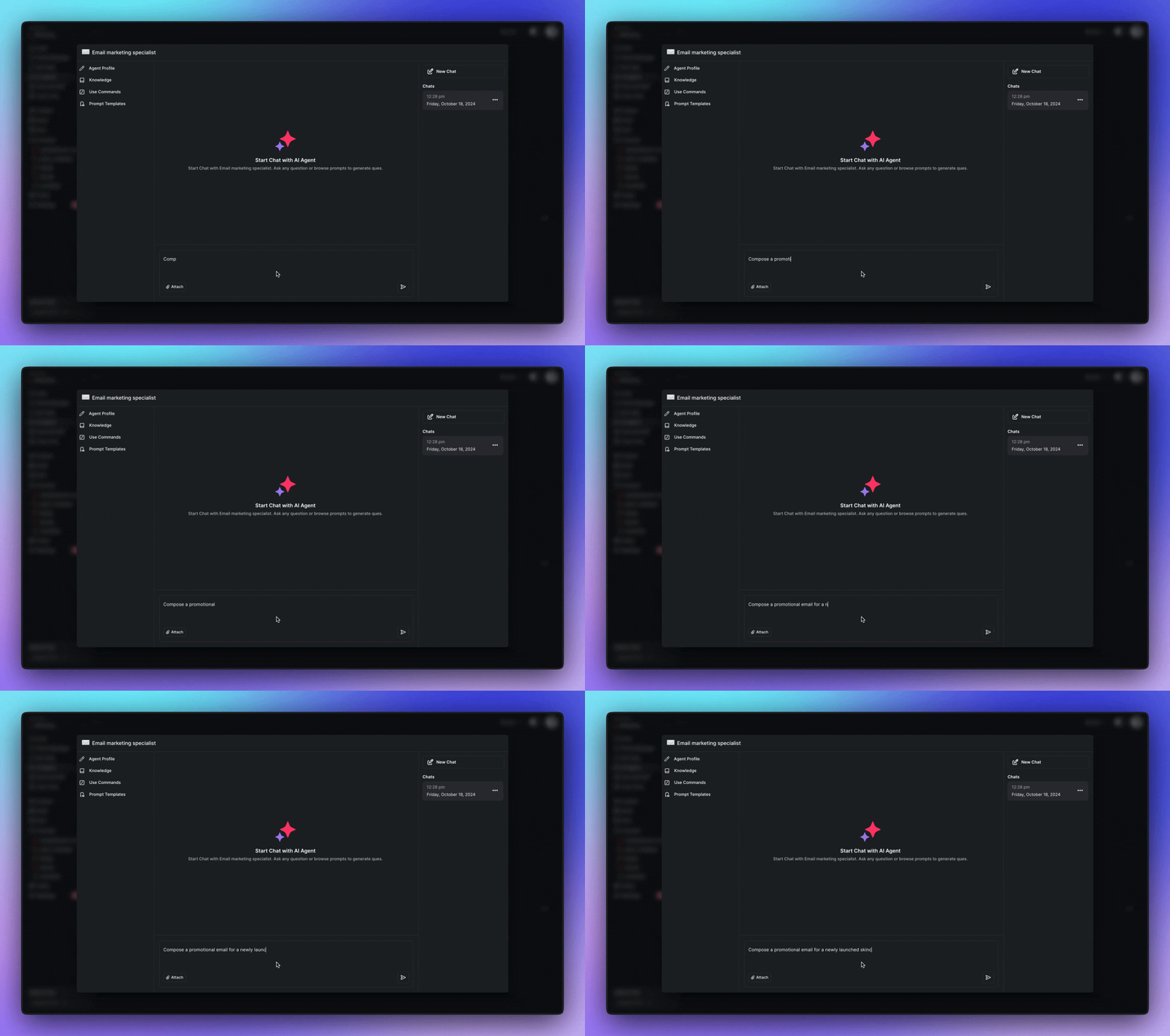
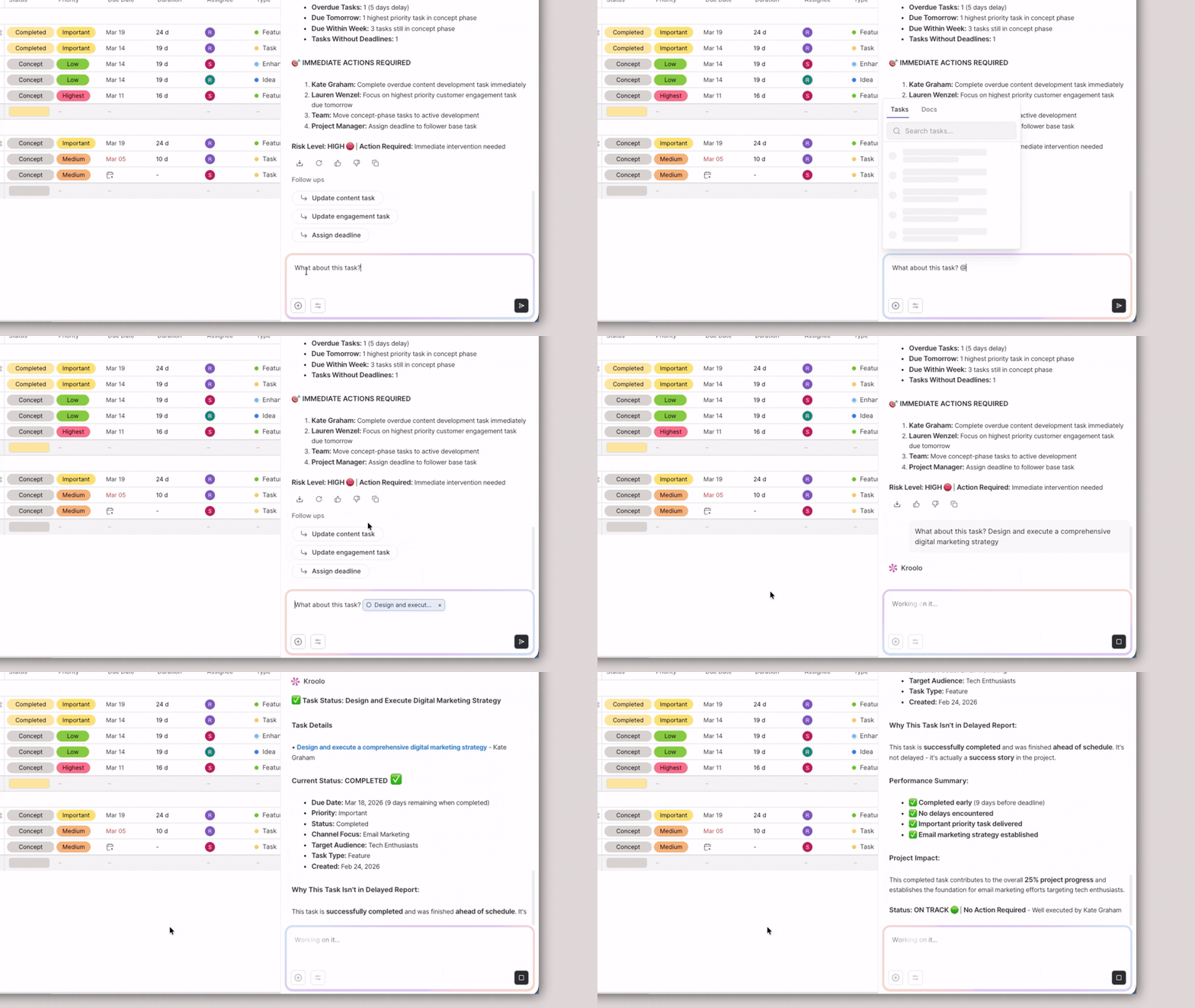
Keeping track of project progress often requires digging through dashboards, reports, or multiple tools. Kroolo simplifies this by allowing teams to interact directly with AI agents through chat.
With Chat in AI Agent, users can choose from prebuilt AI agent templates or create own agents tailored to specific operational needs.
What You Can Do with AI Agents
By allowing teams to interact with project data through AI-driven conversations, Kroolo makes it easier to retrieve insights, understand project progress, and support decision-making directly from chat.
This brings team closer to a workflow where AI actively supports and automates project operations.
Imagine a typical situation in a development team.
A developer finishes working on a bug fix and posts an update in the project channel:
“PR for the login fix is merged.”
In a traditional setup, this message would simply sit in a chat thread. The Lead PM would still need to open the project management tool, find the task, move it to Completed, and update the dashboard manually.
But inside Kroolo, the workflow looks very different.
Because the conversation happens inside the project’s Context Channel, Kroolo’s AI understands the context of the message. It recognizes that the pull request has been merged and that the task has effectively reached completion.
Instead of waiting for a manual update, the system automatically:
All of this happens instantly—without anyone leaving the conversation.
The result is a workflow where the team moves directly from discussion to delivery, without pausing to perform administrative updates.
This is the real promise of AI-native work management: when progress is confirmed in conversation, the system ensures that the project board reflects it automatically.
Conclusion
The real takeaway is simple: consolidation is the cure for the productivity paradox.
When chat and project management live in separate tools, teams waste time manually syncing updates, maintaining dashboards, and running status meetings just to confirm what was already discussed.
An AI-Native WorkOS changes that.
Instead of acting as a passive tracking system, it creates a Single Pane of AI—a workspace where conversations trigger insights, insights trigger actions, and workflows update automatically.
Kroolo unifies chat, project execution, and AI agents into one intelligent system so your project boards always reflect real progress.
Because your project management tool shouldn’t be a manual graveyard of outdated data.
The first TRUE AI WorkOS is here.
Reclaim your team’s focus and let AI handle the coordination.
Sign up for free and automate your first status update today.