
Business leaders, project managers, and startup founders face challenges in achieving more with less, leading to inefficiency, burnout, and reduced morale. The rise of remote teams further complicates these issues.
However, those adopting AI are gaining momentum by automating routine tasks, forecasting risks, and delivering results faster. AI agents, autonomous systems that automate workflows and optimize project delivery in real time, are reshaping business productivity.
Kroolo, an AI-powered project management platform, helps teams use powerful, customizable AI agents for digital transformation.
What Are AI Agents?
AI agents are advanced, autonomous software entities empowered with machine learning and reasoning capabilities. Unlike mere bots or basic automations, AI agents can observe, decide, and act independently according to dynamic business goals. They’re designed to:
- Analyze huge volumes of data, including historical records and real-time inputs
- Make context-driven decisions without human intervention
- Coordinate complex multi-step workflows across teams and tools
- Learn from outcomes to continually refine their strategies.
AI Agents vs. Traditional Automation
Here is a content breakdown of the comparison table between Traditional Automation and AI Agents, capturing the major differences in scope, adaptability, initiative, context awareness, and feedback or optimization:
|
|
|
|
|
|
|
|
|
|
|
|
|
|
|
|
|
|
|
|
|
|
|
|
This comparison highlights how AI agents provide a leap forward in intelligent automation, surpassing traditional rule-based systems in flexibility, initiative, contextual understanding, and self-optimization.
In project management, AI agents don’t just follow checklists—they can plan for delays, redistribute work, and flag new risks as they emerge.
How AI Agents Works in 2025
The core functionality of an AI agent involves perception, decision-making, and action:
1. Data Ingestion
AI agents gather and centralize data from emails, calendars, project trackers, chats, and documents, providing a unified project view that supports accurate decision-making and seamless automation across workflows.
2. Contextual Analysis
Advanced algorithms analyze inputs—deadlines, workloads, communications, project history—to extract actionable insights and trends. This ensures all decisions are context-aware and tailored to real team dynamics.
3. Autonomous Planning & Execution
Agents autonomously plan, reassign tasks, send intelligent reminders, and resolve bottlenecks. They execute tasks and sequences without constant supervision, transforming productivity with less human intervention.
4. Continuous Learning
AI agents continually update their knowledge base, learning from every completed cycle or new data input. This ongoing improvement results in smarter actions that align with evolving team goals.
What is Kroolo’s Approach to AI Agents
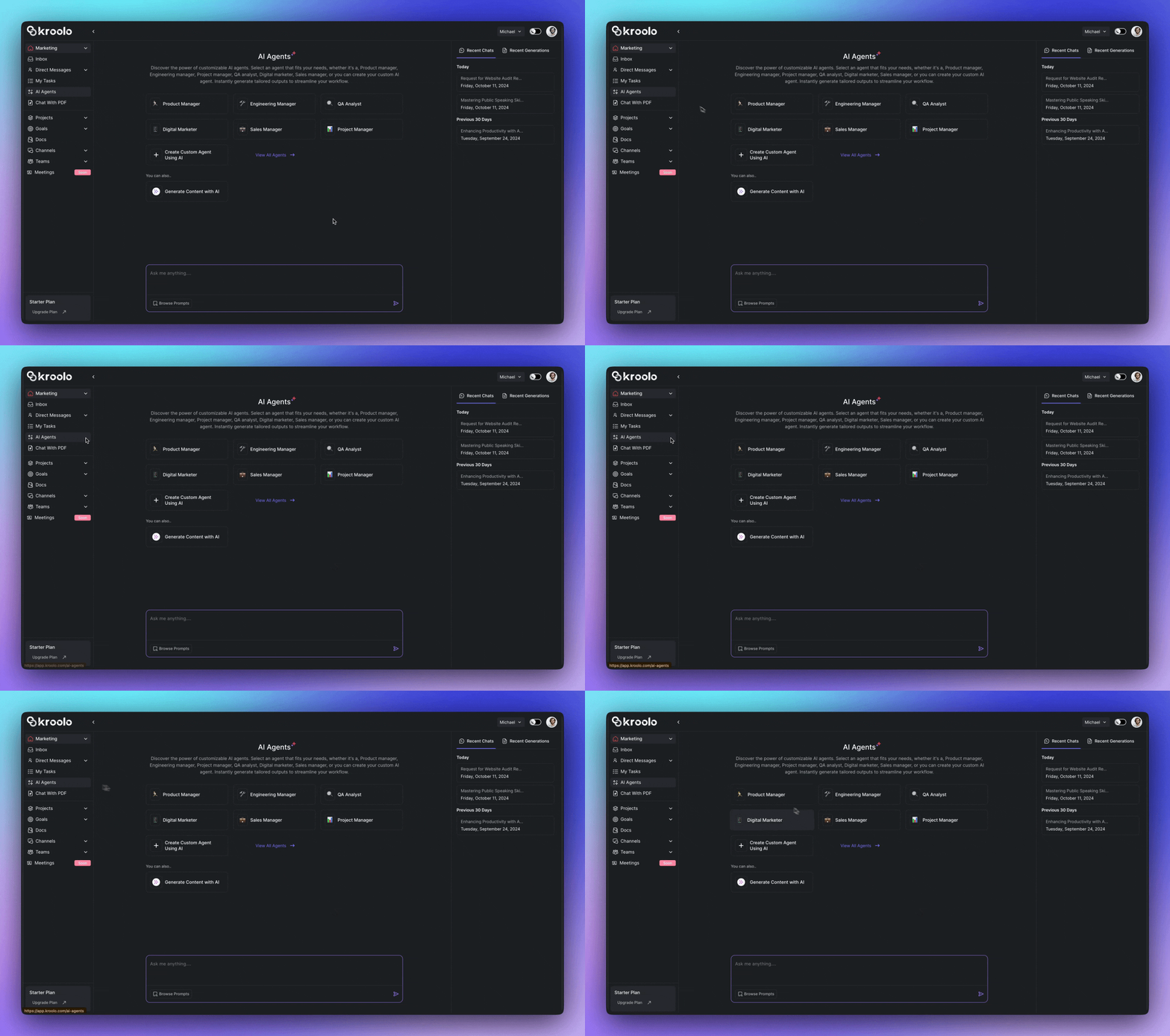
Kroolo’s AI-powered productivity platform leverages both pre-built and custom AI agents you can configure for your team’s unique needs. For example, AI agents span a range from simple assistance to advanced decision-making. Key types include:
1. Reactive Agents
Reactive agents respond instantly to changing events, like sending overdue reminders or escalating urgent issues, maintaining agile workflows without the burden of long-term planning or configuration.
2. Model-Based Agents
These agents use historical project models and environmental inputs to predict challenges, outcomes, and resource needs, enabling proactive, data-driven workflow adjustments within the organization.
3. Goal-Based Agents
Goal-based agents dynamically create and adapt action plans to reach objectives, reprioritizing and shifting resources as new constraints, deadlines, or targets emerge during project execution.
4. Learning Agents
Learning agents improve with every experience, optimizing task assignment, reporting, and risk identification by analyzing strategies that yield the most success across previous projects and team activities.
5. Collaborative Agents
Collaborative agents interact with other agents and team members, sharing insights, coordinating tasks, and automating document handling for improved alignment, communication, and productivity across projects
Key Features of an Kroolo AI Agent
Effective AI agents deliver a spectrum of capabilities essential for high-performing teams. Kroolo’s platform makes these features available—and customizable—out of the box.
1. Autonomous Task Execution
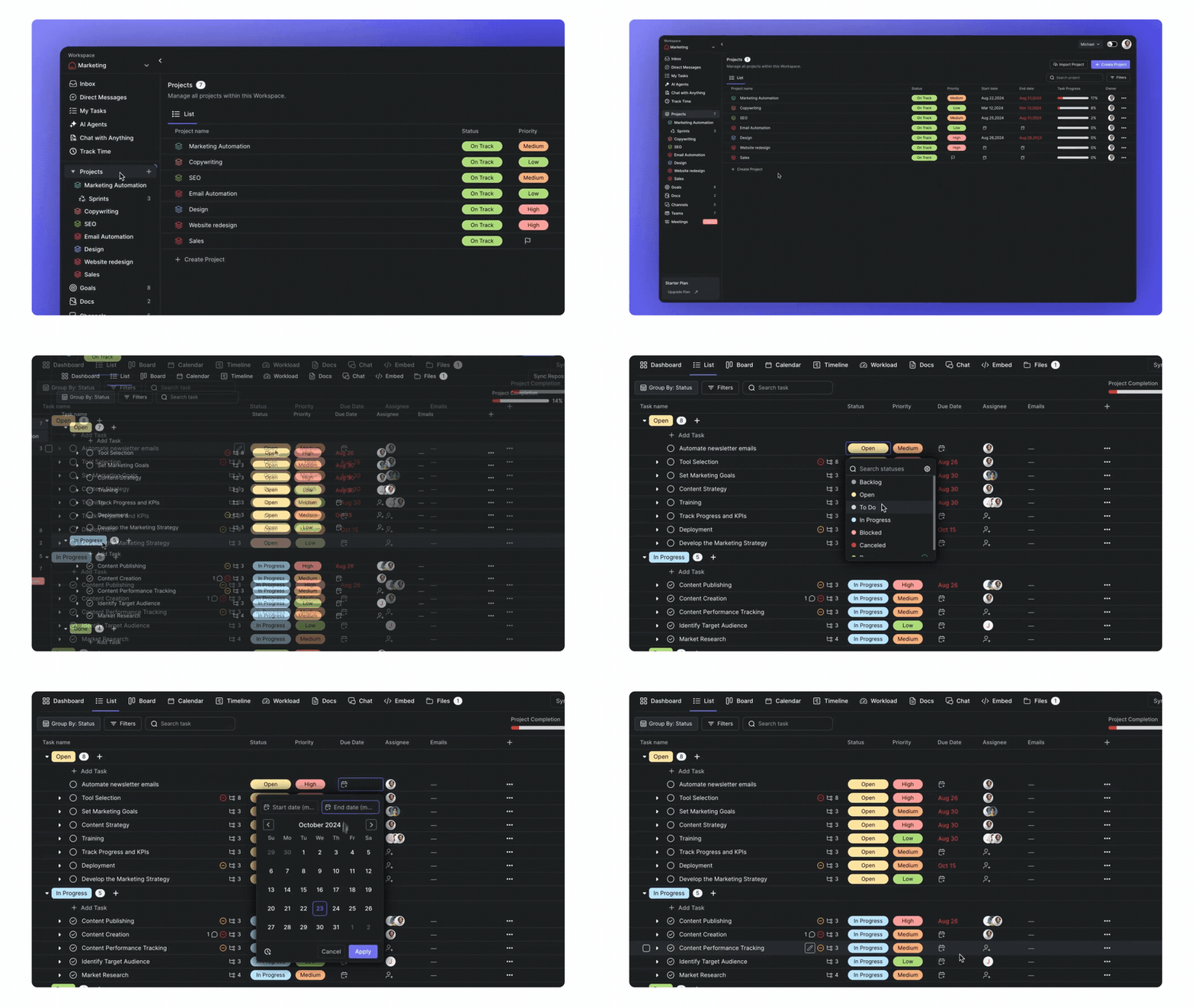
Kroolo AI agents automate task assignment, escalation, and closure; real-time dashboards track progress and ensure stakeholders are always updated without manual administrative effort.
2. Intelligent Content Generation
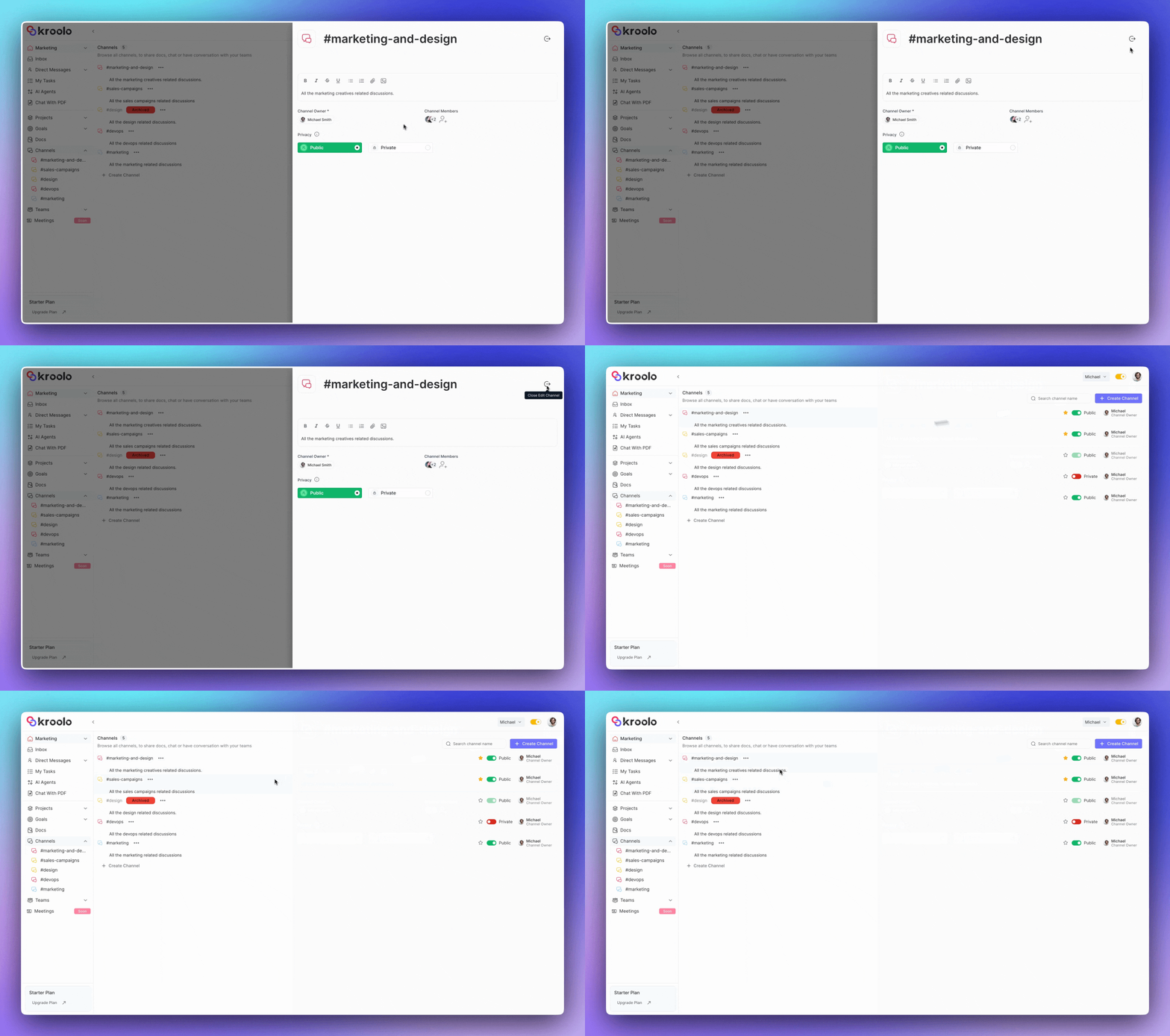 Create meeting notes, reports, proposals, and product descriptions instantly with AI, reducing time spent on documentation and allowing teams to focus on innovation and strategic work.
3. Customizability & Extensibility
Kroolo’s agents can be tailored to any workflow—HR, marketing, engineering, or finance—either by customizing pre-built templates or building new agents from scratch for specific departmental needs.
4. Multi-Model Flexibility
Built-in support for diverse AI models ensures Kroolo’s agents generate accurate, context-relevant responses for any business need, supporting highly reliable decision making and content production.
5. Integrated Tools & Ecosystem
Kroolo agents connect natively with popular apps—calendar, email, boards—creating unified automation workflows that streamline collaboration and eliminate silos across the organization.
6. Security and Governance
Critical business data processed by AI agents is encrypted, governed by access controls, and compliant with global privacy laws, ensuring safe handling and sharing both internally and externally.
7. Scalability
Whether managing one project or scaling across portfolios, Kroolo lets organizations deploy more agents seamlessly for expanded automation, without reinventing existing processes.
Use Cases for Kroolo AI Agents
Kroolo is designed to address real business problems by putting AI agents to work—where human teams need them most:
1. Automated Project Setup & Planning
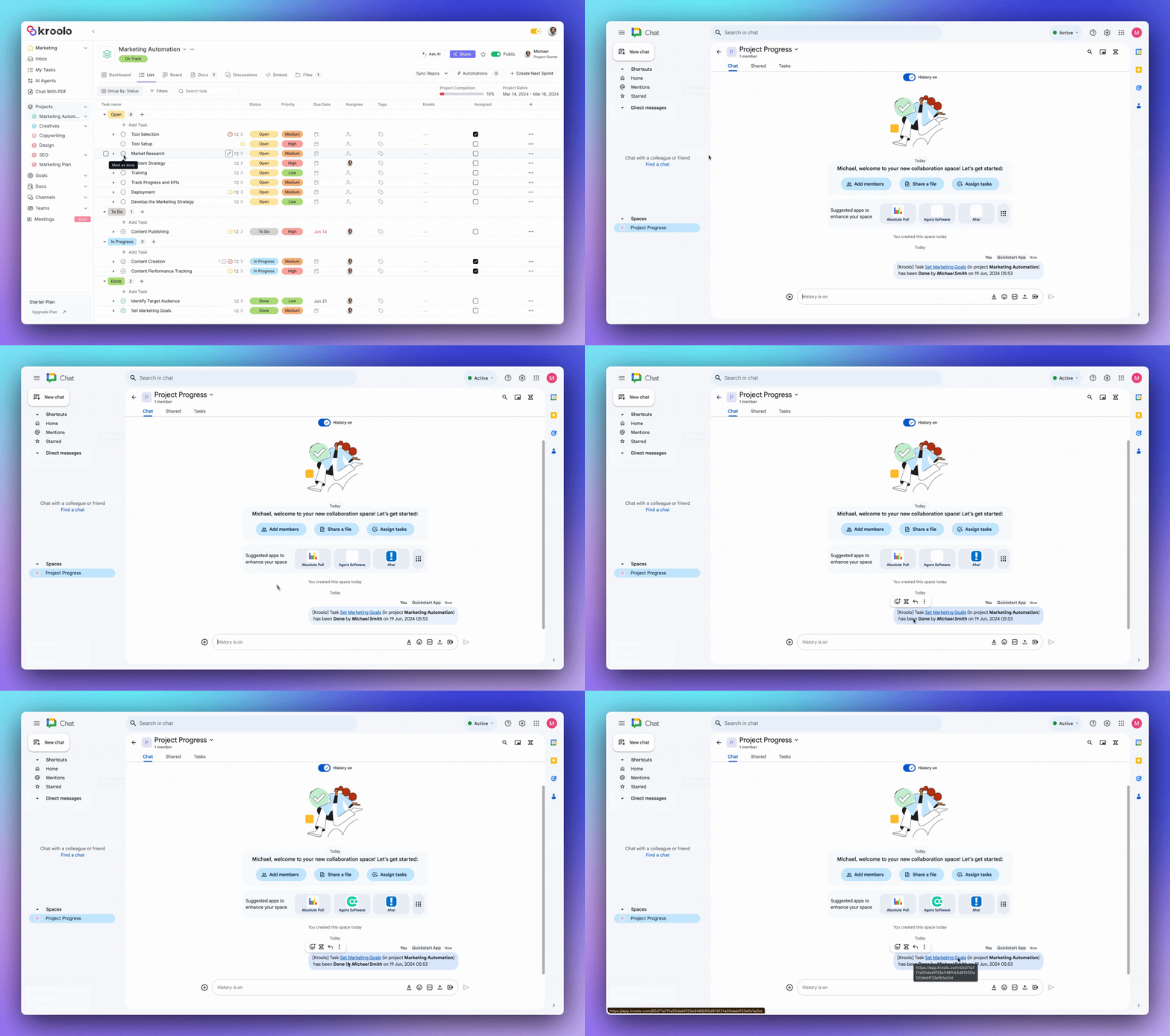 AI agents analyze previous projects and team data, proposing workflows, timelines, and goals to instantly kickstart any plan, saving valuable planning time and effort.
2. Smart Task Management & Prioritization
Agents proactively assign, reorganize, and reroute tasks based on deadlines, capacity, and team strengths, keeping work balanced and bottlenecks avoided in real time.
3. Intelligent Risk Monitoring
Kroolo’s agents track timelines, resource loads, and scope changes, flagging potential issues early and recommending interventions before risks materialize or escalate further.
4. Automated Communications
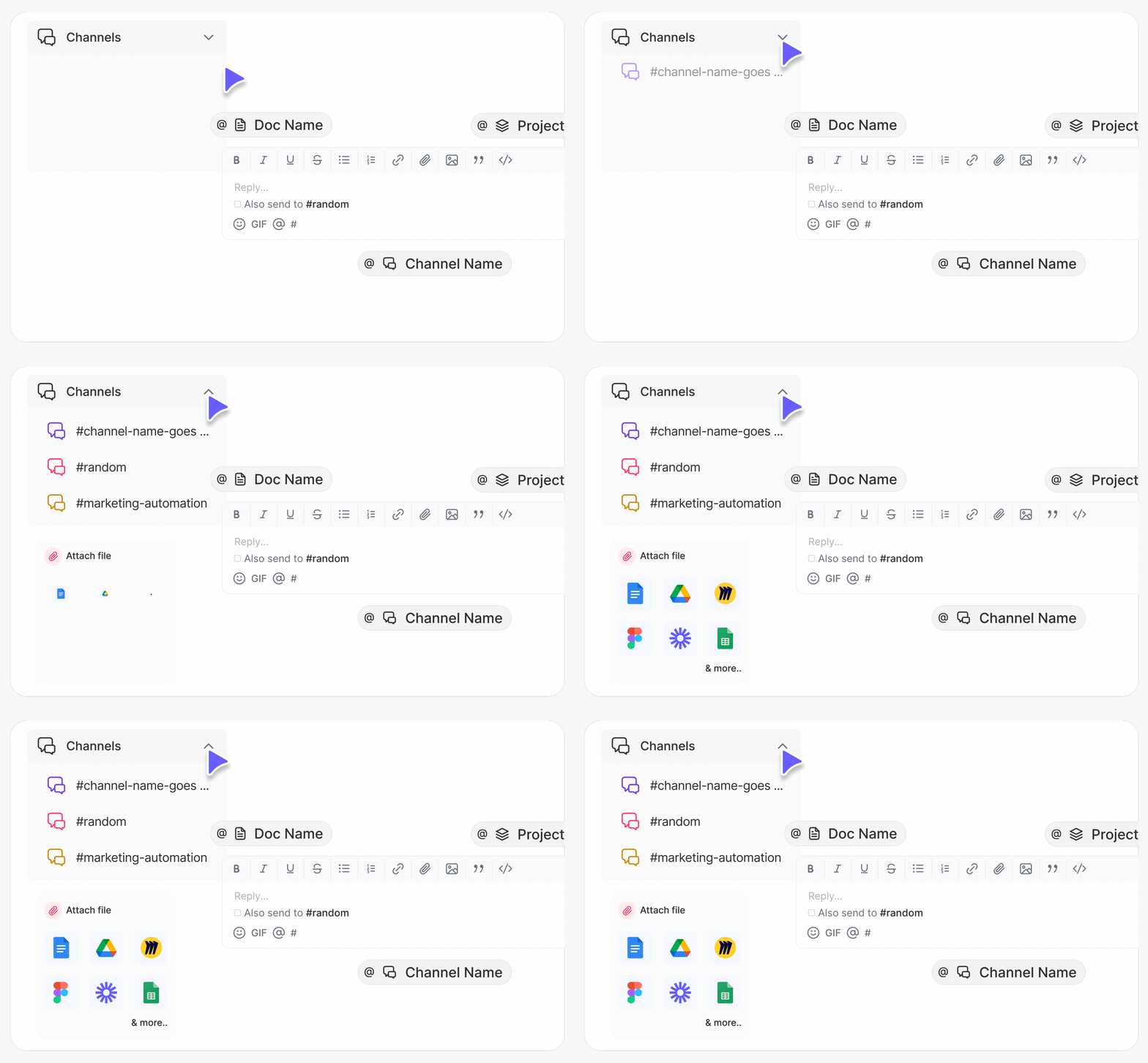
AI agents draft and distribute meeting notes, project updates, and stakeholder messages autonomously, ensuring timely information sharing across teams without manual effort.
5. Document Creation & Knowledge Management
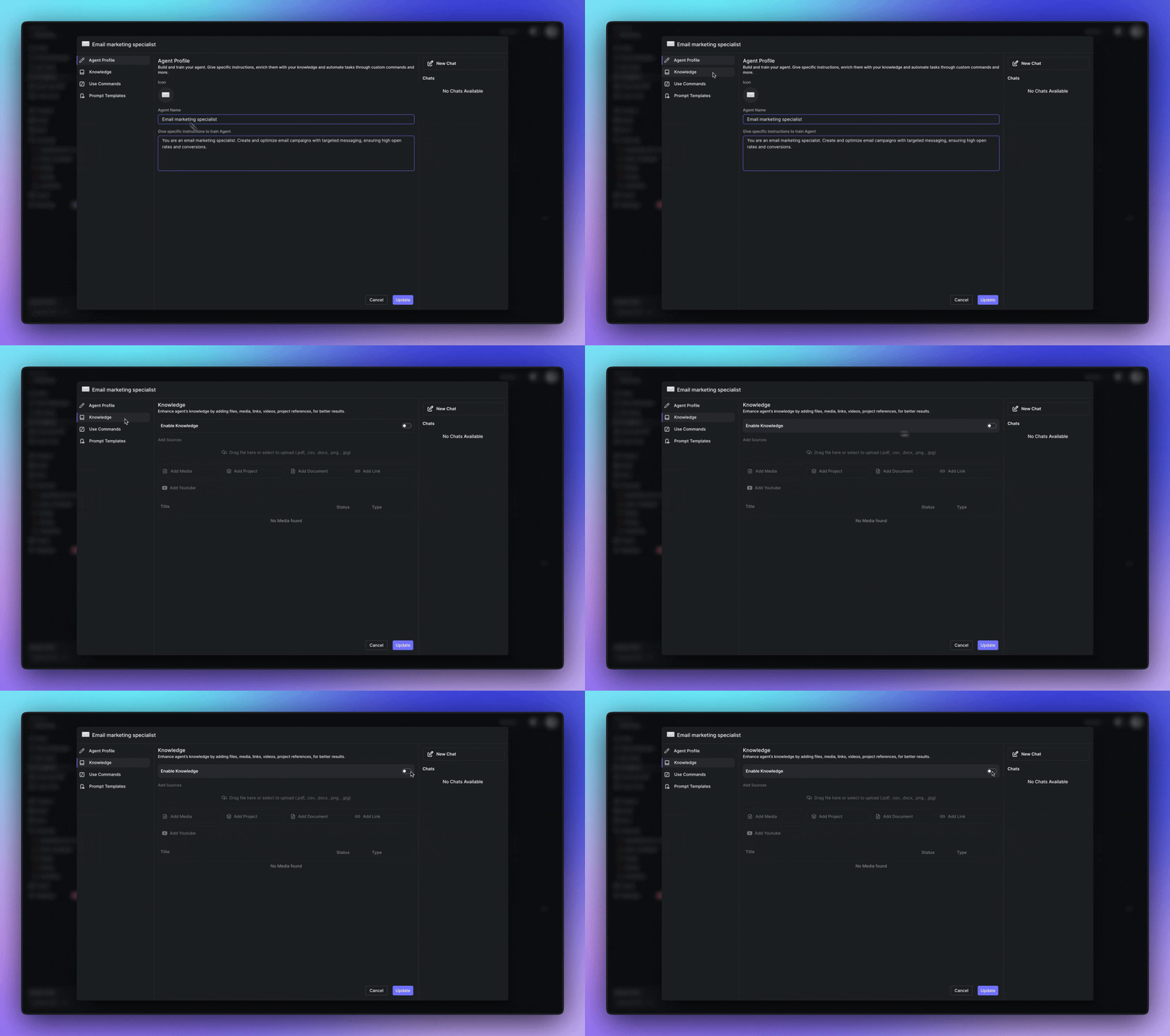
Agents instantly generate, summarize, and organize documents, making knowledge easily accessible, searchable, and actionable for distributed teams.
6. Optimized Resource Allocation
Kroolo’s agents dynamically assign resources to tasks using real-time analysis, keeping budgets and schedules optimized as project needs and team capacity shift.
7. Product Description & Marketing Automation
AI agents create, update, and refine product descriptions, ads, and listings, streamlining content delivery and keeping marketing materials accurate and engaging.
8. Knowledge Sharing Across Teams
Agents facilitate seamless sharing of updates, insights, and documentation to ensure alignment, better communication, and faster decision-making across different teams or departments.
Benefits of AI Agents
Adopting AI agents through platforms like Kroolo delivers strategic, measurable benefits:
1. Unmatched Productivity Gains
Automate repetitive tasks, freeing employees to innovate. Kroolo increases output, reduces burnout, and shortens delivery times to achieve higher team performance.
2. Advanced Risk Mitigation
AI agents proactively detect threats, delays, and budget risks using real-time data, enabling organizations to address problems early and maintain control.
3. Faster, Smarter Decision-Making
Agents instantly analyze complex data, providing timely, actionable, and optimized recommendations so teams can make better strategic decisions quickly.
4. Enhanced Collaboration
AI agents automate communications, organize meetings, and centralize updates to build transparency, strong engagement, and teamwork across silos.
5. Cost and Resource Optimization
Kroolo’s agents allocate staff, budgets, and resources according to priority, minimizing waste and maximizing business value for every project.
6. Scalability
As business needs expand, more AI agents can be deployed, enabling organizations to automate additional workflows and scale efficiently without retraining teams.
What are the Risks & Limitations
AI agents are powerful, but mindful adoption matters. Here are key risks:
1. Data Quality Issues
AI agent effectiveness depends on good data. Regular audits ensure information accuracy for high-quality automation and reliable recommendations.
2. Over-Automation Trap
Excess reliance on automation can reduce team creativity and context awareness; human checkpoints prevent losing strategic insight and critical judgment.
3. Security and Privacy Concerns
Protecting sensitive business data is essential. Kroolo enforces strict permissions and secure encryption for safe agent operations and sharing.
4. Bias and Algorithmic Errors
Agents may inherit biases from historical data. Ongoing review and retraining maintain fairness and accurate decision-making.
5. Change Management Resistance
Human teams may initially resist automation; transparent communication and ongoing training facilitate smoother adoption and acceptance of AI agents.
6. System Integration Challenges
Legacy tools may not integrate easily, but Kroolo’s ecosystem supports smooth agent connections and adapts to existing business infrastructure
