

Mar 09, 2026
-
By Clive
Stop Reading Your Documents. Start Interviewing Them.
Every organization has it.
A massive archive of PDFs, contracts, RFPs, research reports, SOPs, and technical manuals sitting quietly inside folders. Thousands of pages of valuable knowledge — yet practically invisible when you actually need it.
This is what many teams unknowingly create: an Information Burial Ground.
The knowledge exists. But accessing it takes hours.So teams scroll. Search. Re-search. Open the same document five times. Ask colleagues. Schedule meetings. And by the time they find the answer, the momentum of the decision is already gone.
In 2026, the smartest companies have realized something powerful: You shouldn't have to read your documents anymore. You should be able to talk to them.
Modern knowledge workers are drowning in documentation. Reports, research files, compliance manuals, design specs, strategy decks, vendor contracts — information is growing faster than our ability to process it.
And the data shows how costly this problem has become.
Knowledge workers spend 1.8 hours every day searching for information they need to do their jobs. And, some studies estimate this reaches 2.5 hours per day — nearly 30% of the workday.
Employees can lose 4.5 hours per week simply looking for files they’ve already seen before. This is not just inefficiency. It's Static Data Debt.
Companies invest enormous resources creating knowledge — but retrieving that knowledge remains painfully manual.
The result? Teams operate with context blindness. Decisions are made without the full picture because finding the full picture takes too long.
Most organizations rely on one simple tool to navigate documents:
Keyword search.
But keyword search was built for a different era.
It doesn't understand context.
It doesn't interpret meaning.
It doesn't connect insights across documents.
If you're searching a 120-page contract for:
“What are the penalties if the vendor misses the delivery timeline?”
Keyword search forces you to guess:
You scroll. You skim. You still miss the answer. This isn't knowledge management. It's digital archaeology.
Now imagine something different.
Instead of digging through documents, you simply ask:
And your document answers. Instantly.
With context.
With citations.
With the exact paragraph the insight came from.
This is the new paradigm: Conversational Knowledge. Your documents stop behaving like static files. They behave like experts you can interview.
With Kroolo, you can interact with both documents and project data through AI-powered conversations — making it easier to find answers, understand context, and move work forward faster.
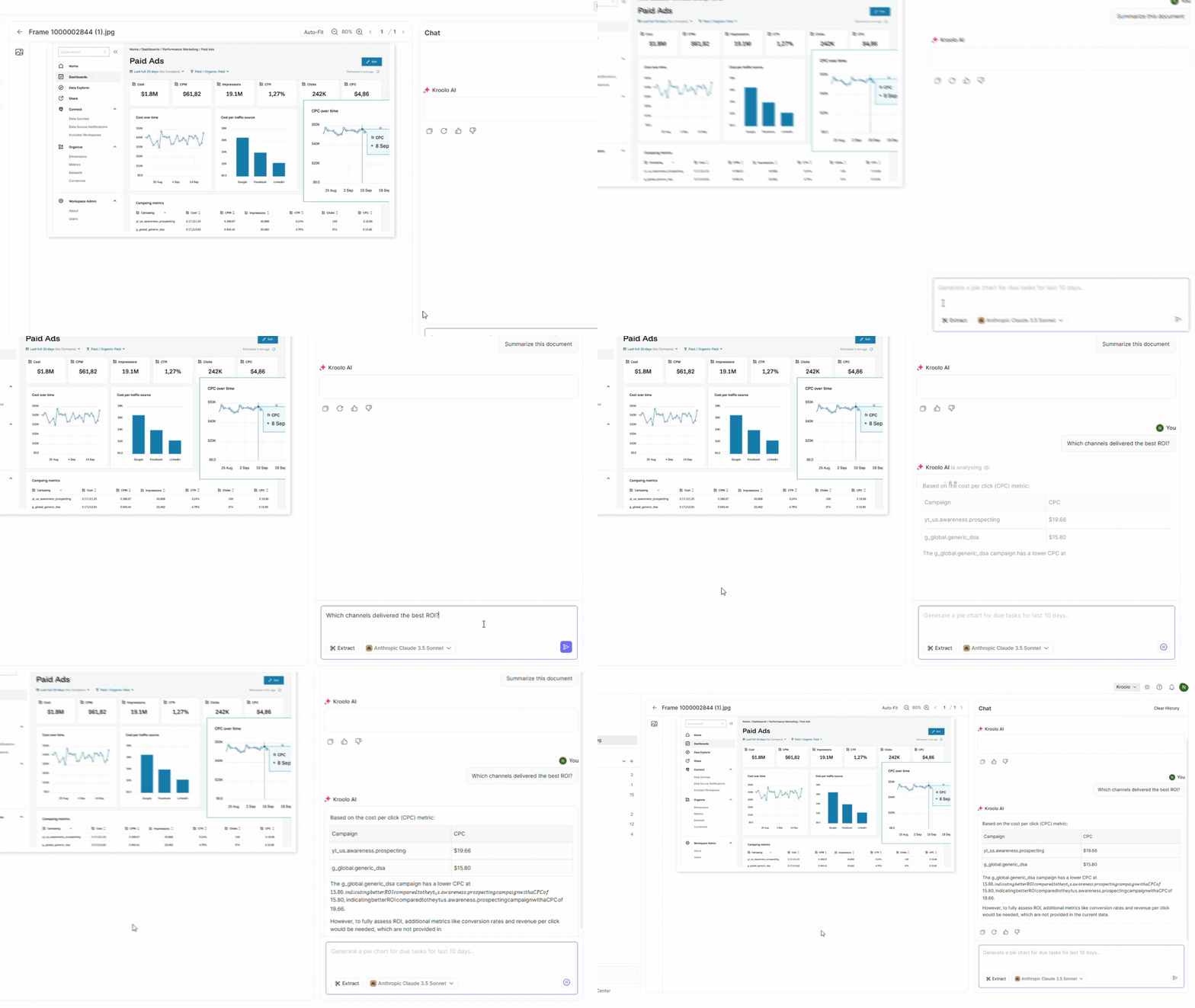
Most business knowledge lives inside documents — long PDFs, technical manuals, RFPs, contracts, research reports, and presentations.
While these documents contain valuable insights, accessing the right information at the right time often requires manually scanning dozens of pages.
Chat with Anything changes how teams interact with documentation.
Instead of reading through entire files to find one specific answer, Kroolo allows you to ask questions directly to your documents and receive clear, contextual responses instantly.
You can upload a variety of document types, including:
Each document can be up to 100 pages, and once uploaded, it becomes part of a conversational knowledge base.
Users can ask questions like:
Kroolo analyzes the document and returns concise answers with relevant excerpts and citations, ensuring users understand both the answer and the context behind it.
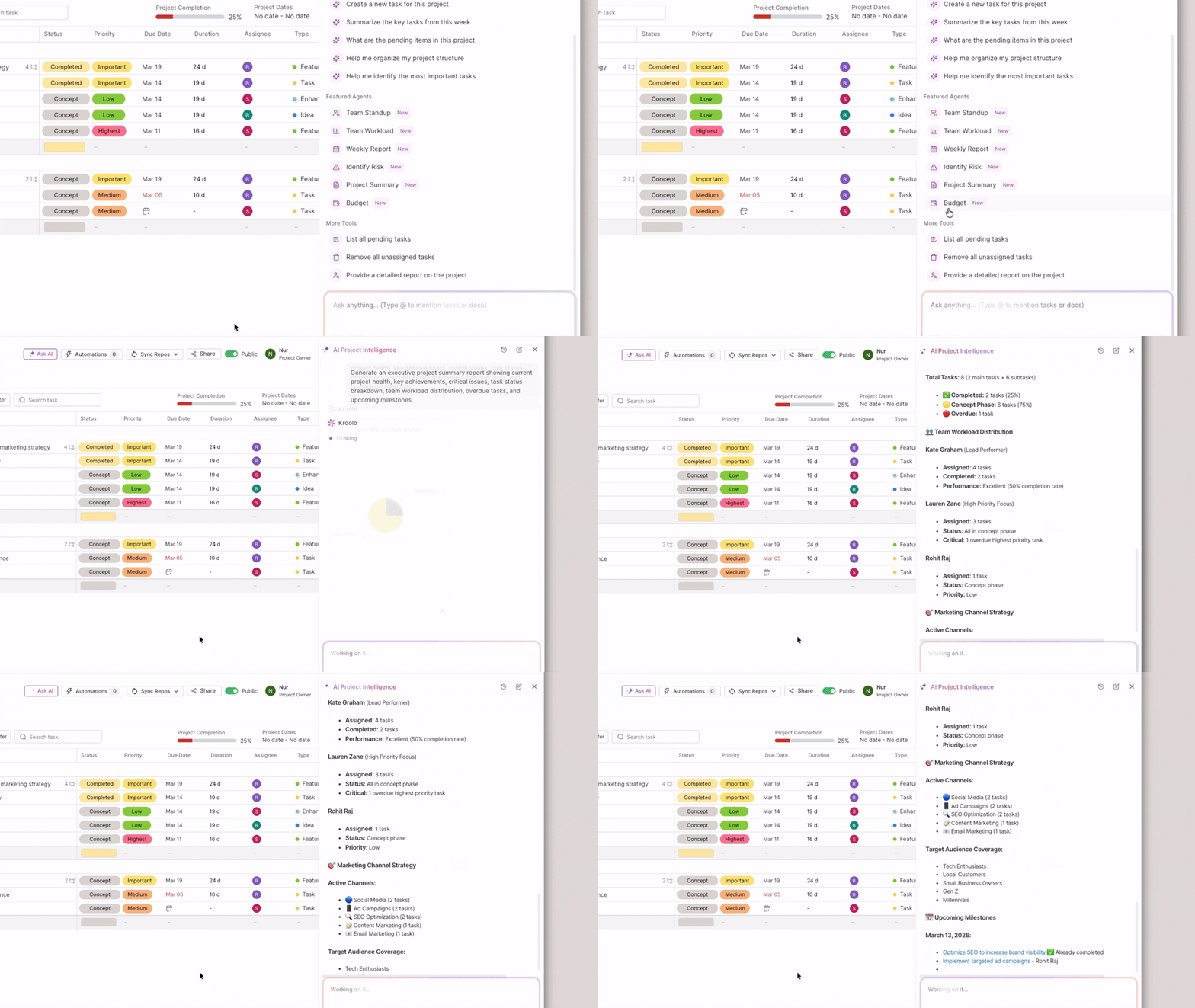
While documents contain critical knowledge, project teams also need quick access to real-time operational insights — such as team workloads, task progress, and project updates.
Ask AI enables teams to interact with their project data conversationally, making it easier to understand complex project information without navigating multiple dashboards or reports.
With Ask AI, users can ask questions and receive structured responses in both text and visual formats, including charts and summaries that simplify decision-making.
Key capabilities include:
A) Text and Visual Insights
Users can ask questions about project performance and receive answers in clear text summaries or visual charts, making insights easier to interpret and share.
B) Search Across Project Data
Ask AI allows users to analyze specific project data, such as team workloads, timelines, progress updates, and task dependencies.
C) Task-Level Insights with @Mentions
Users can simply @mention a task within the chat interface to instantly retrieve task details, updates, and relevant context.
D) Preconfigured AI Agents for Project Intelligence
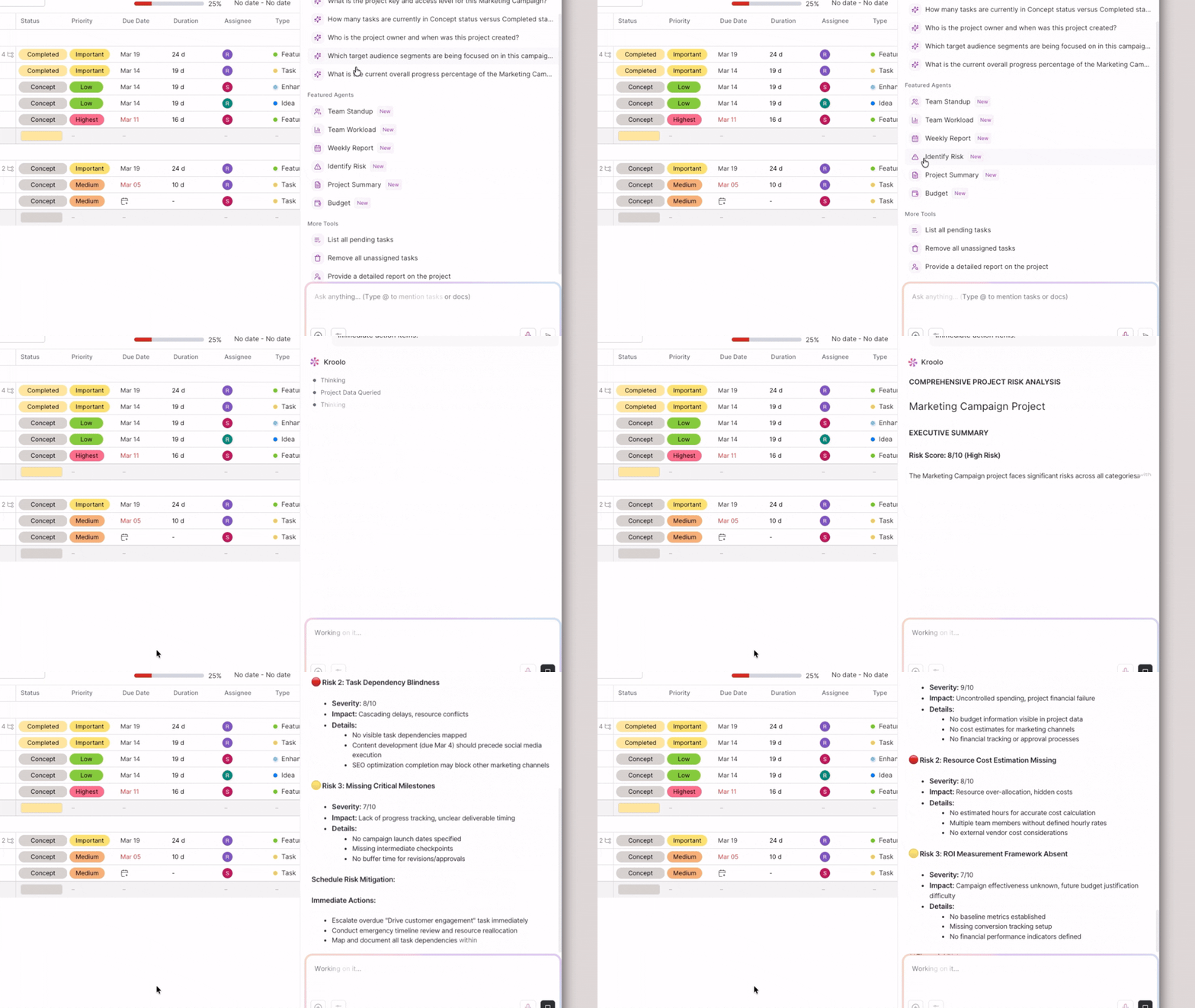
Kroolo includes built-in AI agents that automatically generate insights from project data, such as:
E) Export AI Insights
Users can easily export AI-generated responses and reports, making it simple to share updates with stakeholders and leadership teams.
F) Turn Insights into Action
Ask AI also enables teams to take direct actions from the chat interface, such as:
This ensures insights are not just informative but also immediately actionable.
Together, Chat with Anything and Ask AI transform Kroolo into a conversational workspace where both documents and project data can be queried, analyzed, and acted upon instantly.

What normally takes hours of manual reading can now be done in minutes. Here’s how Kroolo helps a Product Manager uncover key insights from a lengthy report instantly.
A Product Manager receives a detailed 80-page competitor analysis report from the strategy team. The document contains technical breakdowns, feature comparisons, and vulnerability assessments.
While the report is valuable, the information is spread across dozens of pages, making it difficult to quickly identify the most important insights.
Traditionally, reviewing a document like this would mean spending hours reading, highlighting key points, and compiling notes just to extract a few relevant insights. In fast-moving product environments, this delay can slow down decision-making and product planning.
Instead of manually scanning through the entire report, the Product Manager uploads the document to Kroolo’s Chat with Anything. Within seconds, the document becomes fully searchable through conversation.
Rather than reading page by page, the Product Manager simply asks: “What are the three biggest technical vulnerabilities mentioned on pages 20–40?”
Kroolo’s AI instantly analyzes the specified section of the report and provides:
This allows the Product Manager to understand the key insights without manually reading the entire section of the document.
Kroolo doesn’t just stop at summarizing information. Using Ask AI, Kroolo analyzes the insights and suggests three actionable tasks for the engineering team, such as:
These suggested tasks help the Product Manager translate insights into immediate next steps, directly within the workspace.
What would normally require an entire afternoon of reading and analysis is completed in just a few minutes.
Instead of spending time searching for information inside long documents, the Product Manager can immediately focus on strategy, competitive positioning, and product improvements.
This is the power of Kroolo — transforming static documents into conversational, actionable intelligence.
Conclusion
The way teams interact with business knowledge is evolving. Static folders and manual searches can no longer keep up with the speed at which decisions need to be made.
Conversational intelligence is quickly becoming the new standard for enterprise documentation. Instead of digging through files, teams can simply ask questions and receive instant, contextual answers.
This shift marks the “Great Rationalization” of work in 2026 — where traditional file systems evolve into intelligent, agent-driven knowledge hubs that actively support decision-making.
By adopting Kroolo, organizations essentially install a collective brain for their business — ensuring teams move faster, stay informed, and never lose critical context.
Stop manually searching through documents and start interacting with your knowledge.
Sign up for free, upload your first PDF, and experience how Kroolo turns static files into a living, conversational workspace.