
Mar 31, 2026
-
By Julia
If your enterprise search tool only gives you a link, it's already slowing you down. In 2026, the best search engine isn't the one that finds your files fastest. It's the one that finds the answer — and gives you the means to act on it before you've closed the tab.
If your organization is still running a dedicated search layer on top of a separate execution layer, you aren't dealing with a knowledge management problem.
You're dealing with a legacy architecture problem. And it is costing you more than your quarterly software invoice suggests.
Glean is a capable product. It indexes across silos. It surfaces documents you'd otherwise spend twenty minutes hunting for. For organizations drowning in distributed, unstructured knowledge, it solves a real and painful problem.
But there's a ceiling — and most enterprise teams hit it faster than they expect.
The ceiling is this: Glean finds the file. Then it stops.
What happens next is on you. You open the document. You extract the relevant context. You switch back to your project board. You create the task. You write the brief. You schedule the meeting. You do all of the connective tissue work — manually — that turns a piece of discovered information into an executed action.
This gap between finding and doing is what we call the Search-to-Action Gap. And in an organization running at enterprise scale, that gap doesn't show up as a minor inconvenience. It shows up as a structural drag on every knowledge worker's day.
Think about the last time your team needed to act on information they found in a knowledge system. Walk through the steps:
1. Query the search tool
2. Scan results, open likely candidates
3. Read through the document to identify relevant context
4. Switch to project management tool
5. Manually create task or project from that context
6. Switch to documentation tool to draft the brief
7. Switch to Slack to notify the relevant team
Seven steps. Three to four tool toggles. And that's for a clean use case — no ambiguity, no conflicting sources, no needing to cross-reference against a second document from a different system.
Multiply that by the number of knowledge workers in your organization. Multiply by the average number of times per day they run that loop. What you get is not a knowledge management inefficiency — it's a Productivity Paradox embedded at the architectural level of your technology stack.
More tools. More search capability. Less organizational velocity.

What Kroolo represents is a fundamentally different architectural premise — one where search is not a destination, but the starting point of an integrated work environment.
Here's exactly how that works in practice.
Kroolo’s Knowledge Base connects all your essential tools — Slack, Google Drive, Jira, Salesforce, Zendesk, and more — into a single, unified layer.
Unlike traditional systems, this is not a passive index. It is a live, configurable environment.
You decide:
All data syncs in real time, with clear visibility into progress and any errors at the source level. This ensures your team always knows what information is available and up to date.
In addition, you can integrate external sources such as URLs and sitemaps — bringing in documentation sites, partner portals, and public knowledge bases into the same search experience.
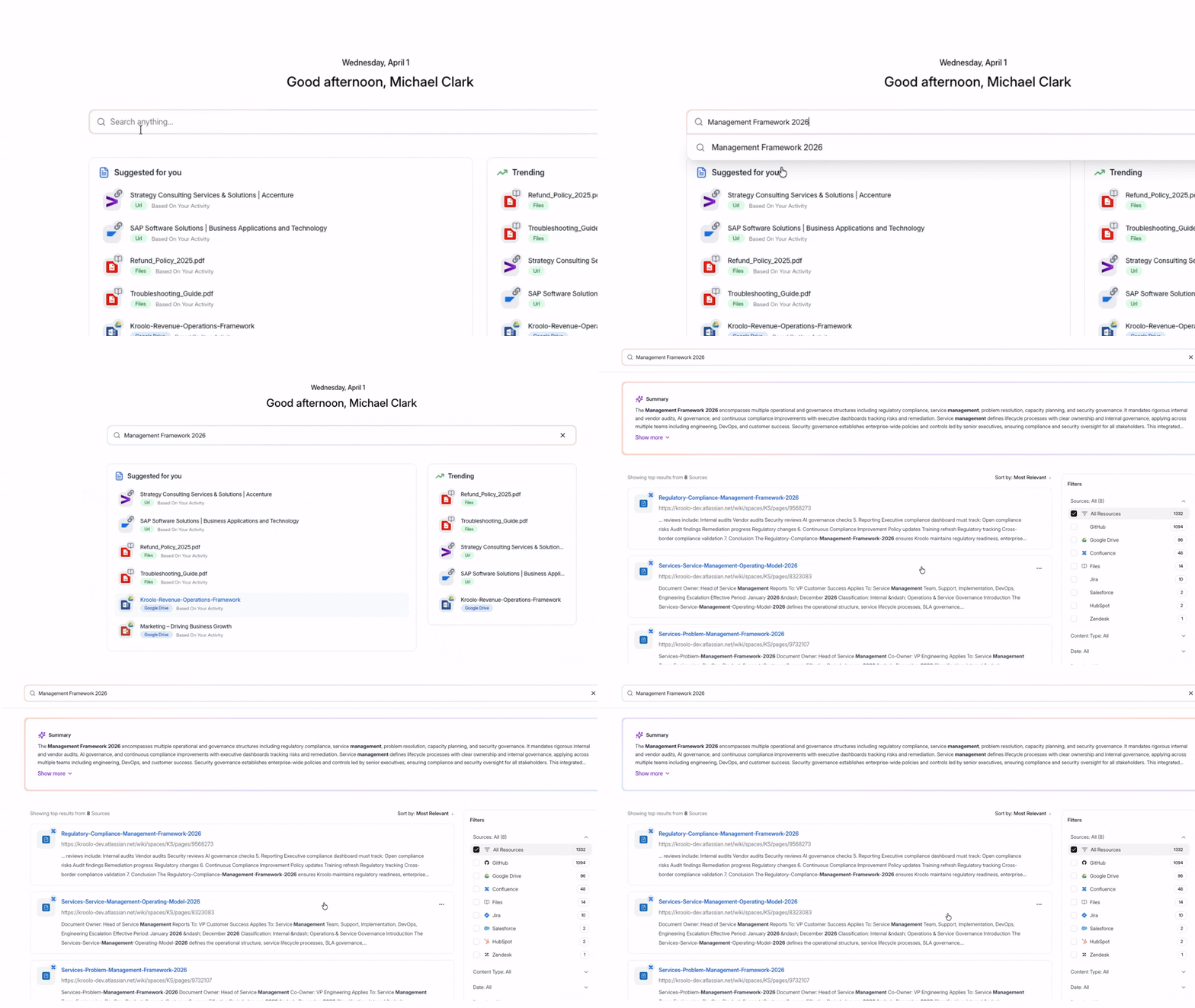
Kroolo’s search goes beyond simple keyword matching.
Its AI understands meaning, relationships, and context:
Search results are also personalized based on the user’s role, team, and current work, making them more relevant over time.
To further improve efficiency, trending files and AI-suggested results are proactively surfaced — often reducing the need to search at all.
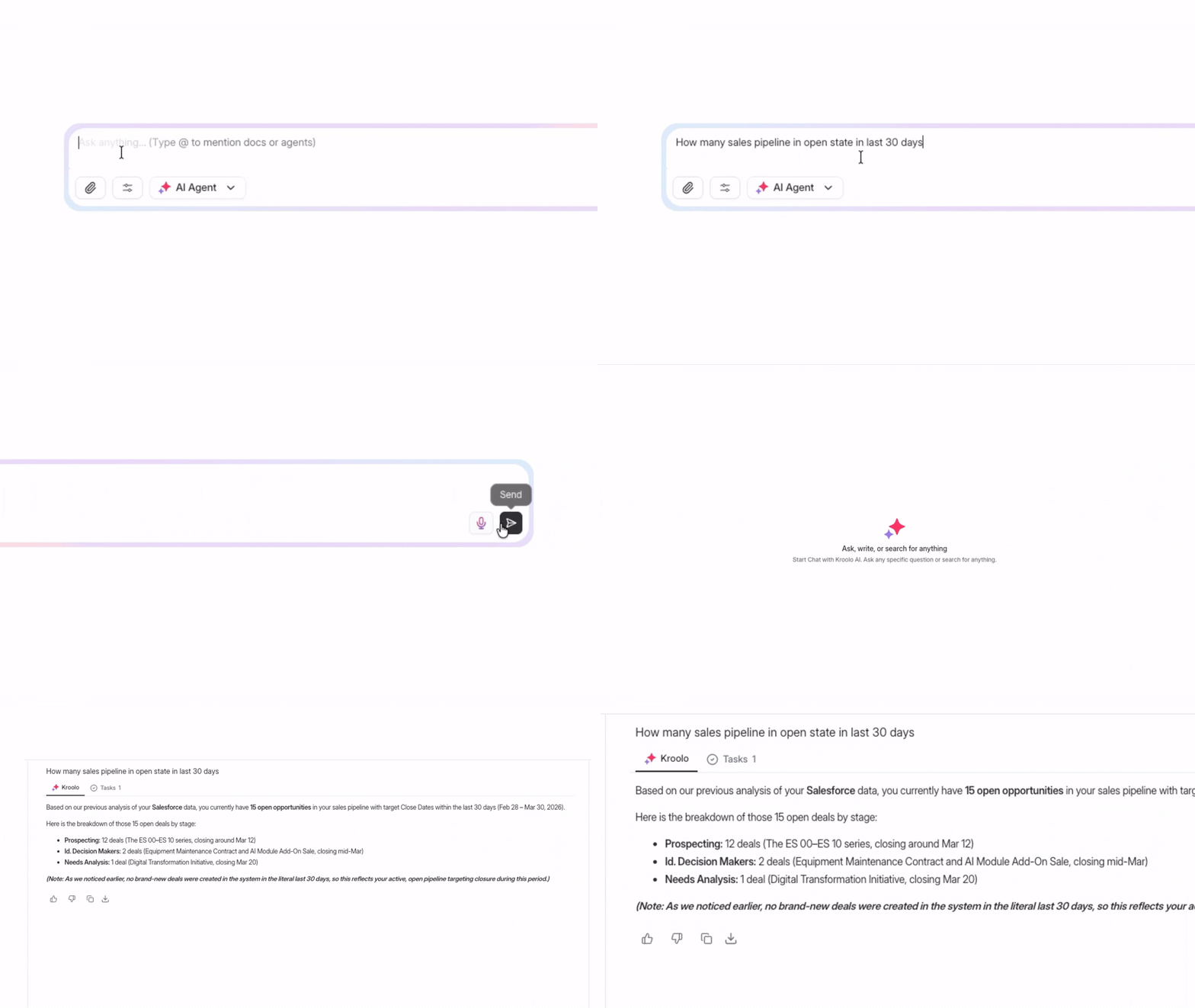
Kroolo’s Chat experience transforms how users interact with information.
Instead of manually reviewing multiple results, users can ask questions in natural language — about policies, projects, clients, or any indexed data — and receive accurate, synthesized answers within seconds.
Each response includes:
Additionally, a detailed task log shows how the answer was generated. This level of transparency ensures trust, auditability, and traceability — all critical in enterprise environments.
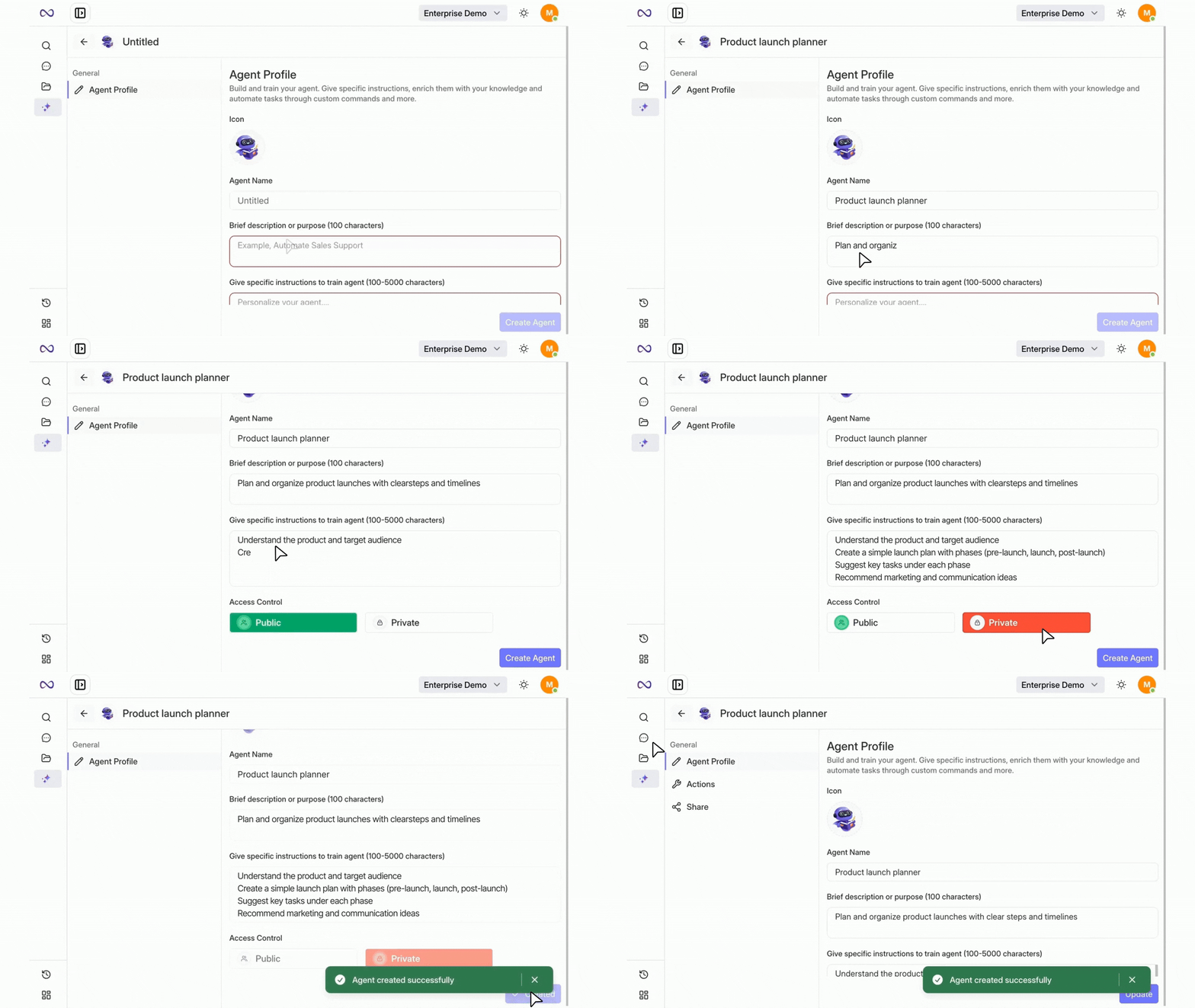
Kroolo extends beyond search with custom AI agents tailored to specific teams and use cases.
Teams can configure agents with:
For example:
These agents go beyond answering questions. They execute tasks — drafting content, generating summaries, and delivering structured outputs.
This marks a shift from tools that return links to systems that actively complete work.
Kroolo eliminates the gap between finding information and acting on it.
Users can:
— directly within the search interface.
There is no need to switch between tools. The same layer where information is discovered is where execution happens.
For teams working across multiple systems, this removes the constant back-and-forth — significantly improving speed and productivity.
Kroolo enforces existing permission structures across all connected systems.
With Role-Based Access Control (RBAC) and Access Control Lists (ACL):
This ensures secure and reliable access to information across the organization.
A project lead needs to identify the core technical requirements from a client’s RFP. The information is scattered — some details are in Google Drive documents, while others are buried in old Slack conversations.
Traditionally, this would involve:
This process typically takes 30 minutes or more.
Instead of manually searching, the project lead simply asks:
“What are the core technical requirements from the client RFP?”
Kroolo instantly:
The real advantage comes next.
With a single click on “Generate Project”, Kroolo:
No manual setup. No context switching.
Kroolo transforms search from a passive activity into an active workflow.
It doesn’t just help teams find information — it enables them to instantly turn that information into structured, actionable work.
Conclusion
2026 marks the shift toward AI-native consolidation — where tools that solve only part of the workflow are no longer enough.
Teams don’t just need better search. They need systems that connect information with action.
Kroolo stands out because it solves the fragmentation problem at its core. It brings together the intelligence to find the right information and the capability to act on it — all within a single, unified environment.
By adopting a unified WorkOS, you’re not just improving how your team searches. You’re upgrading how your entire organization operates — making it faster, more aligned, and ready for the future.
Stop searching. Start automating your work with Kroolo.
Sign up for Kroolo today and experience the shift from search to execution.