

Apr 13, 2026
-
By Clive
Early-stage tech startups are built on speed. Ship fast, learn fast, iterate faster.
There's no time for bureaucracy, no budget for complexity, and no appetite for tools that slow the team down.
So founders do what feels natural — they stitch together a collection of best-in-class apps. Slack for chat. Notion for docs. Jira for tasks. Linear for bugs. Figma for design. Drive for files.
For a few weeks, it works. Then it quietly starts to fall apart.
Not because the tools are bad. But because none of them know what the others know. Context lives in threads. Decisions get buried in channels. Documentation exists in seventeen different tabs that nobody updates and everyone assumes someone else is maintaining.
This is knowledge fragmentation — and for a fast-moving startup, it's more dangerous than most founders realize.
Research shows that 42% of institutional knowledge resides solely with individual employees — meaning when a key person leaves, nearly half of what they knew walks out the door with them.
This blog is about why that matters — and how to build it.
Nobody builds a fragmented workspace on purpose. It happens one tool at a time.
Slack because email was too slow. Notion because Docs got messy. Jira for tasks. Linear for bugs. Figma for design. Before long, your 8-person startup is running 12 tools — and the cost of that doesn't show up on any invoice.
When information is scattered, finding it becomes work.
Forrester reports teams lose up to 23% of their time switching between apps. That’s like losing 2 full-time employees in a 10-person team.
When knowledge lives in chats and scattered docs, it leaves with people. 48% of companies lose institutional knowledge when employees leave
New hires inherit confusion, not clarity - slowing onboarding, repeating mistakes, and killing momentum.
It’s not about having too many tools. Are your tools building a shared memory — or breaking it? If it’s the latter, you don’t need another tool. You need a better system.

Most tools store information. Kroolo structures it — so everything your team knows, decides, and builds is connected, indexed, and retrievable long after the person who created it has moved on.
Here's exactly how that works in practice.
In Kroolo, a project board isn't just a task tracker. Tasks, docs, comments, decisions, and chat threads all live together in one place.
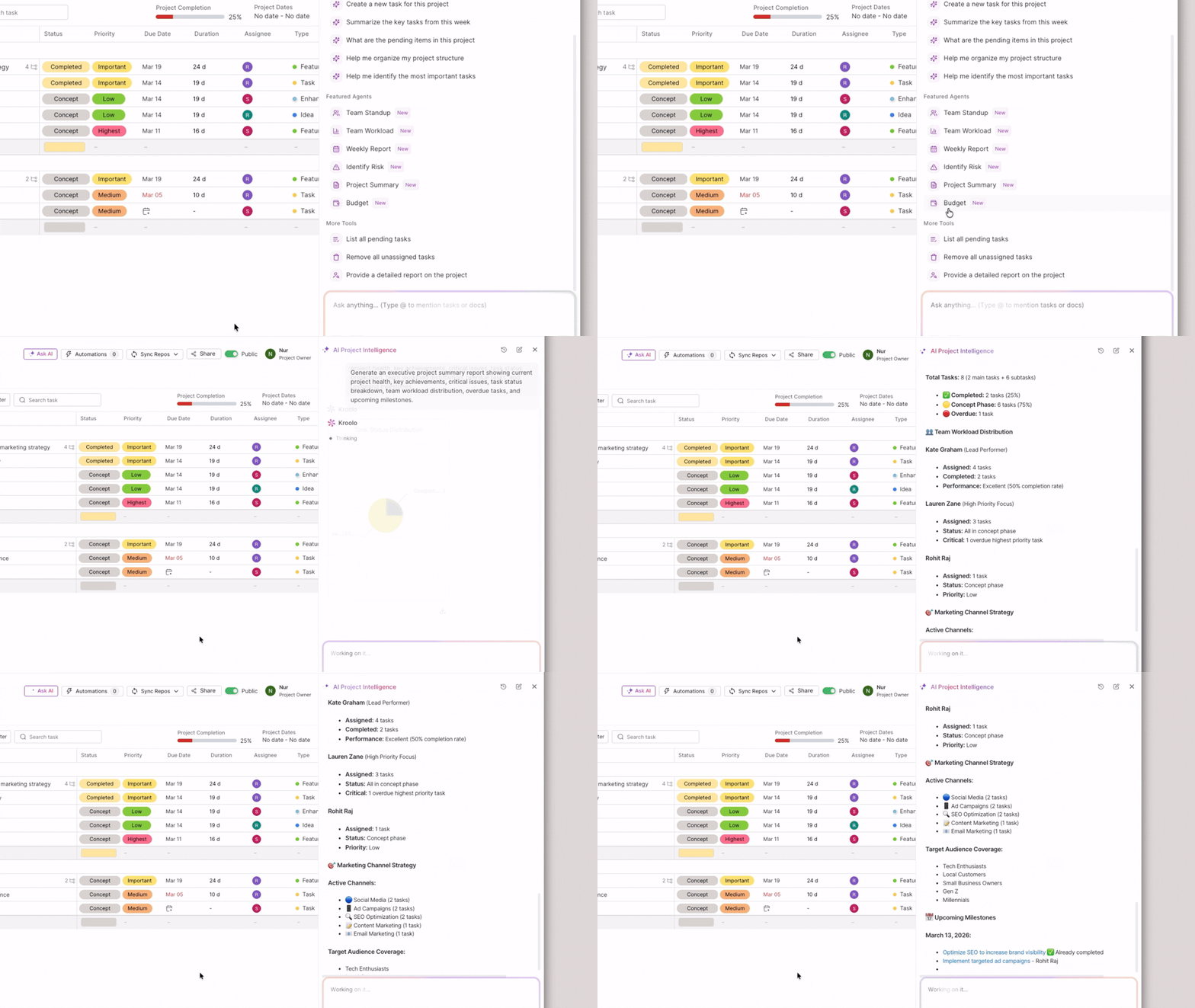
When you need a quick read on the state of the project, just hit Ask AI on the board.
A chat window opens where you can query your entire project in natural language — and get answers in both text and visual formats like charts, making it easy to consume at a glance. You can ask things like:
Kroolo AI analyzes the board data in real time and surfaces structured, actionable responses — no manual reporting, no status meetings.
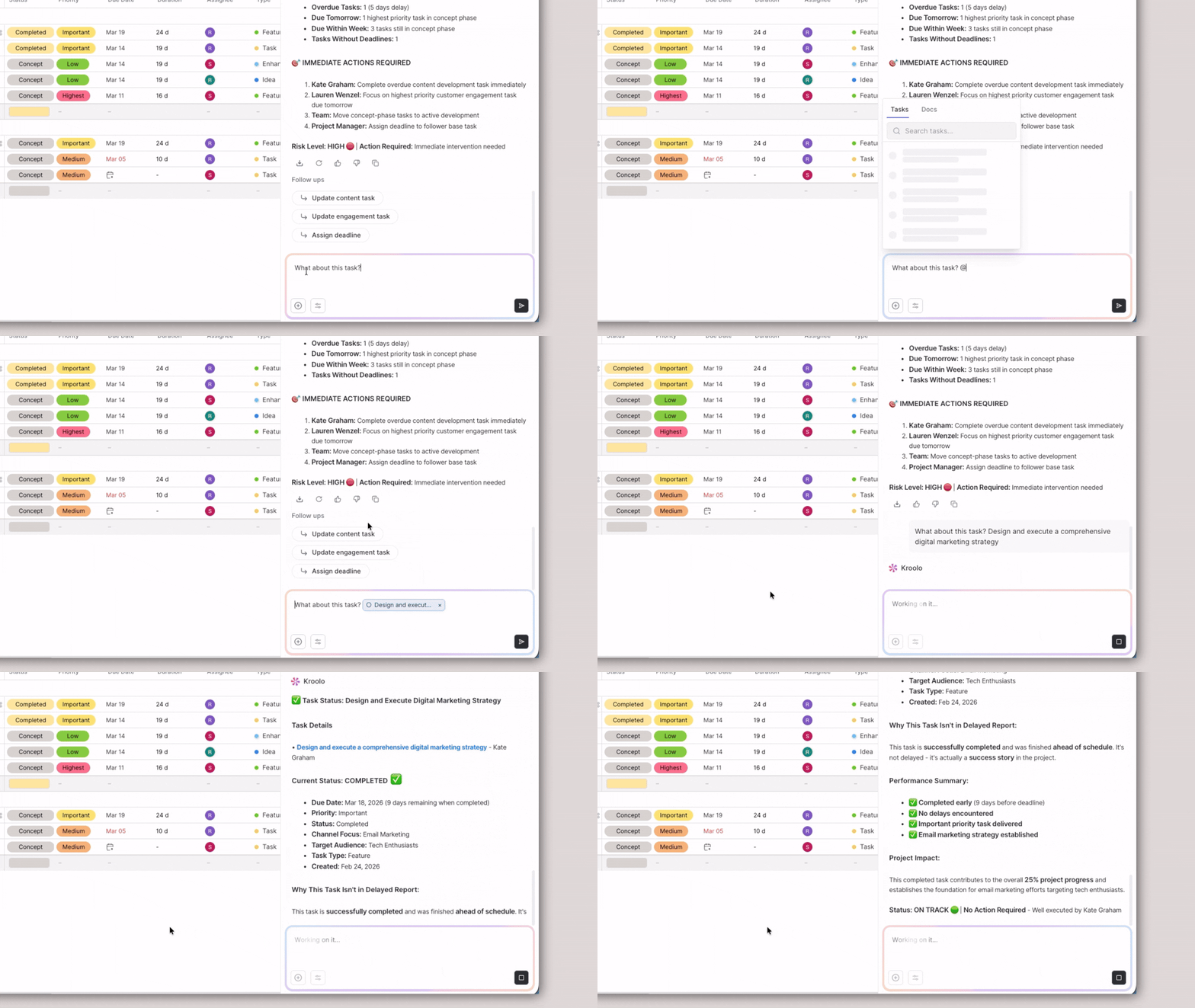
Need instant context on a specific task? Simply @mention the task in the chat and Kroolo AI surfaces everything about it — status, blockers, assignee history, linked docs — instantly. No clicking through menus or chasing colleagues for updates.
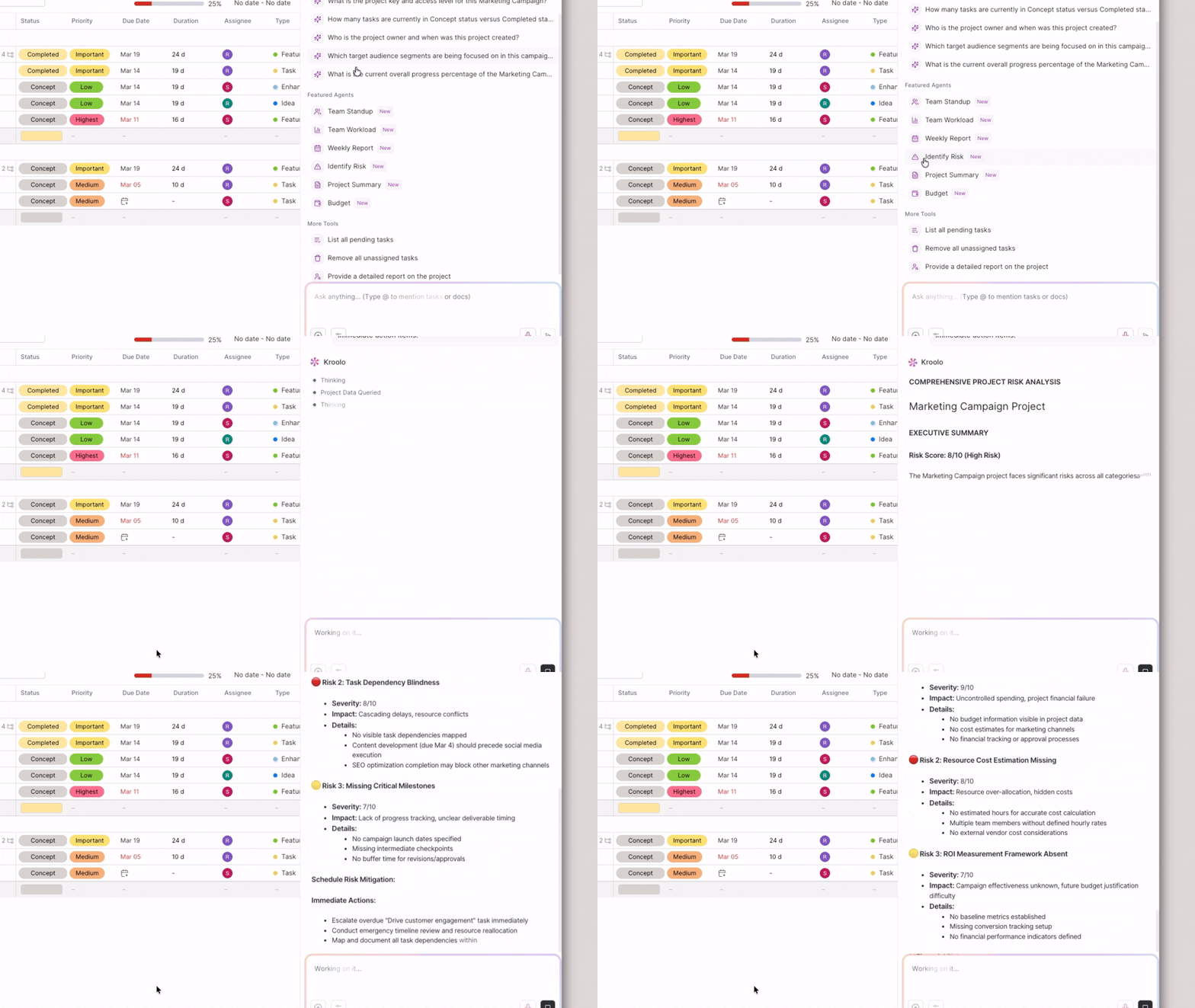
For recurring needs, Kroolo comes with preconfigured AI agents built specifically for startup workflows — weekly project reports, team workload summaries, project health snapshots and more. These agents run on top of your existing project data automatically.
And when an agent surfaces an insight you need to act on? You can create actions directly from the chat interface — reassign a task, leave a comment, update a status — without ever leaving the conversation.
Agent responses can also be exported for stakeholder updates, investor reports, or async team reviews — keeping everyone aligned without pulling anyone into a meeting.
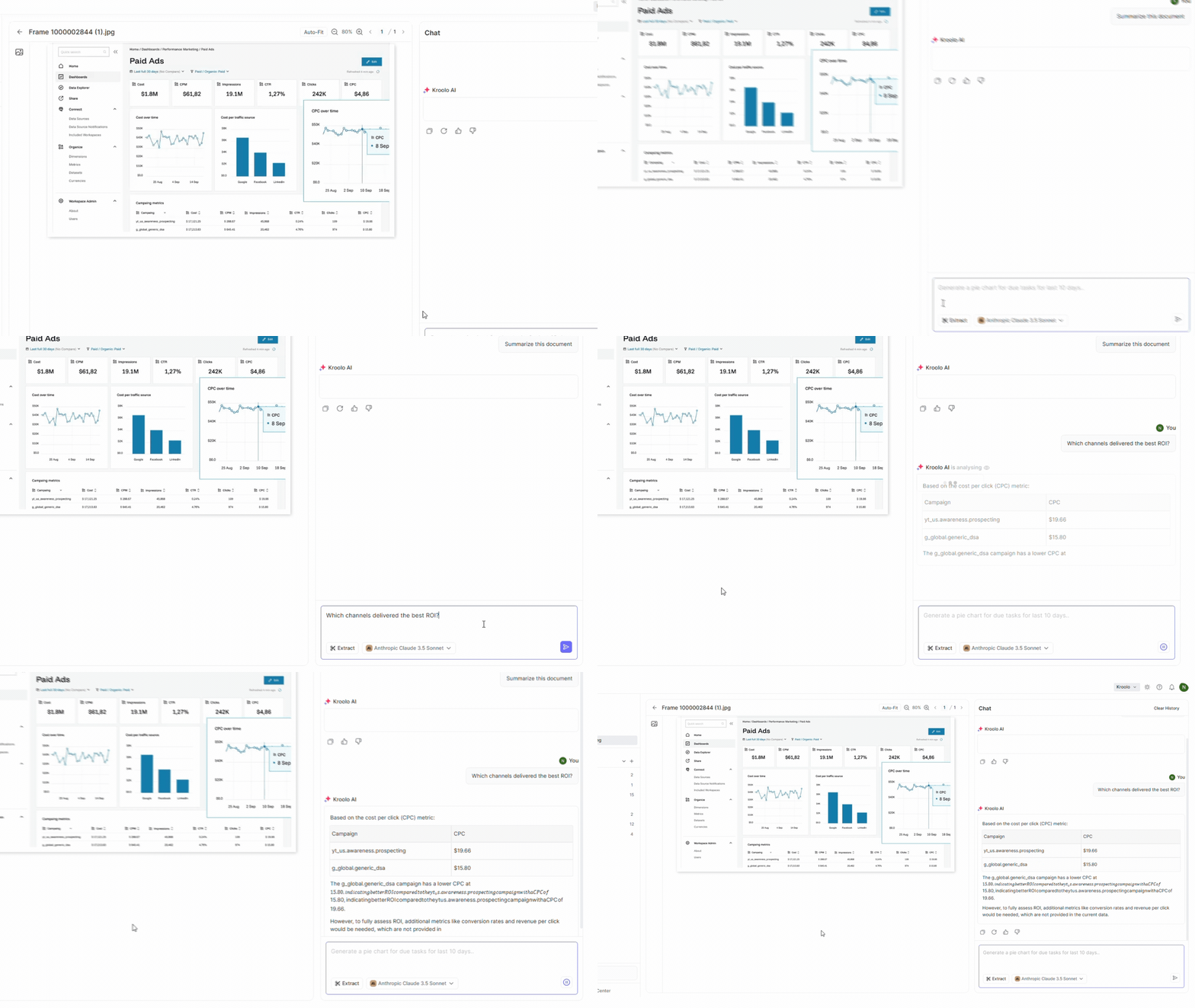
One of the most powerful ways Kroolo prevents knowledge loss is by making every piece of content conversational. Your team can chat with:
This means a new hire doesn't need to read through 40 pages of documentation to understand a project. They just ask. Kroolo answers.
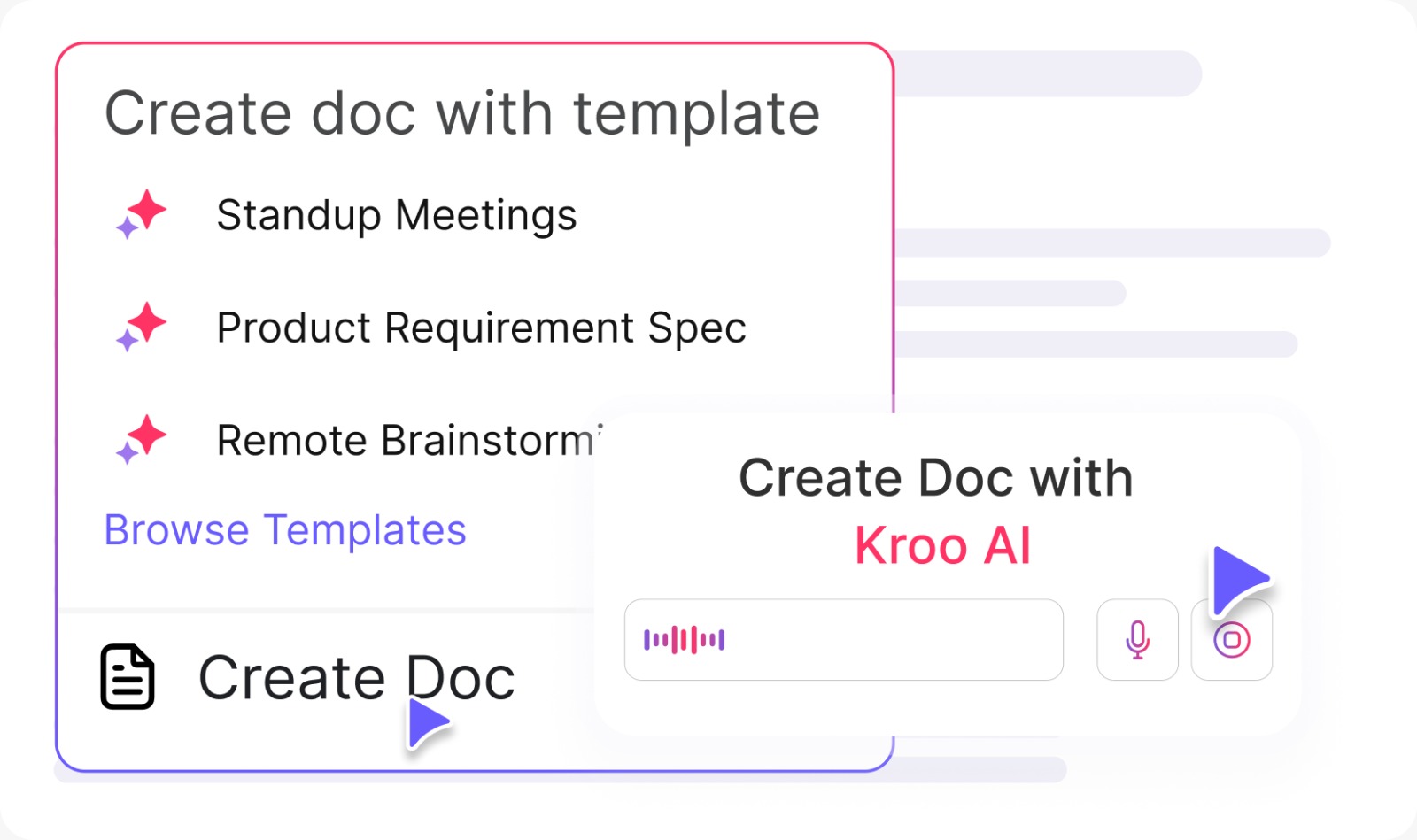
Kroolo Docs sit natively inside projects and boards, linked directly to the work they describe. A product spec, an onboarding guide, a post-mortem — each one lives exactly where it's relevant, not buried in a shared drive nobody checks.
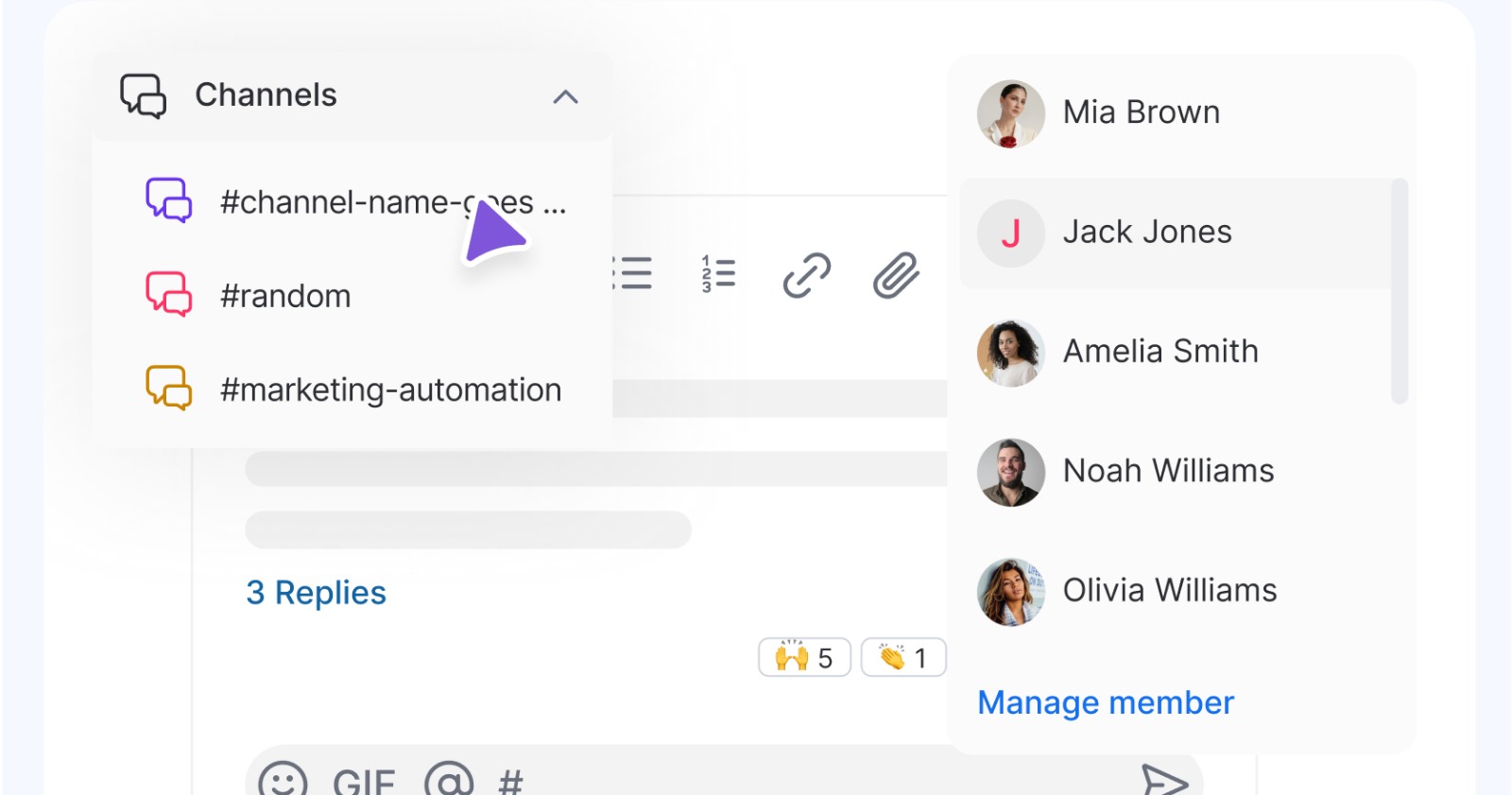
Kroolo brings together Slack-style DMs, threaded conversations, and @mention discussions — all inside the same workspace where the work lives.
No more critical decisions buried in a channel nobody scrolled back through. Every conversation is anchored to the project, task, or doc it belongs to — searchable, contextual, and permanently part of the project record.
When someone leaves, their Kroolo footprint stays behind. Every doc they wrote, every task they owned, every AI-generated report they ran — it all remains in place, organized, and ready for whoever picks it up next.
For a fast-moving startup where tenure averages just two years, that's not just good housekeeping.
It's a genuine competitive advantage — the ability to keep moving forward without constantly rebuilding what was already known
Conclusion
Speed is everything at an early-stage startup. But speed without structure has a hidden cost — and most founders don't notice it until a key person leaves, a new hire takes weeks to ramp up, or the same decision gets made twice because nobody could find where it was documented the first time.
The fragmented tool stack that felt lean at five people becomes a liability at fifteen. Knowledge that lived in one engineer's head becomes a crisis when that engineer moves on.
This isn't a people problem. It's a structural one. And it has a simple fix.
When every chat, doc, task, and decision lives in one connected workspace — indexed, searchable, and tied to the work it belongs to — knowledge stops walking out the door with your employees.
New hires onboard themselves. Teams stop rebuilding what was already known. And your startup keeps moving forward, no matter who comes or goes.
That's what Kroolo gives you. Not just a better tool. A smarter foundation for everything that comes next.
Sign Up with Kroolo for Free — and build a workspace your whole team can grow into.