

May 13, 2026
-
By Clive
Yes — and not only do such tools exist, they’re quickly becoming the preferred choice for modern teams trying to reduce tool overload and cost.
Today, many project management platforms come with native, built-in chat that is directly tied to tasks, projects, and workflows.
This means your team can discuss work exactly where the work is happening—instead of switching between tools like Slack and a separate project tracker.
The case against running a separate chat tool isn't just budget. It's how badly fragmented stacks bleed time.
A 2026 Lokalise study of 1,000 U.S. knowledge workers found that workers switch between tabs, apps, or platforms an average of 33 times per day, with 17% switching more than 100 times in a single workday.
The result: an average of 51 minutes per week lost to tool fatigue, which adds up to over 44 hours per year per employee. For more than 1 in 5 workers, the loss is 2+ hours a week — roughly 2.5 full workweeks gone every year.
That's the productivity bill.
The financial one is worse than most leaders think. ClickUp's research on work sprawl puts it bluntly: a 100-person company loses around $420,000 annually due to miscommunication and disconnected tools.
And the average enterprise is now juggling somewhere between 100 and 250+ SaaS apps, depending on which 2025–2026 industry survey you trust.
So when teams ask, "Do we really need Slack and a project tool?" — they're not being cheap. They're trying to claw back attention.
Built-in chat isn't just a comment box on a task. The good versions of it do 3 things:
Asana's research on context switching found that even brief switches between writing and identifying tasks introduce measurable cognitive cost — and University of California, Irvine work cited in the same body of research pegs the time to fully refocus after an interruption at roughly 23 minutes. Every "let me go check Slack" is, on average, a 23-minute tax on focus.
A few platforms have stopped treating chat as a feature and started treating it as the spine of how teams actually work. Here's where the category stands in 2026.
Kroolo is the one platform on this list that was designed, from day one, to make chat unnecessary as a standalone purchase. Communication isn't bolted on — it's the spine.
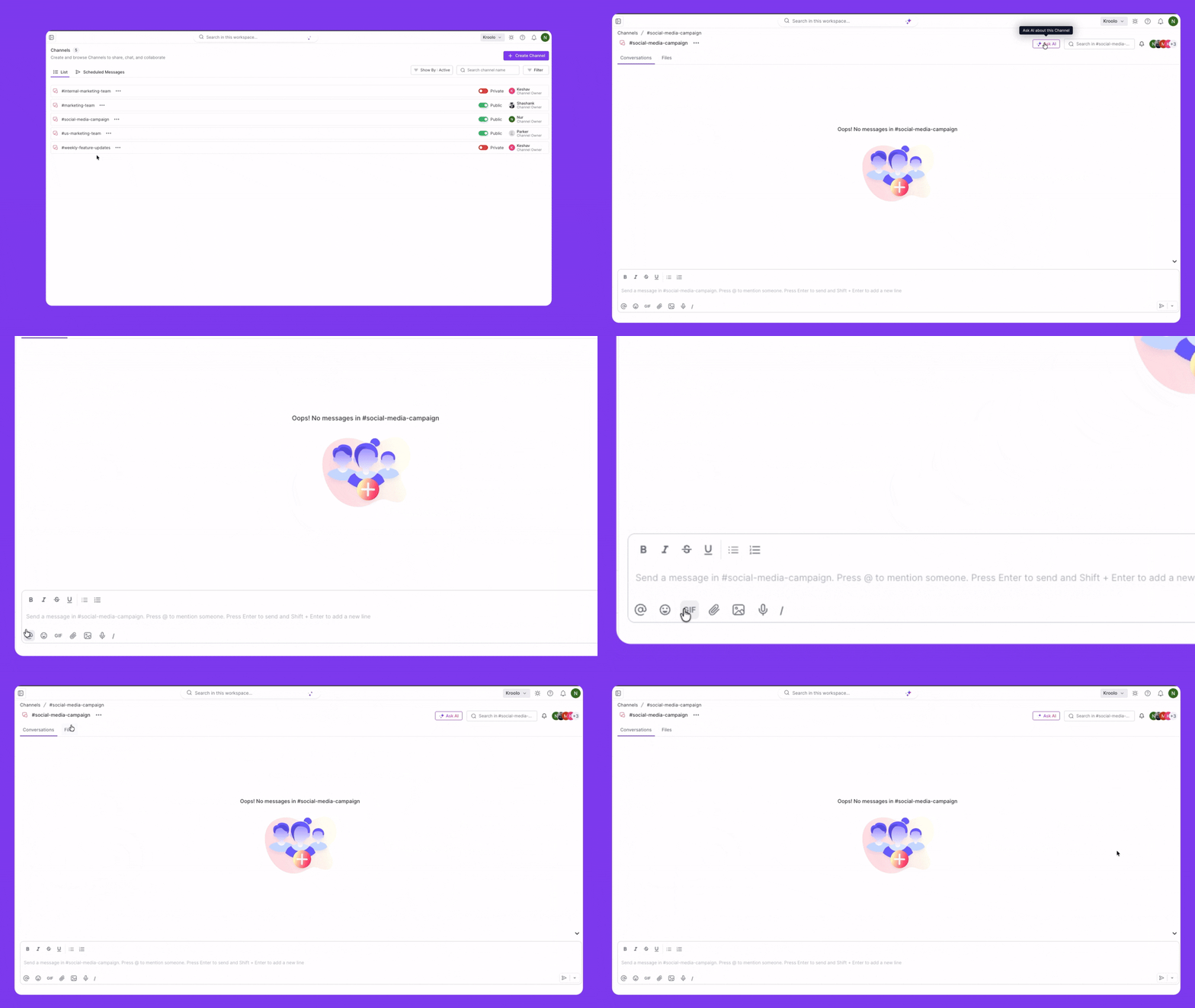
Kroolo's Channels feature isn't a stripped-down comment thread. It's a full team chat experience sitting inside the same workspace as your projects, tasks, docs, and goals.
You get real-time messaging, threaded replies, direct messages, file sharing, voice notes, @mentions, reactions, and forwarding. Everything your team currently does in Slack, except the conversation never leaves the orbit of the work it's about.
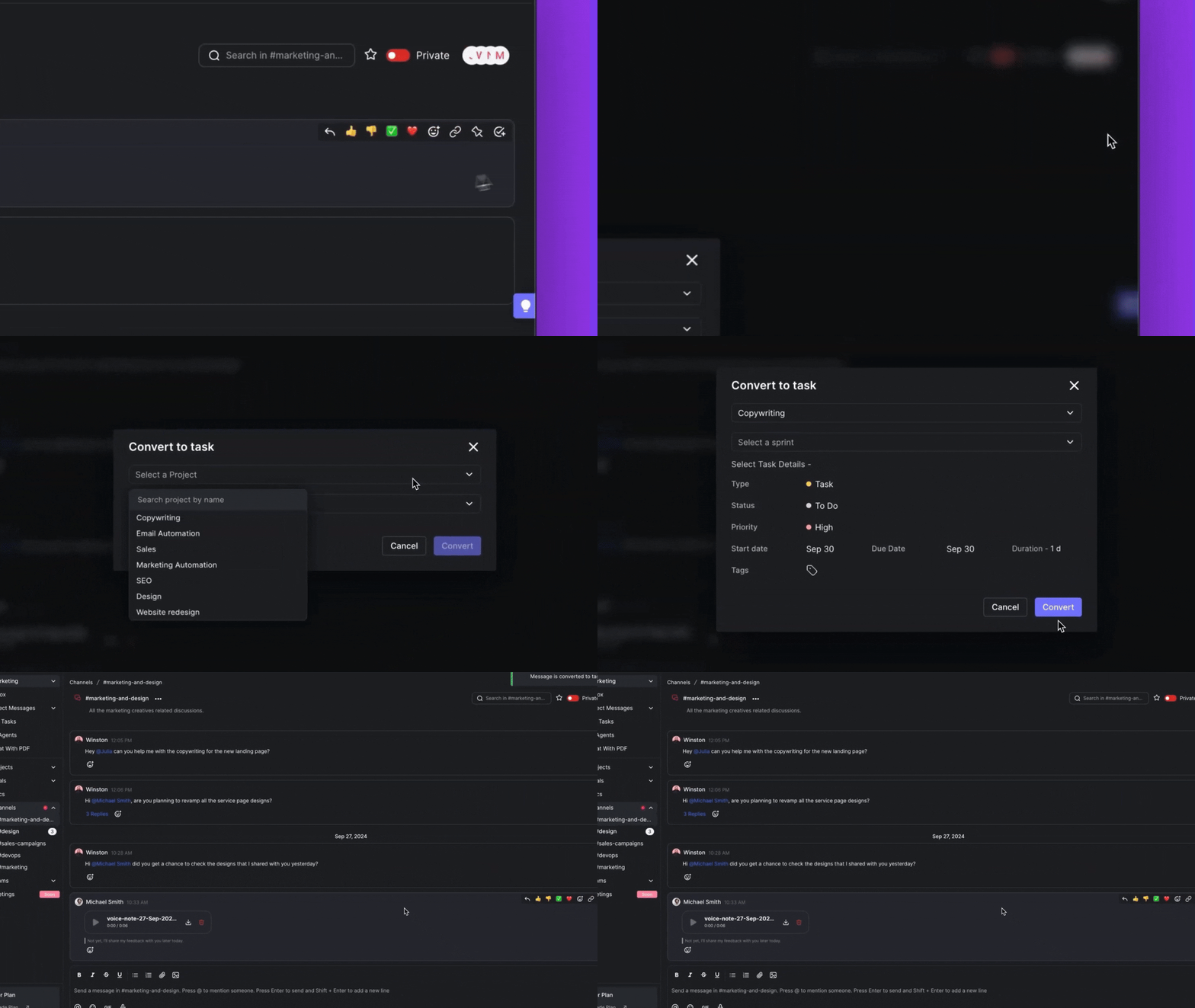
The detail that actually changes day-to-day behavior: any message can be converted into a task in one click.
That casual "hey, can you handle the landing page copy by Friday?" stops dying in the scroll. It becomes an assigned task with an owner, a due date, and a place on the board — without anyone re-typing a thing.
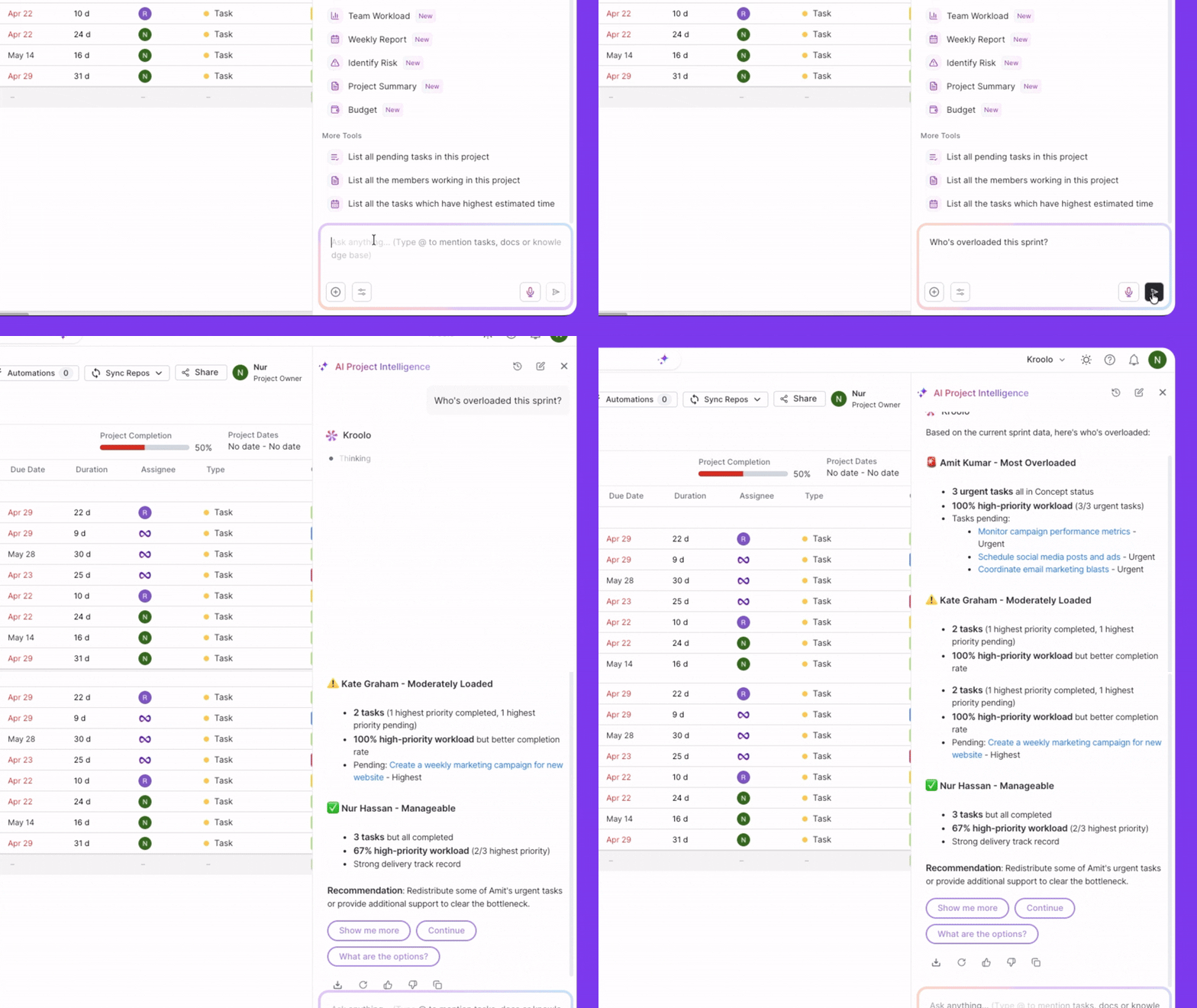
Kroolo layers in something none of the others have: Chat with Project, an AI feature that lets you query a project in plain English.
"What's overdue?" "Who's overloaded this sprint?" "What are the open risks on the Q3 launch?"
The AI answers instantly by reading the actual project data — no manual standups, no chasing people in DMs, no PM stitching together a status update at 5 PM on a Friday.
Add in 40+ AI agents, Kanban/List/Timeline/Calendar/Workload views, sprint management, OKRs, native docs, and integrations with 30+ tools (Slack, Jira, Asana, Trello, Google Drive, GitHub, HubSpot, and more), and the picture comes into focus.
The bottom line
Kroolo isn't trying to be "Slack-but-cheaper." It's trying to make the separate chat tool obsolete by putting communication where decisions actually need to be made — next to the work. For teams that have been quietly resenting their Slack invoice, this is the cleanest exit on the market.

via Basecamp
Basecamp has been in this lane the longest, and its pitch lands harder in 2026 than it did a decade ago: one tool replaces Slack, Asana, Dropbox, and Google Docs.
Group chat lives in Campfire, ad-hoc 1:1s happen via Pings, and both are stitched into every project.
It's deliberately minimalist — no Gantt charts, no time tracking, no resource management — which makes it brilliant for small teams and frustrating for larger ones that need formal reporting.
via ClickUp
ClickUp went heavier in Q1 2026 with its 4.0 release, which pulled tasks, Docs, Chat, and AI tools into a single converged workspace — explicitly framed as a response to platform fragmentation.
The Chat sidebar lives alongside whatever you're working on, so conversations don't require a context switch.
ClickUp's positioning is the most directly aligned with the "kill the tool sprawl" message of any incumbent, though the trade-off is a steeper learning curve than lighter-weight tools.

via Monday.com
monday.com stitches discussion directly into boards and items rather than offering a standalone IM experience.
Open a task, @mention a teammate, drop context — and the conversation stays attached to the work forever.
It's less of a Slack replacement and more of a "stop having project conversations outside the project," which suits teams whose chat is already mostly task-related.

Honest answer: it depends on what your team mostly talks about.
If most of your messages are about projects — task hand-offs, design reviews, "who's blocked on what" — you'll likely get more value moving that traffic into your project tool, where it can attach to the actual work.
The cognitive savings alone (no more rebuilding context across tabs) tend to dwarf the license savings, which are real but secondary.
If your Slack is the company watercooler — culture channels, cross-functional hallway talk, exec announcements — you may want to keep it, and just stop using it as a project-management surface. The mistake isn't using Slack. It's using Slack as the project tool.
The teams getting this right in 2026 aren't picking sides. They're being honest about which conversations belong next to the work, and which belong somewhere else.
Conclusion
The "do we need Slack and a project tool?" debate is mostly over.
The data made the call for us — 44 hours a year lost to tool switching, $420K bleeding out of every 100-person company, and 23 minutes of focus burned every time someone toggles tabs to "just check one thing."
Teams aren't asking whether to consolidate anymore. They're asking which platform is actually built for it.
Most of the incumbents added chat as a feature. Kroolo built the workspace around it. Channels for how your team talks.
Message-to-task for the decisions that come out of those talks. Chat with Project for the AI that already knows what's overdue, who's blocked, and what's at risk — so you stop running standups to figure it out.
If your Slack bill is starting to feel like a tax on conversations that should've happened next to the work in the first place, there's a better way to run things.
Try Kroolo for Free Now — no credit card, no migration headaches, just one workspace where chat and work finally live in the same place.