
Apr 21, 2026
-
By Julia
You know the feeling. A project lands on your desk with a tight deadline, and it needs someone who actually understands a specific niche, say, GDPR compliance for a French subsidiary, or the legacy payments integration nobody has touched in two years. So you start the hunt.
A Slack message in #general. A ping to your manager. An email chain that grows three threads deep. By the time someone finally points you to the right person, half a day is gone, and you still aren't sure they're the best match.
In large organizations, expertise is distributed everywhere and visible nowhere. The right person exists, you just can't find them. This is one of the quiet productivity drains modern teams live with, and it's exactly the kind of problem AI is built to solve.
The numbers back this up. A widely cited McKinsey Global Institute report found that knowledge workers spend an average of 1.8 hours every day, or 9.3 hours a week, searching and gathering information.
Most companies don't have an "expertise problem." They have a visibility problem.
The knowledge is there, sitting inside Confluence pages, Jira tickets, Slack threads, GitHub commits, project retrospectives, and old proposals. But it's scattered across dozens of tools, owned by dozens of teams, and nobody has the bandwidth to map it.
So we fall back on social discovery: asking around. The catch is that social discovery scales terribly. It's biased toward whoever is loudest, most senior, or most recently visible, not necessarily whoever is most qualified. And it punishes new joiners, remote employees, and anyone outside the dominant in-office network.
This isn't a fringe complaint, either. According to a Forrester study cited by Starmind, 63% of surveyed workers said they spend too much time searching for the right people to help them. The harder it gets to find expertise, the more often teams default to making decisions on guesswork instead of insight.
AI-powered search tools can read across your organization's documentation, work history, and collaboration patterns to surface the actual subject matter expert for a given topic, not just the person who comes to mind first.
Here's what that looks like in practice. Instead of asking "Who knows GDPR in France?" in a channel and waiting for a guess, you ask the same question to an AI search layer connected to your internal tools. It scans:
Within seconds, you get a ranked answer with evidence: "Camille Durand, Senior Privacy Counsel, France. Authored 14 of the 22 GDPR-related internal documents in the last 18 months and led the 2024 cross-border data transfer review." That's not a guess. That's a defensible recommendation you can act on.

Kroolo's Enterprise Search is built on this exact premise. Rather than treating search as a keyword-matching problem, it treats it as a knowledge and expertise-mapping problem, pulling signals from across the tools your team already uses to surface both the right answer and the right person.
A few things make this work in practice:
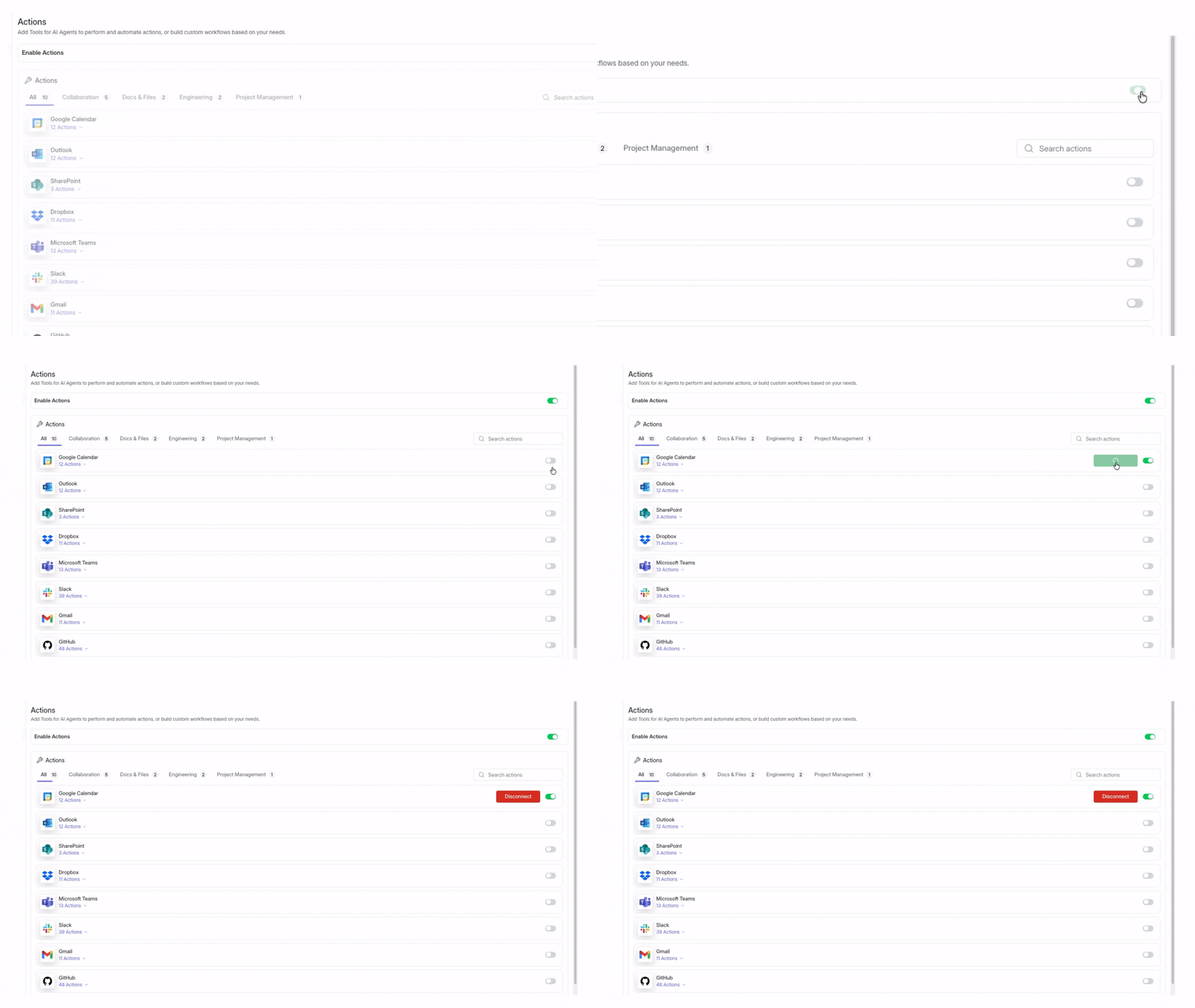
Kroolo's Enterprise Search plugs into the systems where work actually happens: CRM, HRMS, ITSM, docs, project boards, plus integrations like Slack, Google Drive, Jira, Zendesk, and Salesforce.
Instead of opening seven tabs to piece together who's done what, you get a unified view with real-time sync, so the answer to "who's the GDPR person in France?" pulls from every relevant signal at once.
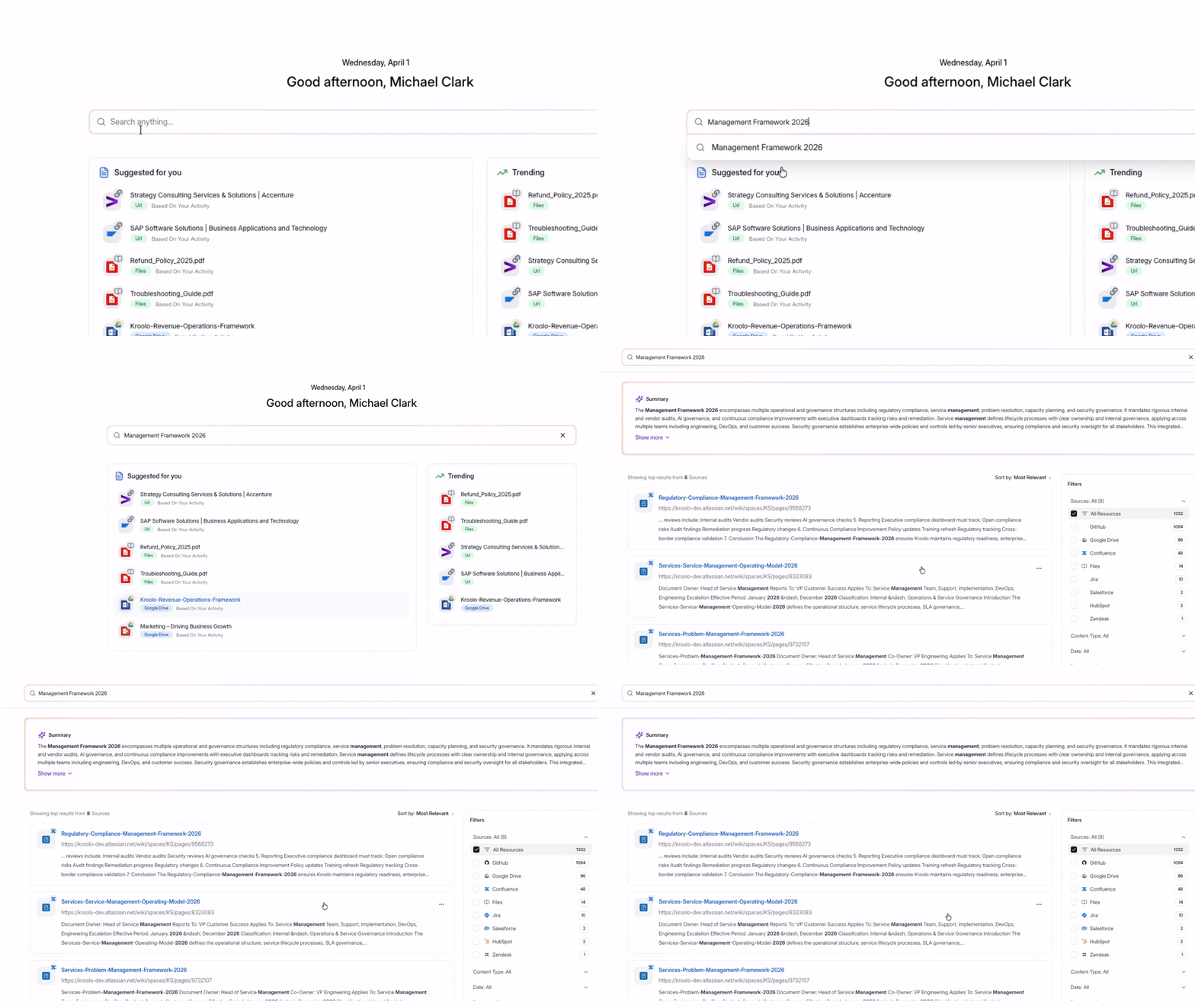
Kroolo's semantic search recognizes synonyms ("customer retention" = "churn reduction"), concepts ("competitive analysis" surfacing market research and competitor intel), and context, prioritizing results relevant to your role, team, and current projects.
Crucially, it understands relationships between documents, people, and projects, which is exactly what expert discovery requires.
Knowing that someone authored a doc is one signal; knowing they collaborate frequently with the EU privacy team is another, and the system weighs both.
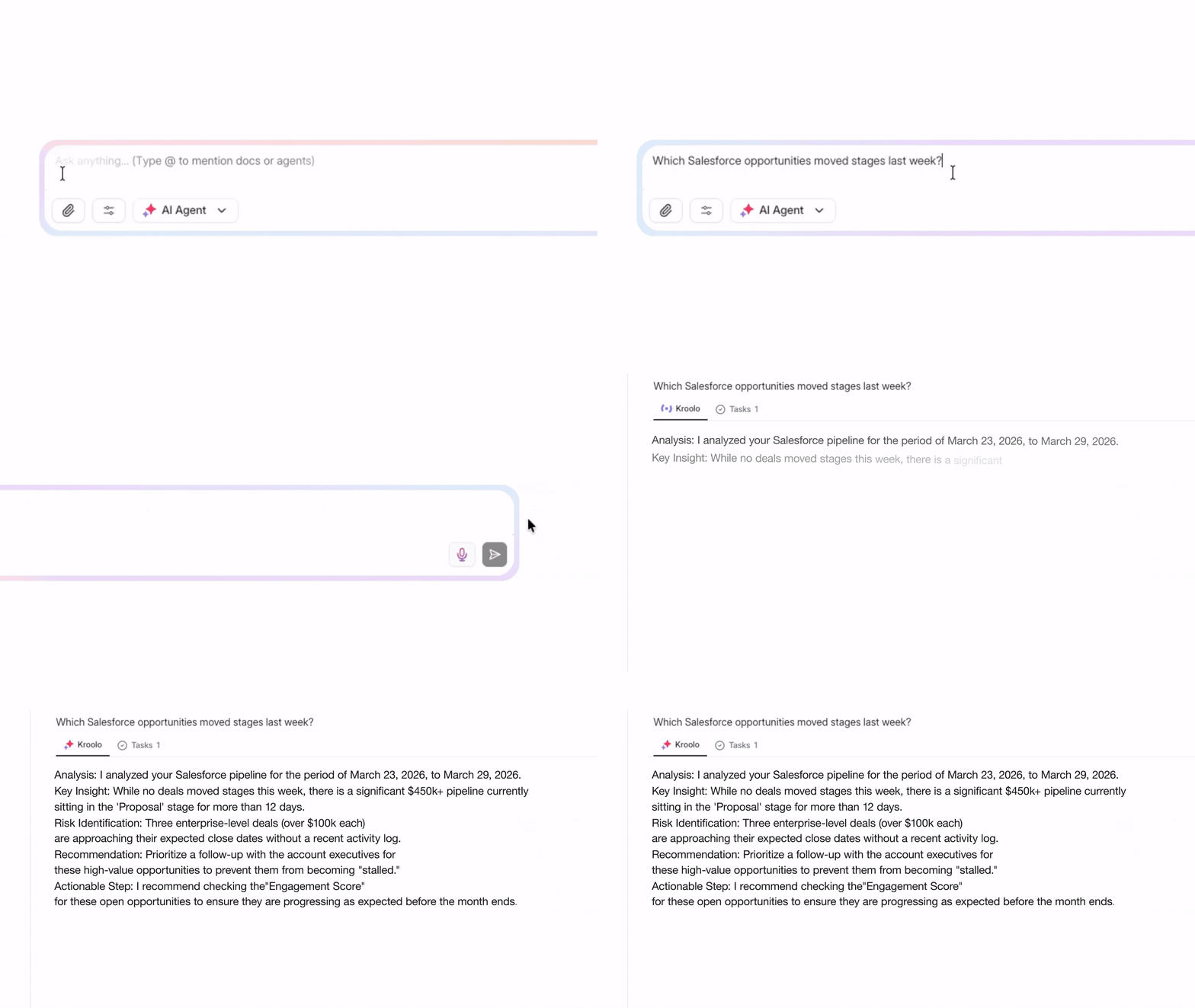
You don't need to craft the perfect query. Chat in enterprise search understands intent, asks clarifying questions when needed, and returns precise answers with sources attached, each tagged with a relevance score so you can see exactly why a person or document was surfaced.
Every answer comes with a "Sources" panel listing which files, tickets, or conversations contributed, which matters when you need a defensible recommendation rather than a black-box guess.
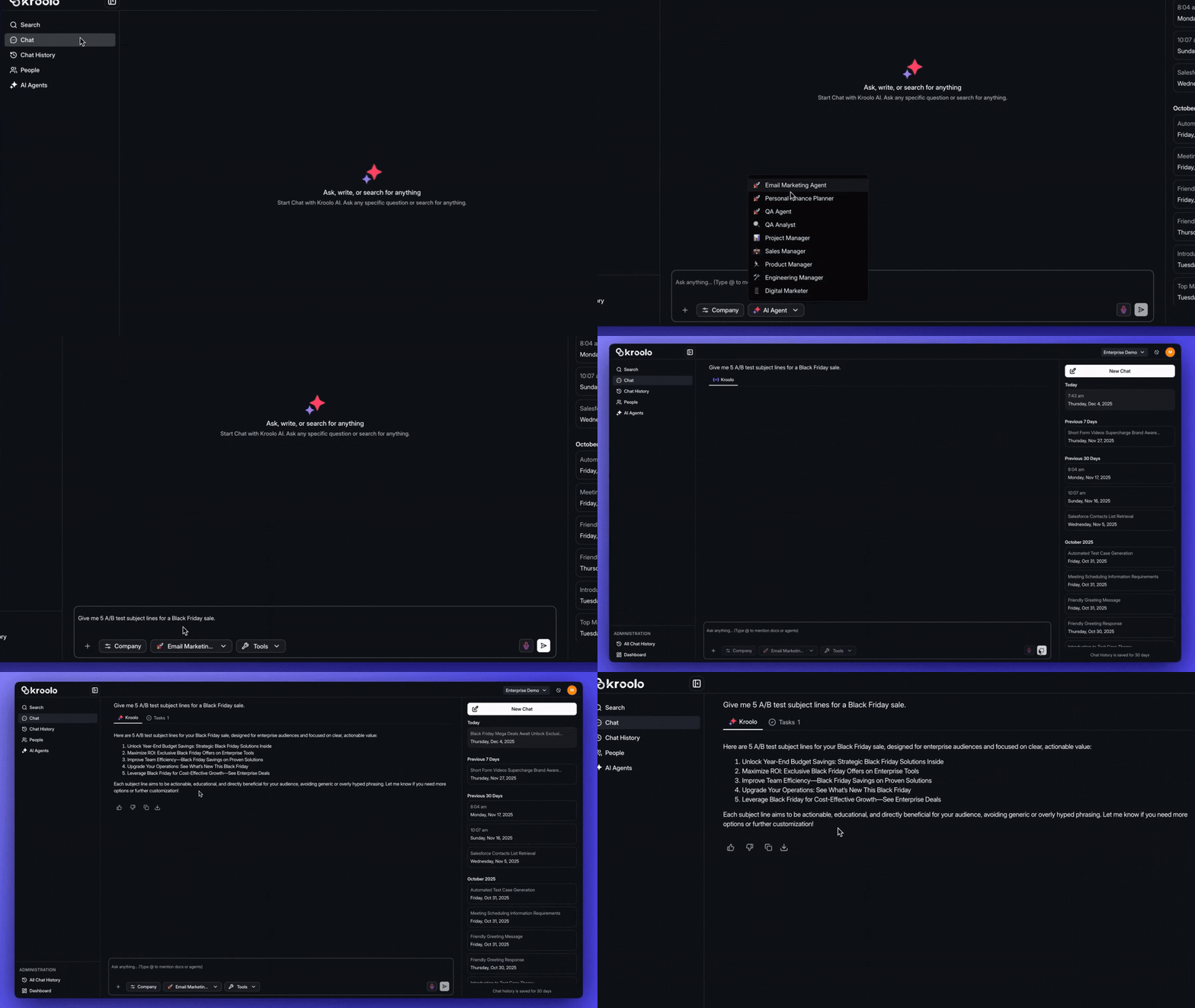
The more your organization uses it, the more relevant the results get. Search queries, AI-generated answers, team conversations, and decision context all become part of a persistent, searchable knowledge base, what Kroolo calls a Unified Knowledge Hub.
So when a new person joins and asks the same GDPR question six months later, the system already knows where the answers live and who's been giving them.
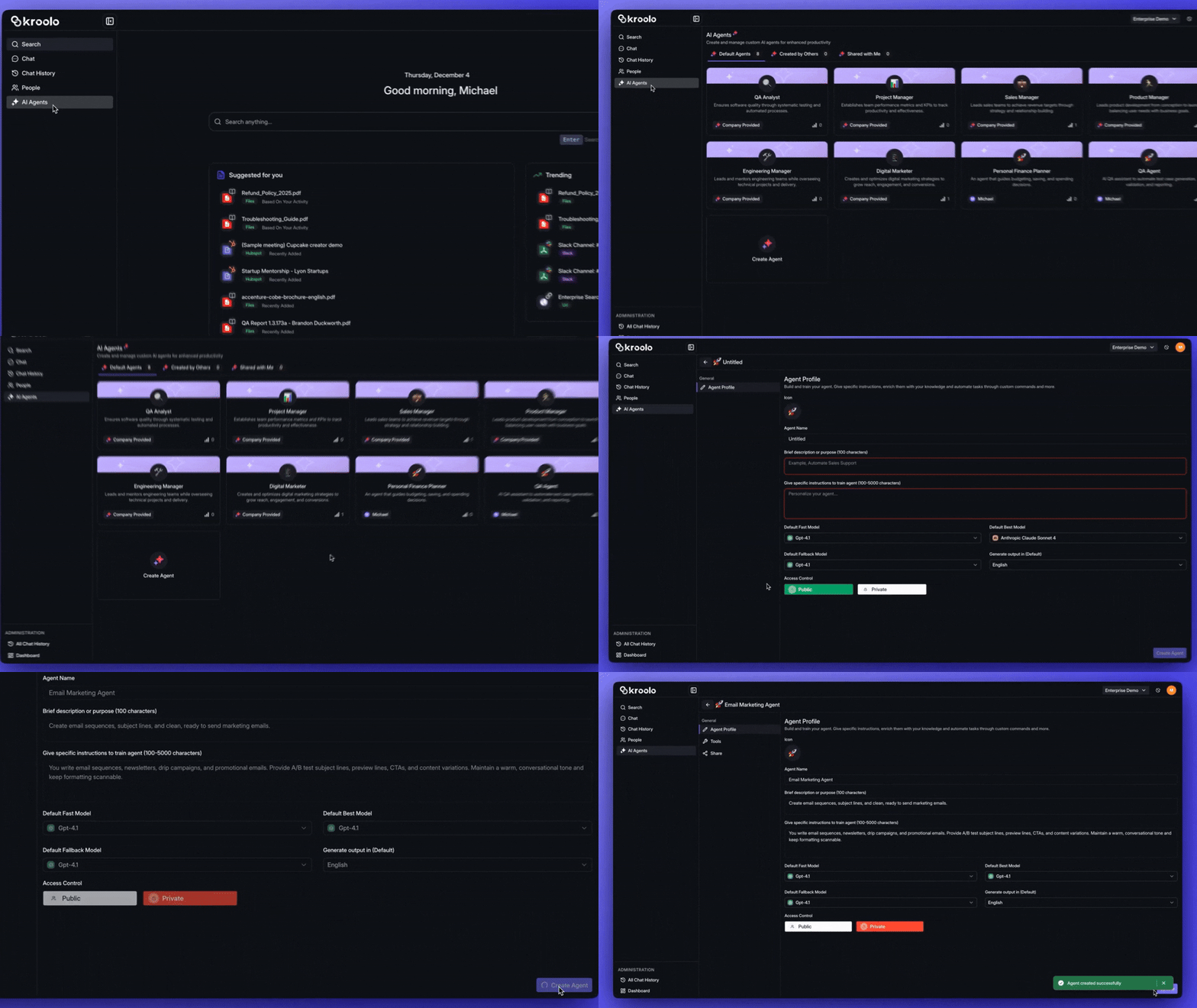
Expertise data is sensitive, and surfacing the wrong signals to the wrong person is a real risk.
Kroolo enforces role-based access control (RBAC), access control lists, and granular data permissions, so search results only ever reflect what the person asking is allowed to see.
Admins can also configure custom AI agents with their own access scopes and usage limits, useful when you want a "Compliance Helper" agent that only the legal and privacy teams can talk to.
Conclusion
Finding the right person for a project shouldn't be the hardest part of starting a project. Yet for most organizations, it still is, half-day Slack hunts, guesswork-based recommendations, and the same three "usual suspects" getting tapped for every new initiative while real experts stay invisible.
AI changes the math. When your search layer can read across tools, understand intent, weigh relationships, and respect permissions, expert discovery stops being a social scavenger hunt and becomes a single question with a defensible answer. New joiners ramp faster.
Distributed teams stop being penalized for not sitting next to institutional memory. And the people who actually know things get pulled into the work that needs them, not the work that happens to be near them.
Sign up with Kroolo for FREE and see how fast it is to find the right person, the right document, and the right context in a single search.