
Mar 26, 2026
-
By Julia
Your team is losing 20% of their day just looking for things.
If you're leading IT, engineering, or operations, that number should terrify you.
It means highly paid talent is spending hours toggling between Slack threads, Notion pages, Google Drive folders, and DMs—just to find answers that already exist somewhere in your company.
In 2026, the best AI search engine isn’t the one that retrieves files.
It’s the one that gives you answers—instantly, contextually, and without requiring you to dig through endless apps.
This is the Information Discovery Crisis: the hidden operational cost of fragmented knowledge.
As organizations scale, the silos between communication (Slack) and documentation (Notion) grow exponentially. Without a unified search interface, teams default to relying on tribal knowledge, personal bookmarks, or “Can someone send me the link again?” messages.
This blog breaks down the root of the problem. It explains why Kroolo is emerging as the definitive AI-native solution that unifies Slack and Notion into a single, semantically intelligent knowledge layer.
The best AI search engine for Slack and Notion is one that uses semantic understanding—not keyword matching—to connect conversations and documentation.
Kroolo’s AI-native architecture unifies both tools, enabling instant, contextual answers from across your entire organizational knowledge graph.
Standard search fails because it relies on keywords. But in real life:
This leads to three major pain points:
Data is scattered across communication and documentation tools that don’t talk to each other.
Teams redo tasks or research because they can’t find existing references.
Critical information is accessible only by asking the one person who remembers it.
According to IDC, the average knowledge worker uses more than 10 applications every day, and information silos cost Fortune 500 companies an estimated $31.5 billion annually in lost productivity. The problem isn’t just inconvenient—it’s economically damaging.
Even when the search technically “works” inside individual tools, the real cost shows up in context switching.
Research from the University of California, it takes an average of 23 minutes to fully regain focus after an interruption. Every time an employee jumps between Slack, Notion, Jira, or Drive, that focus is fractured.
|
|
|
|
|
|
|
|
|
|
|
|
|
|
|
|
The result is subtle but dangerous.
As organizations scale, knowledge doesn’t compound—it fragments. Teams don’t get faster with size; they get slower. And just when speed, clarity, and execution matter most, work gets buried under its own tools.
Most teams don’t struggle because information is missing. They struggle because information is scattered.
The problem isn’t search—it’s fragmented search. Kroolo solves this by creating a single AI-native pane of knowledge where teams can ask questions and get answers across their entire workspace—without switching tools.
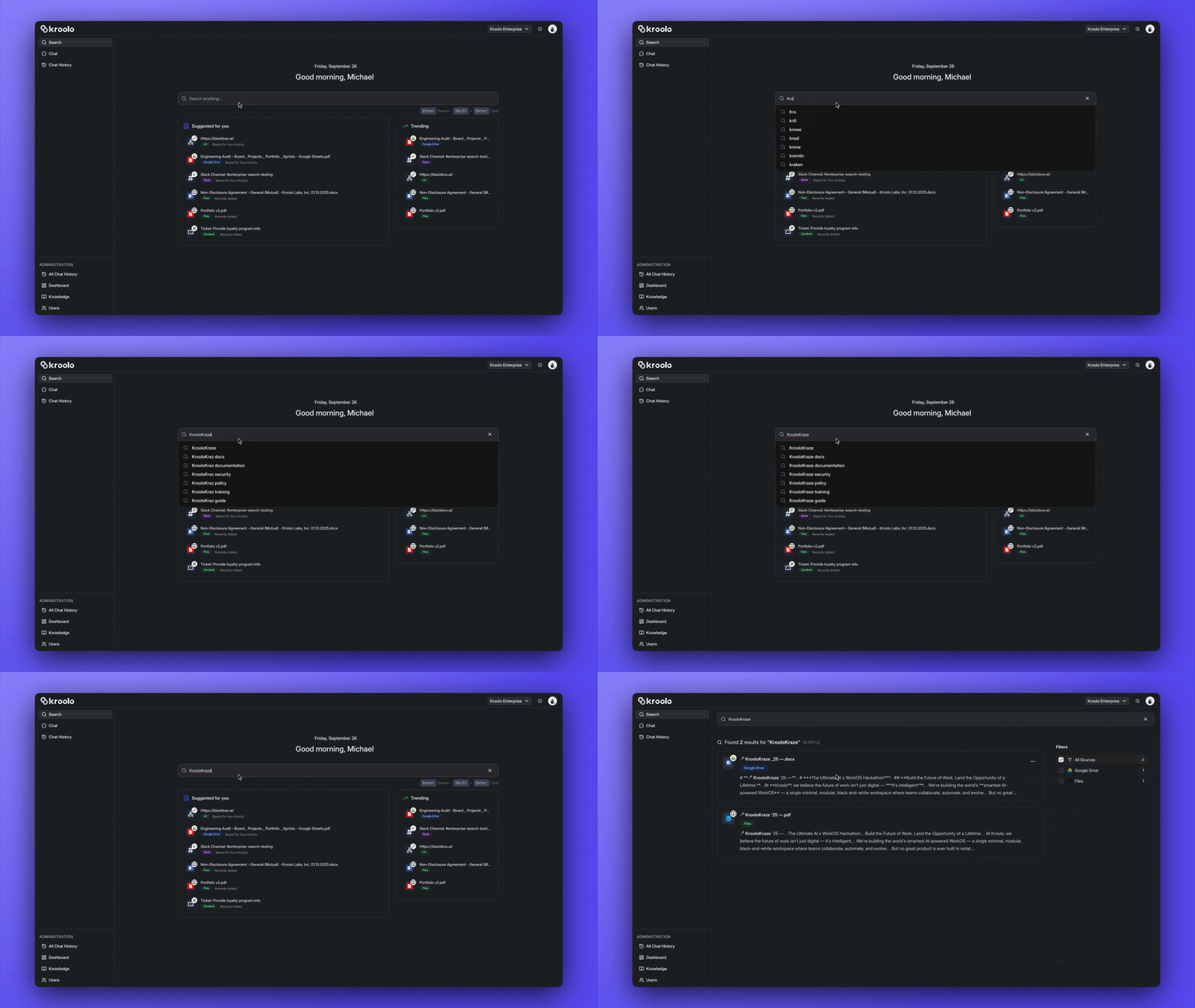
Kroolo Enterprise Search unifies knowledge across 12+ workplace tools into one intelligent search experience. Instead of deciding where to look, users ask what they need.
Behind the scenes, Kroolo combines:
This means Kroolo doesn’t just retrieve files—it understands intent and context.
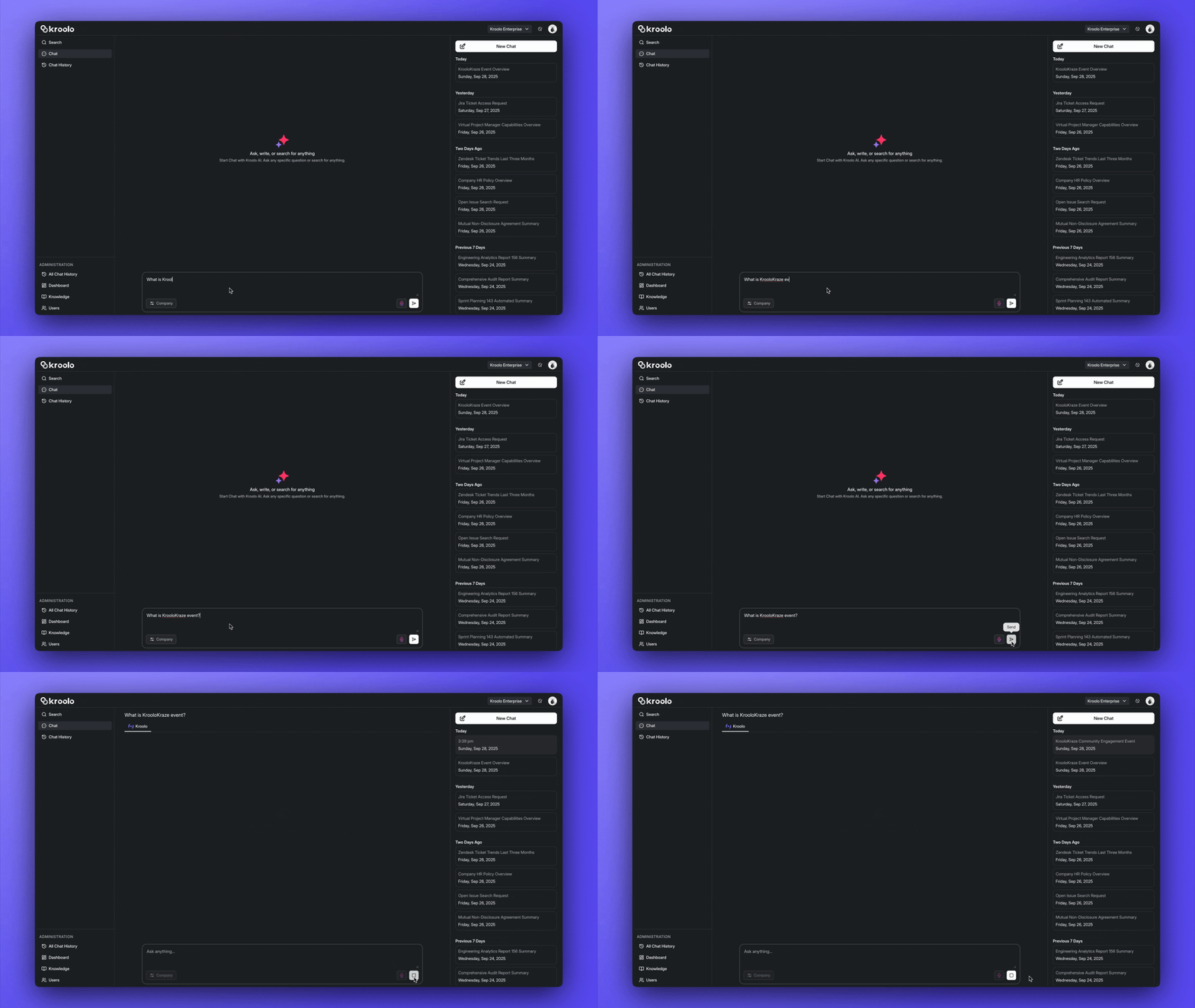
Traditional enterprise search returns document lists. Kroolo returns direct, contextual answers—with citations.
You can ask:
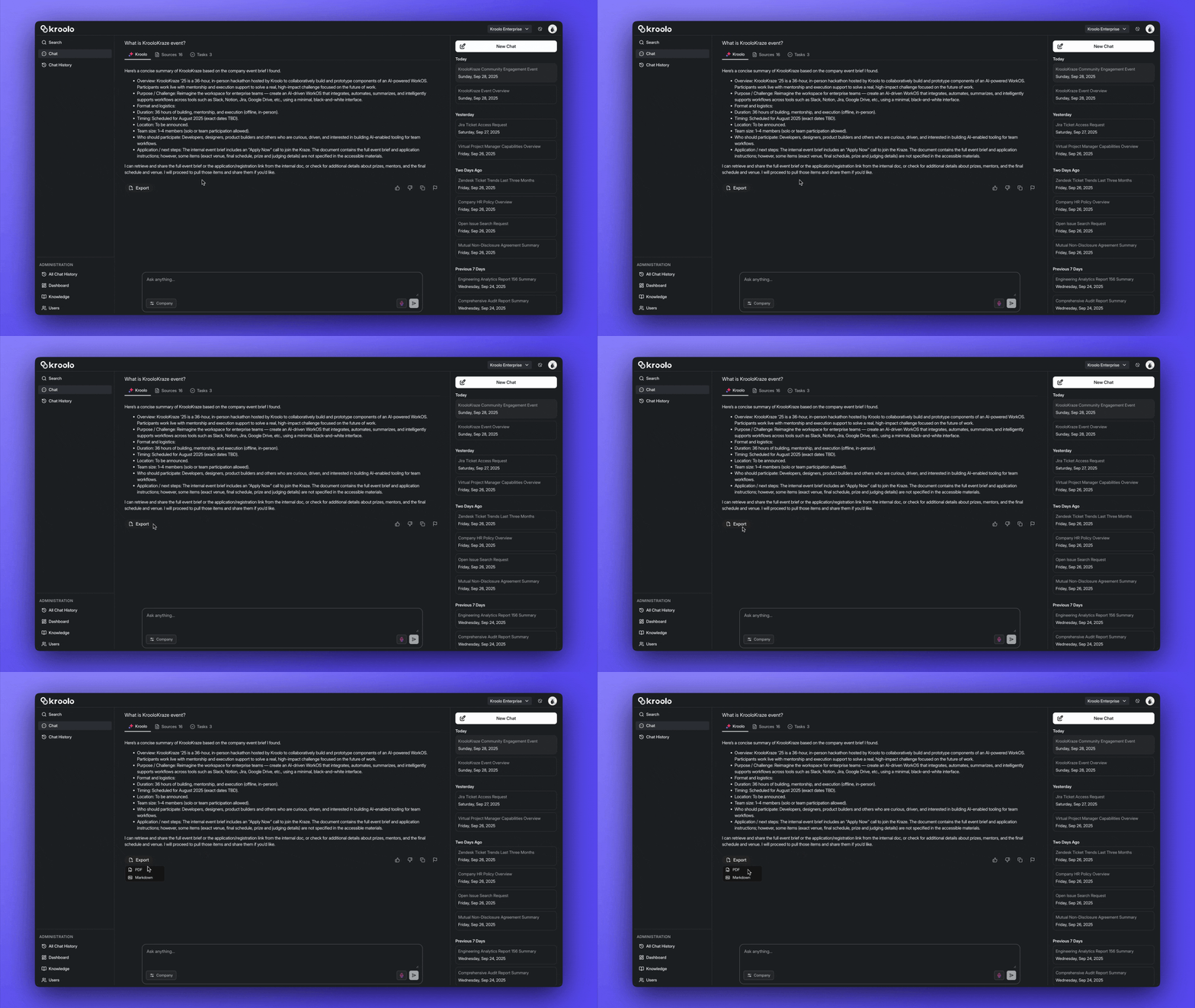
Kroolo scans Slack threads, Notion pages, attachments, tasks, and revisions—then delivers a clear answer written in plain language with source-linked citations for verification, and relevant context without noise. This ensures - One question. One answer. No app switching.
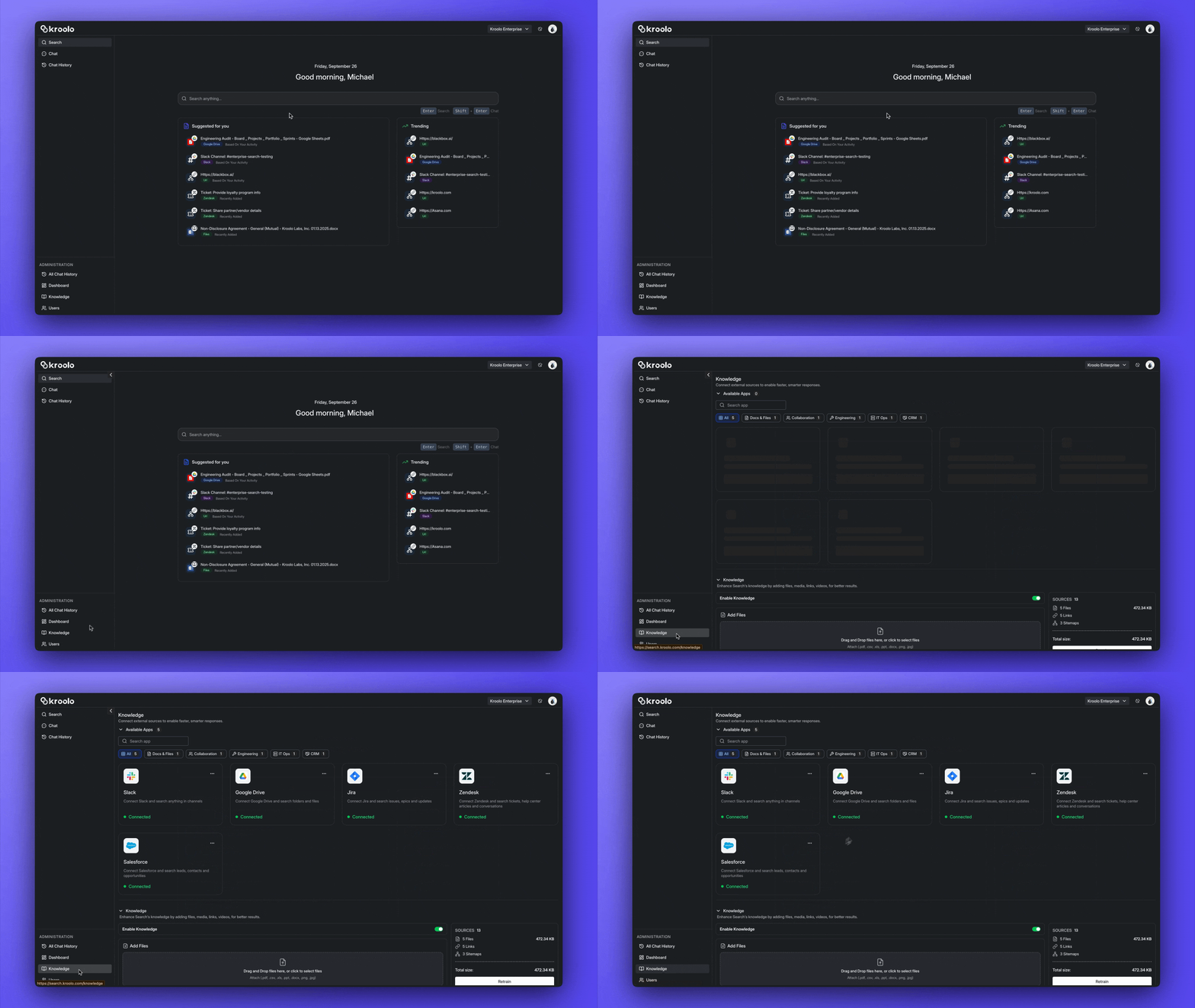
Kroolo’s search understands meaning when you enable your knowledge base and not just keywords. It recognizes:
Users don’t need to guess the “right” wording. They can ask naturally—and trust the results.
In most companies, even when someone finds the right answer, it disappears again. Kroolo prevents that.
Every search and response becomes part of a living knowledge hub, automatically preserving:
Over time, your organization builds searchable institutional memory—without asking teams to document everything manually.
Kroolo is built for real enterprise environments.
Employees only see what they’re allowed to see—nothing more, nothing less.
Search in Kroolo doesn’t stop at discovery. Because search lives inside the same workspace where work happens, teams can act immediately.
From search results, users can:
No copy-pasting. No context loss. No tool switching.
For IT, Operations, Engineering, and Product leaders, Kroolo changes how information flows through the organization.
This isn’t “better search.” It’s organizational intelligence—designed for teams that need to move fast without losing context.

A Technical Lead was planning a large engineering initiative involving backend services, frontend updates, QA workflows, and documentation. They were already using an “AI-enabled” tool, but the experience fell short where it mattered most.
The AI produced a high-level task list—but stopped there. To turn that list into a usable project, the Technical Lead still had to:
Planning a single sprint took hours, and execution was delayed before work even began.
“The AI told me what to do—but not how to actually run the project.”
— Technical Lead
Solution
The Technical Lead switched to Kroolo’s Prompt-to-Project agent, designed for engineering execution—not just ideation. Instead of managing multiple tools or configuring boards manually, they described the project in a single prompt:
Kroolo’s AI agent instantly translated that prompt into a ready-to-run engineering project. In under 10 seconds, Kroolo can successfully -
No manual setup. No rework. No context switching.
Outcome
The shift was immediate and measurable. Sprint planning time dropped from 2–3 hours to seconds, reducing planning overhead by 90%. Engineers could start executing immediately, while the Technical Lead moved from operational setup to strategic oversight.
Results
Kroolo transformed AI from a passive assistant into an active execution engine—moving engineering teams from manual oversight to high-speed, autonomous project delivery
Conclusion
The takeaway is that manual information discovery is an "Information Overhead" your enterprise can no longer afford. Adopting a unified AI search engine is not just a tool upgrade; it is a strategic commitment to organizational velocity.
Kroolo is superior because it turns scattered data into an actionable knowledge base with security-aware, semantic precision. By unifying Slack and Notion, you don't just search your company; you talk to it. It’s time to stop acting as a manual librarian and start moving at the speed of thought.
Sign Up for Free and connect your first app to experience the future of unified search today.